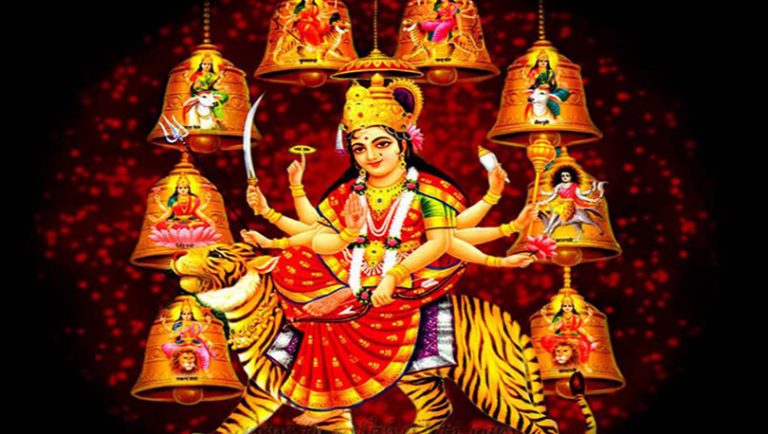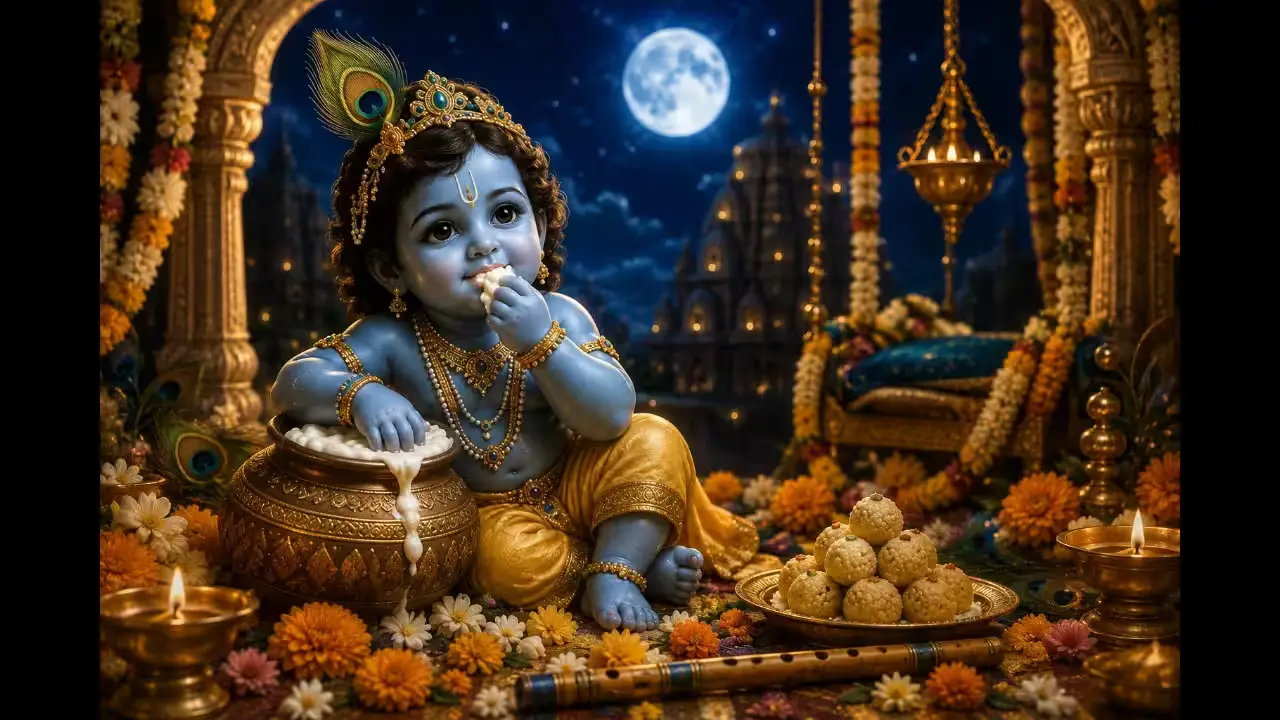
Krishna Janmashtami will be observed across Nepal on September 4, 2026, with temples and homes taking on a festive glow as devotees gather to commemorate the birth of Lord Krishna. In Kathmandu Valley, the historic Krishna Mandir at Patan Durbar Square is expected to remain one of the principal centers of devotion, drawing worshippers for prayers, offerings, devotional singing and the traditional midnight observance.
The festival is observed on the eighth day, or Ashtami, of the dark fortnight of the Hindu lunar calendar and is dedicated to Krishna, who is revered by Hindus as an incarnation of Vishnu and holds a particularly important place in the Vaishnava tradition. In Nepal, Janmashtami is a public holiday, and its observance extends from homes and neighborhood shrines to historic temples where devotees maintain fasts, recite sacred texts, sing bhajans and kirtans, and wait for the symbolic moment of Krishna’s birth at midnight.
A festival centered on faith, devotion and tradition
The word Janmashtami combines janma, meaning “birth,” and ashtami, meaning “eighth,” referring to the traditional belief that Krishna was born on the eighth lunar day of the dark fortnight. The festival is celebrated across India and by Hindu communities around the world, but local customs give each celebration its own character. In Nepal, the festival has become an important expression of religious devotion and living cultural heritage, with generations of families continuing rituals that connect contemporary life with longstanding Hindu traditions.
For devotees, Janmashtami is not simply a celebration of a religious figure’s birth. Krishna’s life and teachings are closely associated with ideas of dharma, devotion, wisdom and righteous action, particularly through the Bhagavad Gita. The festival therefore combines celebration with spiritual reflection, giving worshippers an opportunity to renew their faith, listen to sacred narratives and participate in rituals that have been carried through generations.
The date itself follows the Hindu lunar calendar rather than a fixed Gregorian date, which is why Janmashtami moves between August and September from year to year. In Nepal, the 2026 celebration falls on Friday, September 4. For Kathmandu, astronomical calculations place the principal midnight period shortly after midnight on September 5, while the festival date itself is September 4.
The story behind Krishna’s birth
The traditional story of Krishna’s birth is preserved in Hindu religious literature, particularly the Bhagavata Purana and other important texts. According to the religious narrative, Krishna was born to Devaki and Vasudeva in Mathura. Devaki’s brother, King Kamsa, had received a prophecy that Devaki’s eighth child would become the cause of his downfall. Fearing the prophecy, Kamsa imprisoned Devaki and Vasudeva and, according to the traditional account, killed their earlier children.
The story says that Krishna was born at midnight while his parents were imprisoned. At the time of his birth, miraculous events allowed Vasudeva to carry the infant Krishna away from Mathura and across the Yamuna River to the home of Nanda and Yashoda, who would raise him in Gokul. Krishna’s childhood stories including his playful relationship with butter, cows, friends and the people of Gokul later became central to devotional traditions throughout South Asia.
These accounts belong to Hindu religious and mythological tradition and should not be presented as independently verified historical events. Their importance for Janmashtami lies in the spiritual and cultural meaning they hold for devotees. The story of Krishna’s birth is remembered as a moment when divine hope enters a world facing disorder, while Krishna’s later teachings and life provide a broader spiritual framework for devotion and righteous living.
Patan Krishna Mandir becomes the heart of Nepal’s celebration
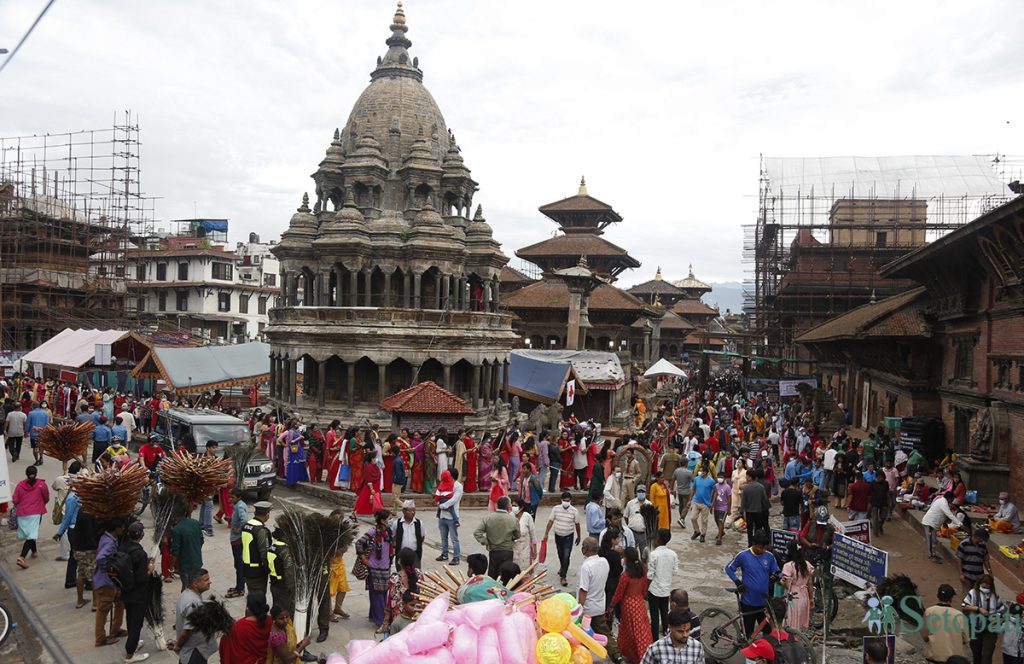
Among Nepal’s many Krishna temples, Krishna Mandir in Patan Durbar Square, Lalitpur, holds a particularly prominent place in Janmashtami celebrations. Nepal Tourism Board describes the temple as the center of celebrations in Kathmandu Valley, where large numbers of devotees traditionally gather during the day and continue their worship into the night. The 17th century stone temple is itself an important part of the historic Patan landscape, making the festival an intersection of religious devotion and Nepal’s architectural heritage.
As Janmashtami approaches, the temple environment takes on a distinctly festive character. Devotees arrive to offer prayers and worship, while devotional songs and chants become part of the atmosphere. Nepal Tourism Board notes that worshipers gather around the temple at night, light small oil lamps and sing praises to Krishna while awaiting the midnight hour. Images of Krishna may also be carried through the city in processions accompanied by followers and musical groups.
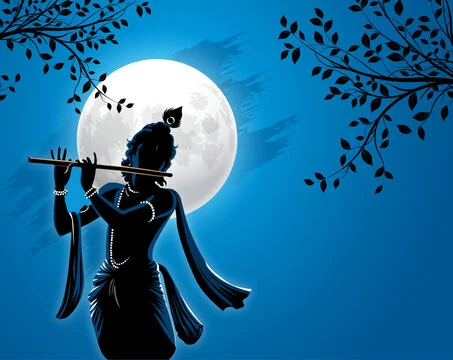
The celebration extends beyond Patan. Krishna temples and Hindu religious centers in different parts of Nepal observe the festival through their own local customs, while families create smaller celebrations within their homes. This combination of major public gatherings and intimate household worship gives Janmashtami a broad social character, allowing people to experience the festival according to their family, community and religious traditions.
A night of fasting, worship and the midnight birth
For many devotees, Janmashtami begins with fasting and religious observance during the day. Some worshipers refrain from regular meals until the midnight celebration, while others follow particular fasting practices according to their family or religious tradition. Throughout the day, devotees may visit temples, make offerings, listen to religious readings and participate in devotional singing.
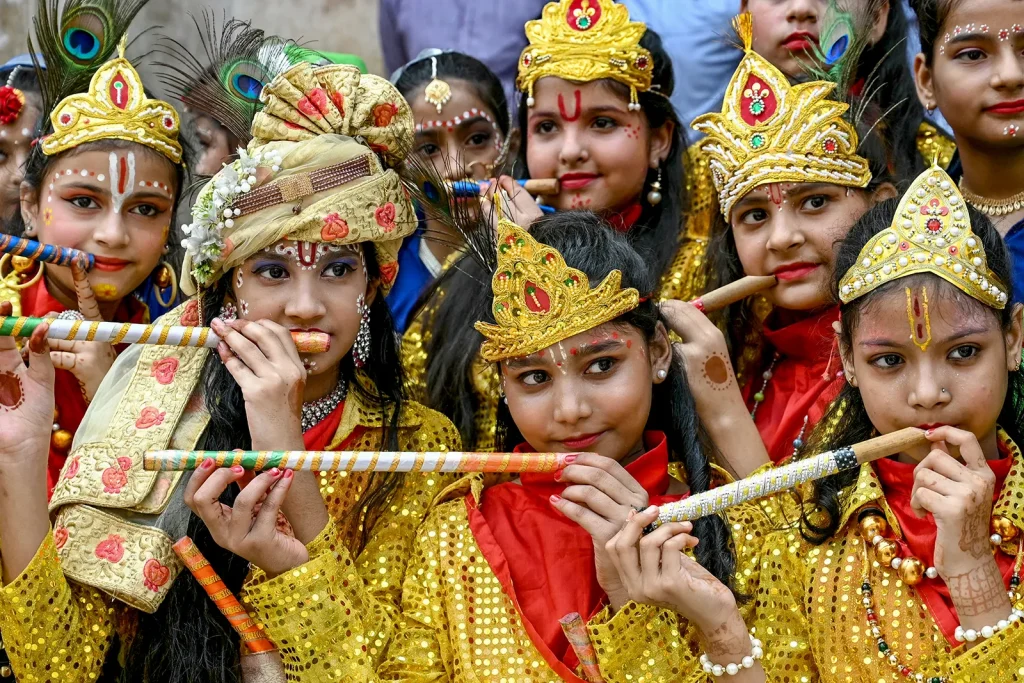
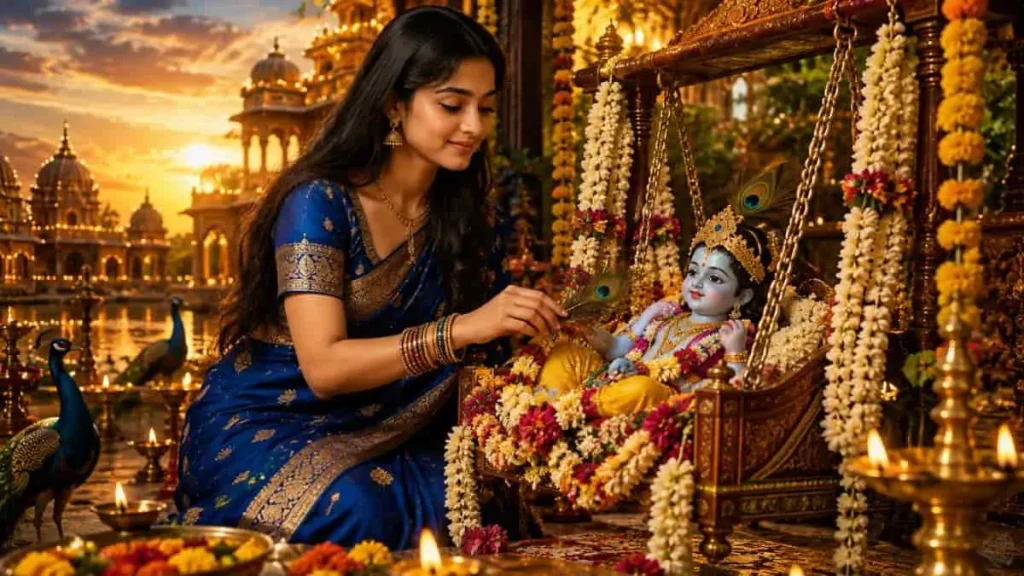
As evening arrives, preparations become more elaborate. Temples and homes are decorated with flowers, lamps and images of Krishna, while prayer areas are prepared for the night’s ceremonies. Families may prepare traditional offerings and sweets, and children are sometimes dressed as Krishna or other figures associated with the Krishna tradition. These preparations create a connection between religious worship and family participation, allowing younger generations to learn the customs directly from parents and elders.
The midnight observance is the central moment of the festival because Krishna’s birth is traditionally believed to have occurred at midnight. In temple settings, devotees gather for prayers and worship as the hour approaches. Religious ceremonies may include bathing and dressing the image of infant Krishna, placing the deity in a cradle, offering food and flowers, and singing devotional songs. In Kathmandu, the midnight period for 2026 falls shortly after the beginning of September 5, with Kathmandu-based Panchang calculations placing the Nishita Puja period at approximately 11:40 p.m. to 12:26 a.m.
Following the midnight worship, devotees who have been fasting may break their fast according to their religious tradition and share prasad and festival foods. The act of sharing food is an important part of the communal character of the celebration, turning an individual act of devotion into a collective experience.
Temples, lights and devotional music shape the atmosphere
One of the most recognizable features of Janmashtami is the transformation of religious spaces. Flowers, lamps, images of Krishna and other decorative elements give temples a festive appearance, while devotional music and chanting create an atmosphere that continues late into the night. At Patan’s Krishna Mandir, the historic stone architecture provides a distinctive setting for the celebration, linking the present day festival with the heritage of the Kathmandu Valley.
The sounds of bhajans, kirtans, bells and devotional chants become an important part of the celebration. Rather than being limited to formal ceremonies, music allows devotees to participate collectively, with groups singing praises and religious compositions as the midnight hour approaches. The visual combination of lamps, flowers, traditional clothing and decorated shrines further contributes to the festival’s distinctive character.
For visitors, the atmosphere provides an opportunity to observe one of Nepal’s important living religious traditions. However, Janmashtami remains first and foremost a religious observance, so visitors are expected to approach temples respectfully, dress appropriately and follow local instructions, particularly during crowded ceremonies and worship.
Families and communities keep the tradition alive
Janmashtami brings together people of different generations. Children, parents, young people and older family members participate in different ways, from preparing decorations and food to attending temple worship and joining devotional singing. In many households, the festival becomes an opportunity for parents and grandparents to explain the story of Krishna and the meaning of rituals to younger family members.
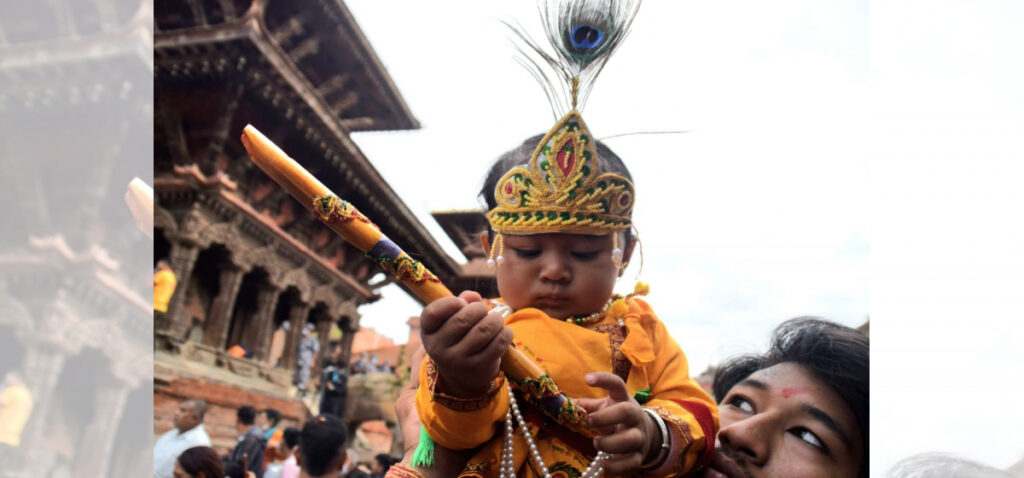
Children often have a particularly visible role in the celebration because Krishna’s childhood is one of the most beloved aspects of the religious tradition. Dressing children as Krishna, creating small footprints representing the arrival of the infant deity and preparing images or cradles are among the ways families connect the festival with Krishna’s childhood stories.
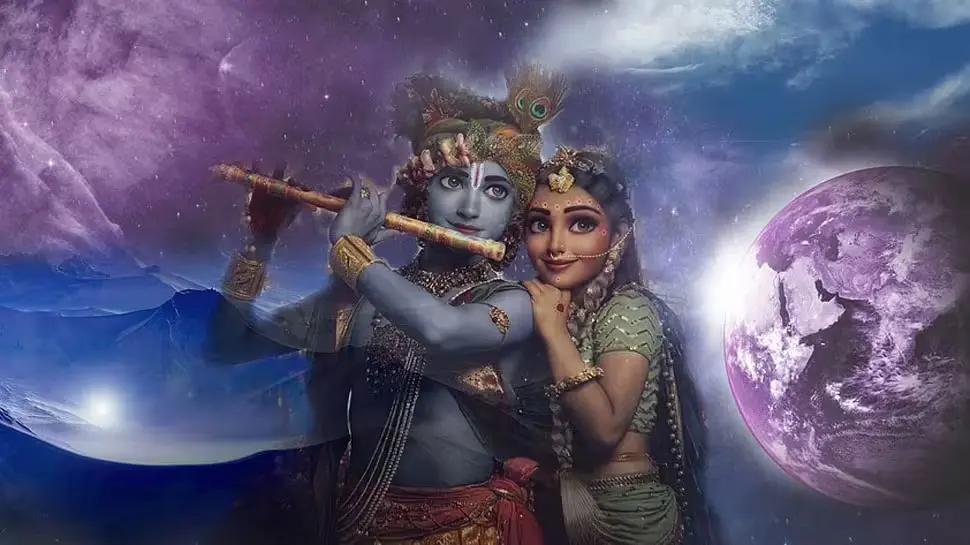
Community participation is equally important. Religious groups and temples organize worship and devotional activities, while volunteers and local participants help maintain the atmosphere of the celebration. The festival’s ability to bring people together demonstrates why Janmashtami remains more than a religious date on the calendar it is also a social and cultural occasion through which traditions are shared and renewed.
Food, offerings and the cultural expression of Krishna
Food forms another important part of Janmashtami observance. Devotees commonly prepare fruits, sweets, milk based foods and other offerings, with specific dishes varying according to household and regional traditions. After worship, offerings may be distributed as prasad, creating a shared connection between religious ritual and community celebration.
The artistic side of the festival can also be seen in temple decorations, devotional images, music and performances associated with Krishna. Across the wider Hindu world, Krishna’s childhood stories have inspired painting, dance, theatre and devotional poetry for centuries. In Nepal, these traditions complement the temple-centered rituals and help keep Krishna’s stories visible in contemporary cultural life.
Traditional clothing also adds to the visual character of the celebration, particularly when children are dressed in Krishna-inspired costumes. Such practices allow religious stories to move beyond written texts and become part of family celebrations, performances and everyday cultural expression.
Why Janmashtami remains important in modern Nepal
The continuing popularity of Krishna Janmashtami demonstrates the strength of Nepal’s living religious heritage. The festival brings together faith, family, architecture, music, food and community participation, creating a cultural experience that remains relevant even as lifestyles change.
For younger generations, participation provides an opportunity to learn traditions directly rather than encountering them only through books or historical accounts. Visiting temples, listening to religious stories, helping prepare offerings and joining family rituals create experiences that can be passed forward. In this sense, Janmashtami functions as both a religious celebration and a form of cultural transmission.
The festival also contributes to Nepal’s cultural tourism landscape. Historic sites such as Patan Durbar Square provide an important setting in which visitors can encounter religious traditions alongside some of the Kathmandu Valley’s celebrated architecture and heritage. Nepal Tourism Board specifically highlights Krishna Mandir and the wider Patan celebration as an important destination for experiencing Krishna Ashtami in Nepal.
What visitors should know about Janmashtami 2026
For those wishing to experience the festival in Nepal, Krishna Janmashtami will be observed on Friday, September 4, 2026. It is a public holiday in Nepal. The principal celebration at Patan’s Krishna Mandir is centered around worshipers’ prayers and the midnight observance, although the exact program can vary according to temple arrangements and religious practice.
Visitors attending a temple celebration should dress modestly, respect worshippers and temple customs, and follow instructions regarding entry, photography and movement around religious ceremonies. Those wishing to observe the midnight rituals should plan their visit around the local temple program rather than relying solely on general festival timings, as individual temples may organize ceremonies differently.
The festival is particularly suitable for visitors interested in religious heritage, traditional architecture, cultural photography, devotional music and living traditions. Patan Durbar Square offers the opportunity to experience Janmashtami within one of the Kathmandu Valley’s most historically significant urban settings, while smaller local temples can provide a more neighborhood-centered experience.
A celebration with a distinctly Nepalese character
What makes Krishna Janmashtami particularly memorable in Nepal is the way religion and heritage come together. The story of Krishna belongs to a much wider Hindu tradition, yet its celebration in Nepal takes place within a landscape of historic temples, traditional neighborhoods, community worship and generations-old cultural practices.
At Patan, the experience is especially distinctive: devotees gather around a historic stone temple, lamps illuminate the surrounding space, devotional voices rise through the evening, and worshipers wait together for the symbolic midnight birth. Elsewhere, families and communities create their own versions of the celebration, ensuring that the festival is not confined to a single monument or city.
The festival’s strength lies in this combination of shared belief and local expression. The same story can be celebrated through a quiet family prayer, a crowded temple gathering, a devotional song, a child’s Krishna costume or a midnight ritual. Each expression forms part of a much larger cultural tradition.
A tradition that continues into the future
Krishna Janmashtami brings together a remarkable range of experiences: the ancient story of Krishna’s birth, the devotion of worshippers, the beauty of Nepal’s historic temples, the sound of bhajans and kirtans, the warmth of family gatherings and the anticipation surrounding the midnight celebration. In Nepal, these elements come together each year to create a festival that is both deeply religious and culturally significant.
As September 4, 2026 approaches, temples and households once again prepare to welcome Janmashtami. At the heart of the celebration remains a simple but powerful tradition: remembering the birth of Krishna and renewing the values of devotion, faith and righteous living associated with his story. From the illuminated courtyards of Patan to family prayer rooms across the country, Krishna Janmashtami continues to show how a centuries-old tradition can remain vibrant, meaningful and deeply connected to the lives of people today.