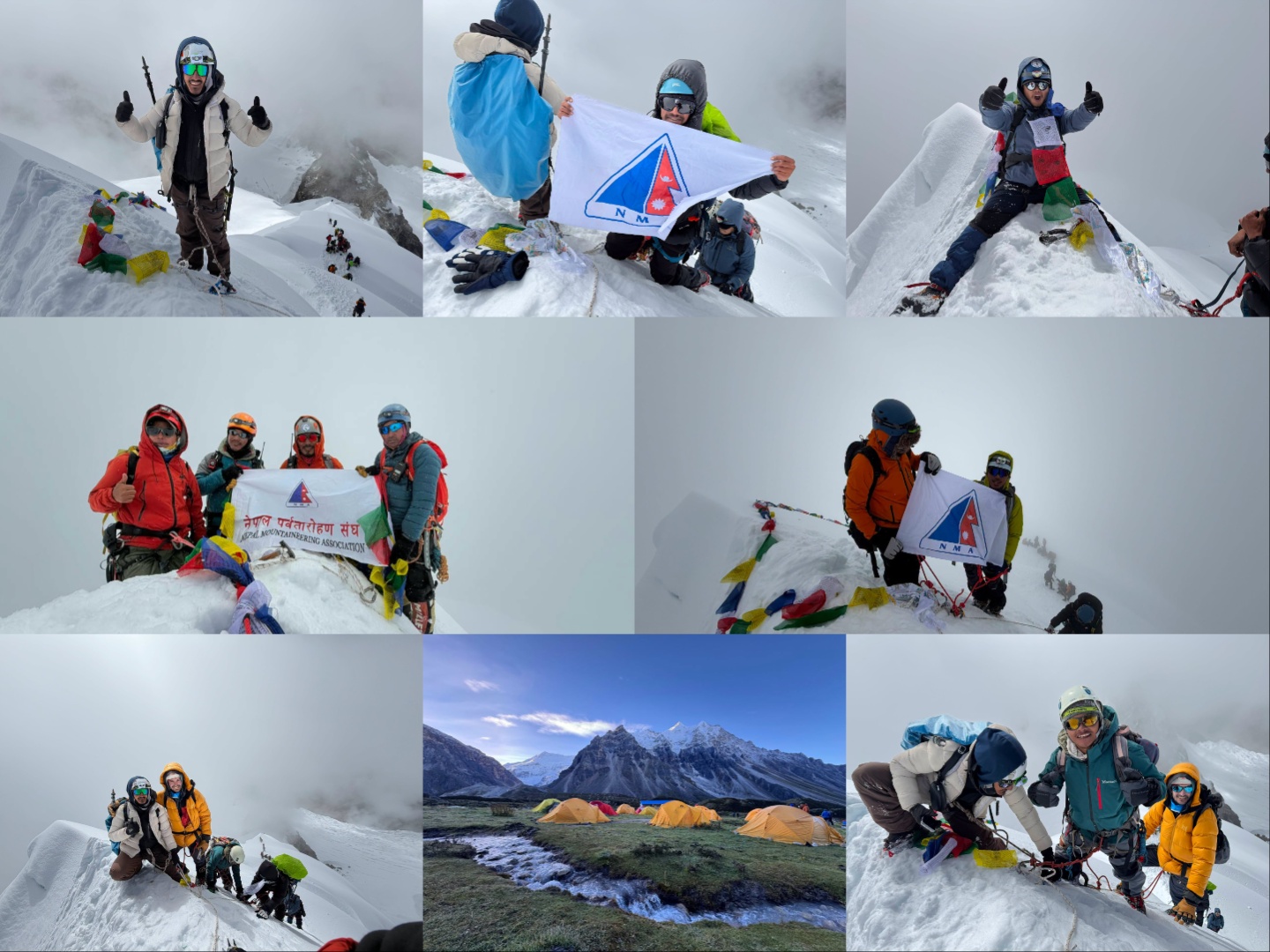
A group of 29 mountain guide trainees, along with six instructors, has successfully summited Danga Peak (6,355 meters) after finishing the practical training portion of the second Summer Skill Course for Professional Mountain Guide Training. The expedition took place as part of a specialized training program aimed at giving aspiring professional mountain guides hands-on experience in high-altitude conditions.
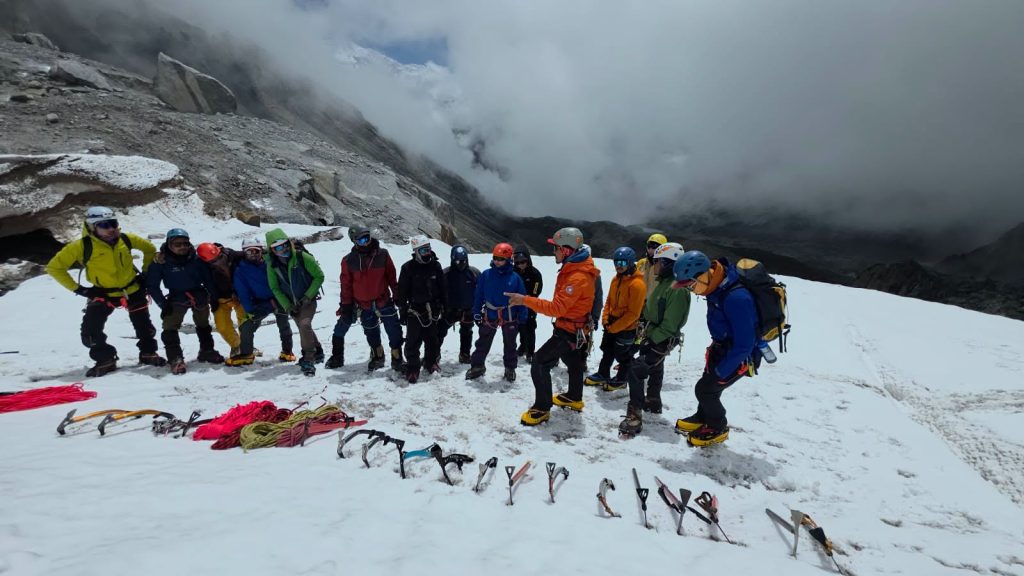
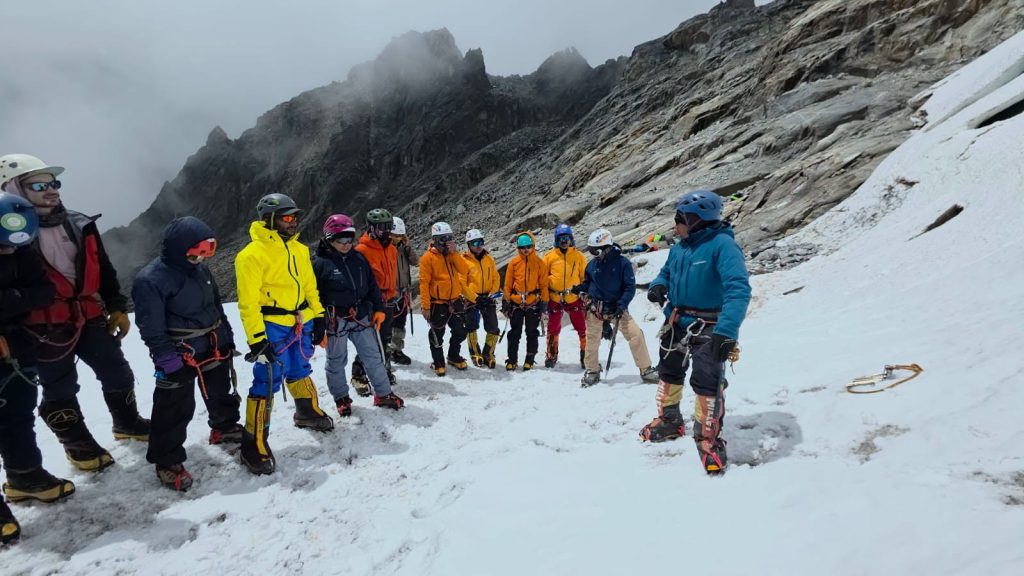
Before attempting the summit climb, the trainees completed glacier-based training, which let them apply their technical skills in a real Himalayan setting. The successful ascent signals the completion of both the field training and the peak expedition portions of the course. Following the successful conclusion of the program in the Kanchenjunga region, the training team has now started its journey back to Kathmandu.
Training Merges Classroom Learning with Himalayan Field Practice
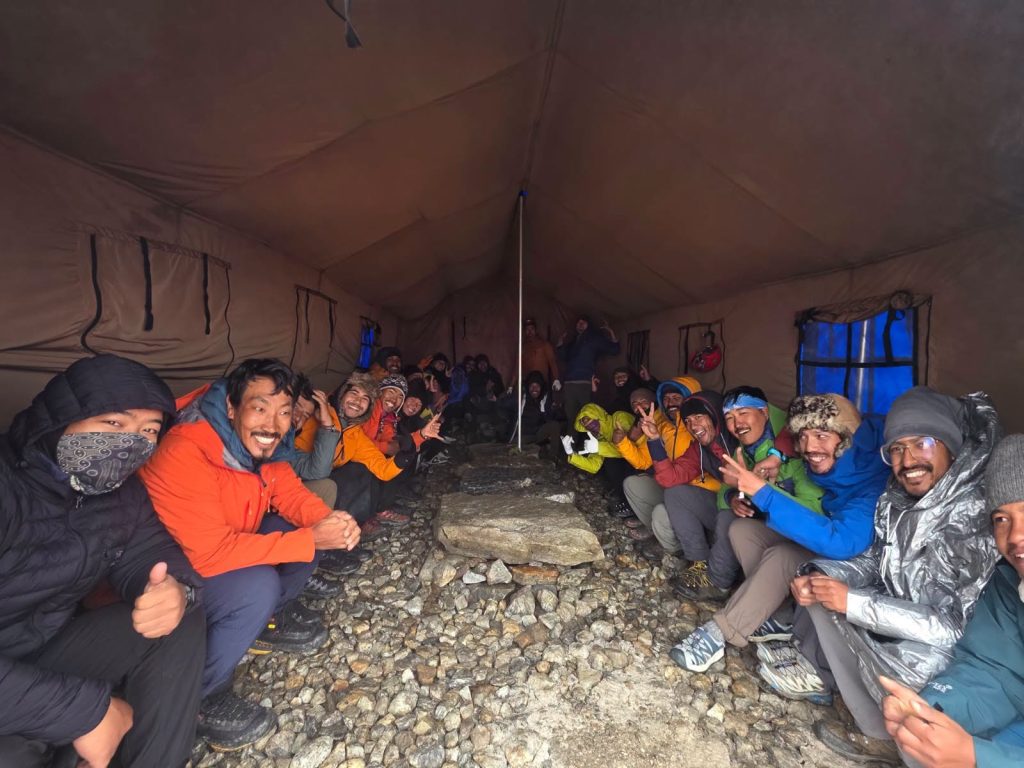
The Summer Skill Course was organized jointly by the Nepal Mountaineering Association (NMA) and the Sustainable Tourism Project (STP). The program merged classroom instruction and technical preparation in Kathmandu with extensive practical training in the mountains. The theoretical sessions, rock-climbing exercises and other preparatory activities took place in Kathmandu before the participants traveled to Danga Peak in Taplejung’s Kanchenjunga region for the field-based component.
The mountain training gave participants a taste of real climbing conditions, including glacier travel, high-altitude movement and the technical challenges that come with guiding in a Himalayan environment. This kind of practical exposure is a key part of preparing guides who will eventually work with domestic and international mountaineers.
Danga Peak Expedition Bolsters Technical Skills
The Summer Skill Course is part of the 1,696-hour Professional Mountain Guide curriculum developed and approved by the Council for Technical Education and Vocational Training (CTEVT). Within the curriculum, the summer course takes place on a mountain above 6,000 meters. The high-altitude setting is meant to give trainees firsthand experience with the conditions they may face while working as professional mountain guides.
The peak expedition is a core element of the course, not merely a climbing achievement. Participants must demonstrate and further build on the technical skills and competencies they gained during their training. Holding the practical component on Danga Peak offered a chance to test those skills in a demanding Himalayan environment. The mix of theoretical knowledge, rock-climbing practice, glacier training and summit experience is expected to boost the participants’ readiness for professional guiding duties.
NMA Congratulates Trainees and Training Team
The Nepal Mountaineering Association has extended its congratulations to all 29 participants for completing the training successfully and reaching the summit of Danga Peak. The association also acknowledged the dedication and professionalism of the six instructors and the broader training team in delivering the course. Their responsibilities involved guiding participants through the program’s technical and practical elements and providing support during the mountain expedition.
The successful completion of the course marks another step toward strengthening Nepal’s pool of professionally trained guides. As Nepal’s Himalayan destinations continue to draw climbers and trekkers from across the globe, skilled and properly trained guides remain a vital component of the country’s adventure tourism sector. The completion of the Danga Peak expedition has thus represented both a personal achievement for the trainees and a significant milestone in their path toward professional mountain guiding.