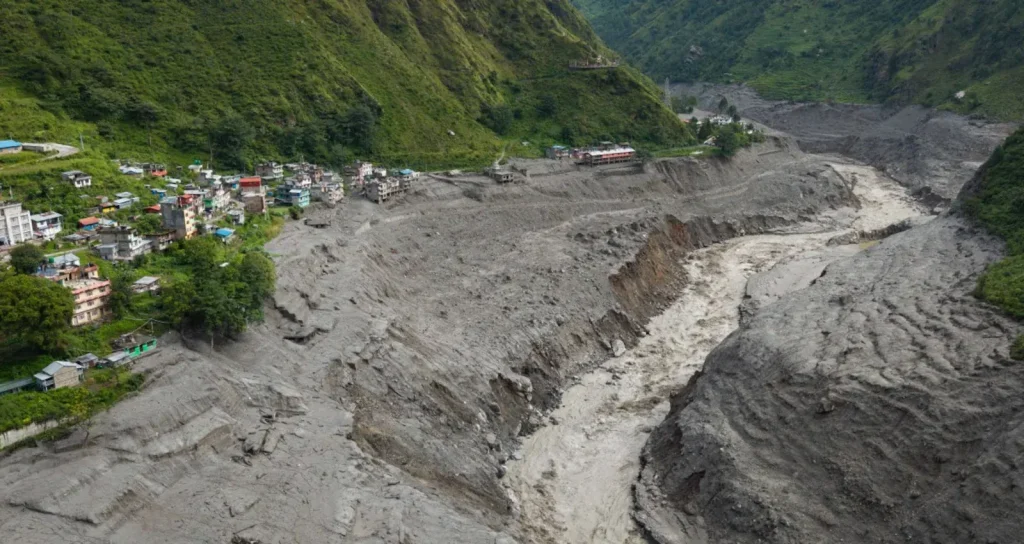
The morning of 26th August 2026 began like any other in the mountainous districts of Rasuwa, Nuwakot, and Dhading in Nepal. But by midday, a catastrophe of unimaginable scale had unfolded. A sudden, violent flood swept down from the Himalayas, a raging torrent of water, rocks, and mud that tore through villages, destroyed vital infrastructure, and claimed thousands of lives. This was the Bhotekoshi River flood, a disaster that would soon become a grim symbol of our changing world.
Nepal’s Prime Minister, Balendra Shah, stood before the parliament and delivered a stark message: this tragedy was not merely a natural disaster but a “serious signal” of escalating climate risks in the Himalayan region . As the world watched the rescue efforts unfold, the question became unavoidable: is this the new normal? To understand the connection between this single, devastating event and the broader global phenomenon, we must first look at the science of climate change itself .
The Science: Why is Our Planet Heating Up?
At its core, the story of climate change is a story of energy balance. Our planet receives energy from the Sun. Some of this energy is reflected back into space, but a significant portion is absorbed by the Earth’s surface and then radiated back out as heat. This is where the “greenhouse effect” comes into play. Certain gases in our atmosphere, like carbon dioxide (CO2) and methane, act like a blanket. They trap some of this outgoing heat, keeping our planet warm enough for life to thrive.
This natural greenhouse effect is essential. Without it, the Earth’s average temperature would be a frigid -18°C, instead of the livable 15°C we know. The problem is that human activity has been thickening this blanket. Since the Industrial Revolution, we have been burning vast quantities of fossil fuels (coal, oil, gas, etc) for energy.
This process releases massive amounts of CO2 and other greenhouse gases into the atmosphere. Deforestation and certain agricultural practices also contribute to this growing problem in Nepal. The result is an enhanced greenhouse effect, where more heat is trapped than escapes, causing the planet’s average temperature to rise. This long-term increase in Earth’s average air temperature is called global warming.
Climate change is a broader term that encompasses global warming and all its “side effects”. While climate can change naturally over millennia due to shifts in Earth’s orbit or volcanic activity, the current rate of change is unprecedented. It is overwhelmingly driven by human activity. The consequences we are seeing today in Nepal, including melting glaciers, more extreme storms, devastating floods, etc are the direct result of the extra heat energy trapped in our climate system.
The Symptoms of a Warming World
Climate change is not a problem for the distant future; it is a crisis of the present. The symptoms are visible across the globe, affecting everything from our weather to our ecosystems. One of the most visible signs is the increase in extreme weather events. A warmer atmosphere can hold more moisture, leading to more intense and frequent downpours and floods. Conversely, it can also intensify droughts and heatwaves in other regions. This is why we are seeing more destructive hurricanes, record-breaking wildfires, and, as in Nepal, devastating flash floods.
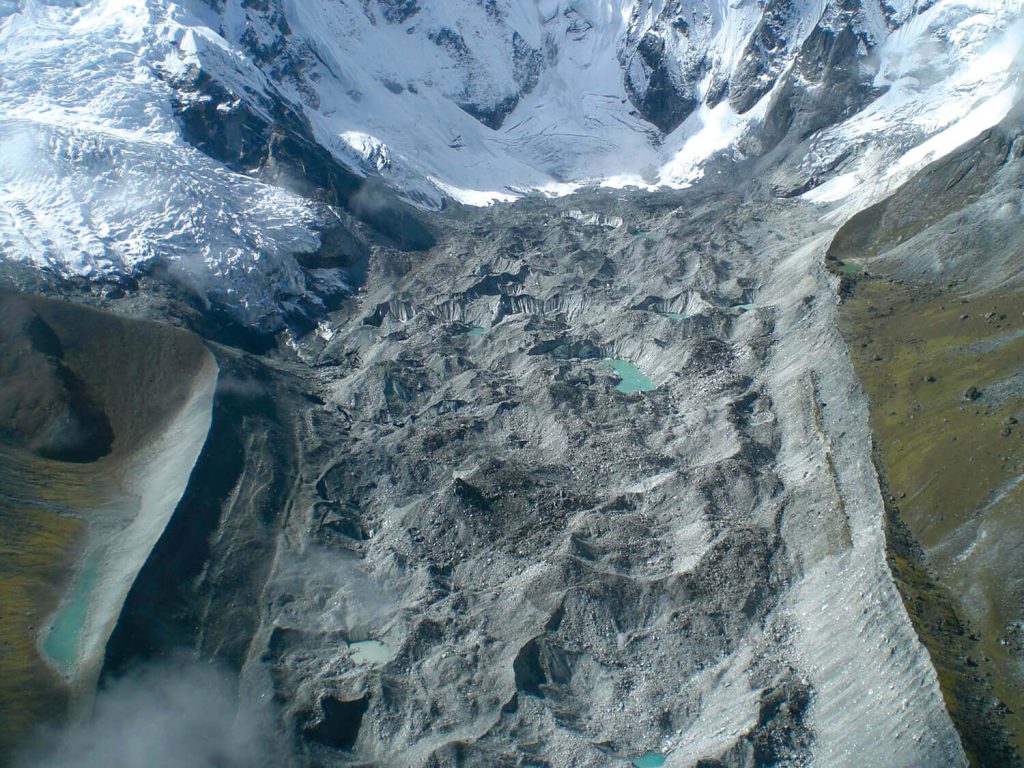
The warming is not uniform across the globe. Polar regions and high mountain areas are heating up much faster than the rest of our planet. This accelerated warming has a dramatic effect on the world’s frozen places. Glaciers are melting at an alarming rate, and the ice sheets of Greenland and Antarctica are shrinking. This melting ice, combined with the thermal expansion of seawater as it warms, is a primary driver of rising sea levels, threatening coastal communities worldwide.
A Global Problem, A Shared Responsibility
The tragedy in Nepal highlights a profound injustice at the heart of the climate crisis. The country has contributed less than 0.1% of the world’s historic greenhouse gas emissions, yet it finds itself on the front lines of its most devastating impacts. It is paying the highest price for a problem it did little to create. As Prime Minister Shah stated, “Climate change is a product of the whole world’s contribution; mitigating and managing its effects is the shared responsibility of the global community”.
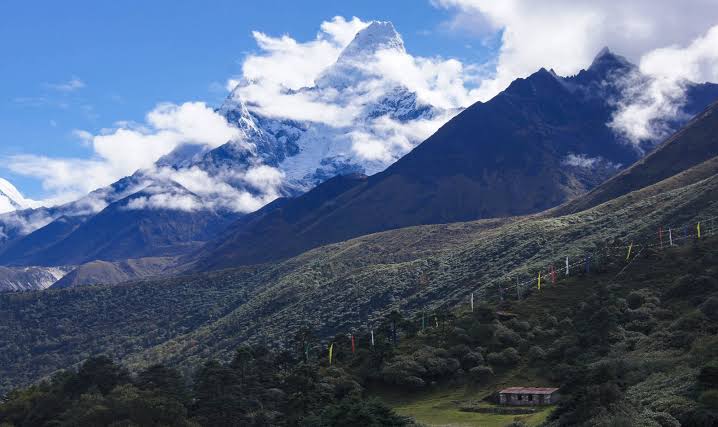
This sentiment underscores a fundamental principle: the climate crisis is a global emergency that requires a global solution. The large, industrialized nations that have historically emitted the most greenhouse gases have a moral and practical responsibility to lead the charge in cutting emissions and supporting vulnerable countries.
The solutions are complex but known. They require a rapid transition away from fossil fuels to clean energy sources like solar and wind power. They demand we protect and restore our forests, which act as vital “sinks” for carbon dioxide. And they necessitate international cooperation to build early warning systems and resilient infrastructure to protect communities from the impacts we can no longer avoid.
The floodwaters of the Bhotekoshi River, Nepal have receded, leaving behind a trail of devastation. For the people of Nepal, the road to recovery will be long and arduous. But for the world, the flood serves as a powerful warning. It is a stark reminder that climate change is not an abstract future threat but a present-day reality that is costing lives, livelihoods, and entire communities. It is a cry for action, a call for humanity to recognize the shared responsibility we have to our planet and to each other. The time to act is now, not just to prevent future tragedies, but to build a more just and sustainable world for all.
Article By: Prashant Kumar Raut (The author is a student of Environmental Science at the University of Delhi.)