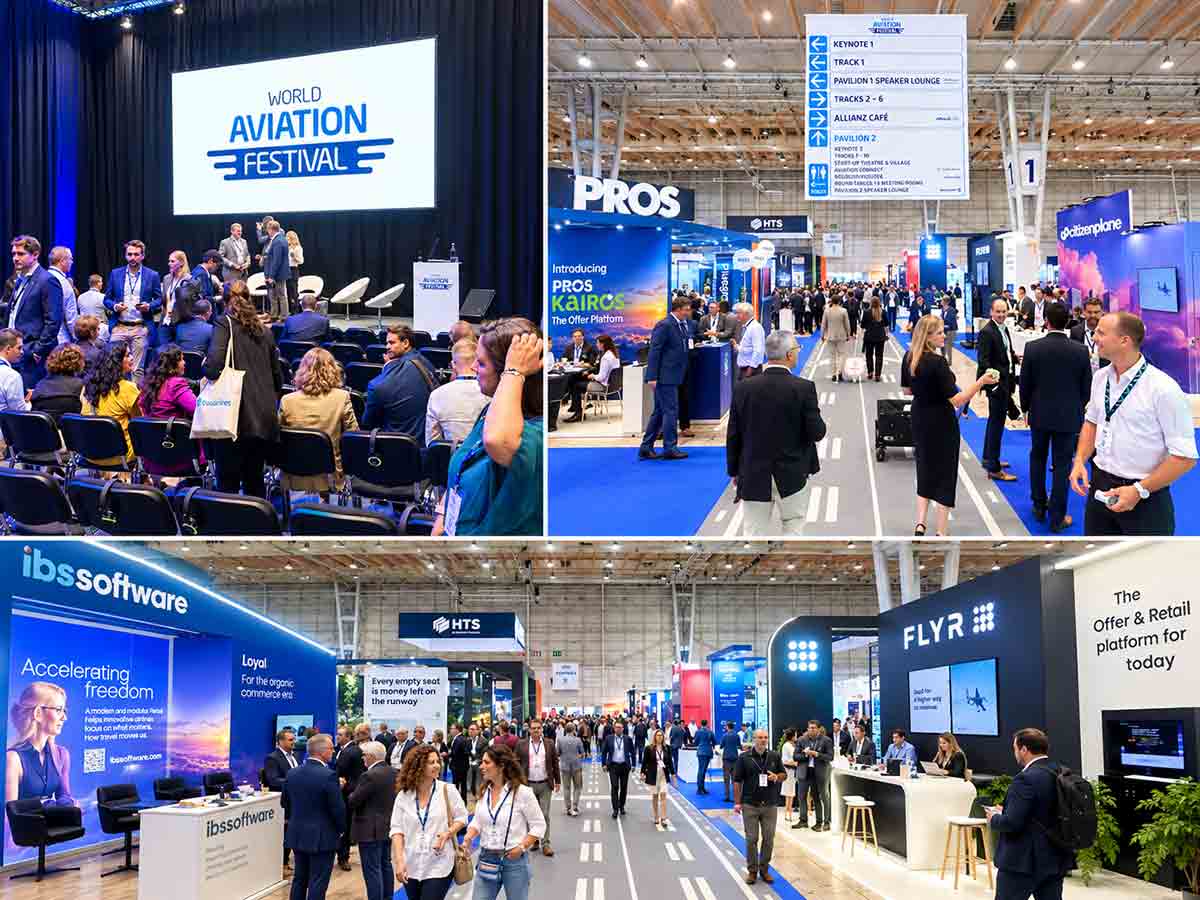
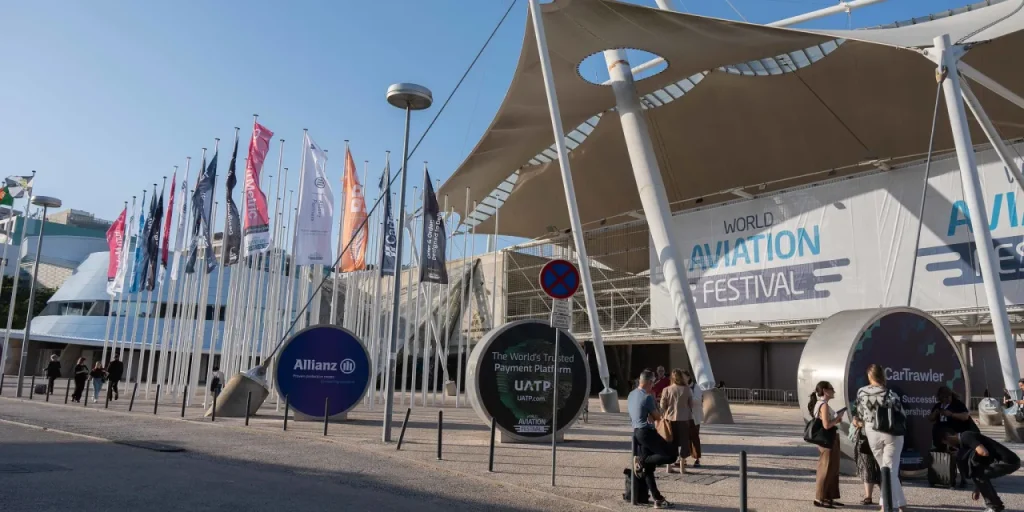
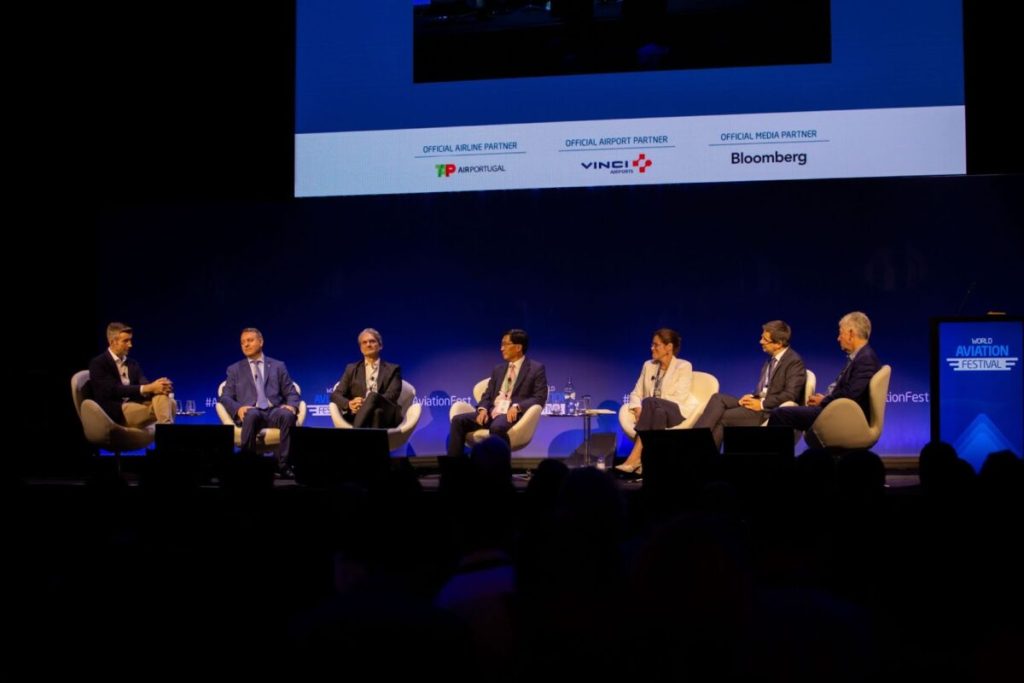
The World Aviation Festival 2026, which is being held in Lisbon, Portugal, from October 13 to 15, has attracted more than 4,500 attendees and 600 speakers from the aviation industry. Airlines, airport operators and technology companies are talking about artificial intelligence (AI), airport infrastructure, passenger services and strategies to improve operational efficiency.
The first two days have witnessed a number of significant developments, including Lufthansa’s selection as a future shareholder in TAP Air Portugal, plans for a new Lisbon airport and new AI powered aviation solutions. These developments are indicative of how the global aviation industry is responding to rising operating costs, growing passenger expectations and the need for more efficient and digitally connected travel services.

AI and Automation to Transform Airline and Airport Operations
Artificial intelligence and automation have become a talking point at the festival, with companies touting technologies to cut down on delays and improve airport operations. Aviation technology company Assaia’s 2026 Turnaround Report found that aircraft turnarounds in North America and Europe averaged 11.1 minutes behind schedule in the first quarter of 2026. The company estimates that closing this gap could save airlines up to US$44 billion annually, while AI-monitored turnarounds operated 36% closer to schedule.
Turkish Airlines unveiled its Turnaround AI system, which uses existing airport cameras to monitor ground handling activities and track more than 30 operational events. The system achieves more than 92% accuracy in detecting critical events under supported conditions. Other discussions delved into autonomous airport vehicles, robotics and AI-powered voice services, pointing to the potential of technology to improve ground handling, detect operational problems earlier and provide faster passenger assistance.
TAP Air Portugal and Lufthansa Deal Shape Industry Outlook
The Portuguese government announced that Lufthansa will be a shareholder in TAP Air Portugal, and it was a major development discussed during the festival’s second day. Lufthansa and Air France KLM had submitted their final bids for 44.9% of TAP’s share capital, with the other 5% set aside for employees. The transaction is subject to approval by the European Commission, and is expected to be completed in 2028.
TAP Chief Executive Officer Luís Rodrigues said the new shareholder would influence how TAP implements its strategy, while long haul services to South America and North America and aircraft maintenance would remain central to its business. Executives from TAP, LATAM Airlines Group and Abra Group also discussed rising fuel prices, higher operating costs and financial uncertainty. They stressed the importance of stronger financial management, operational efficiency and strategic technology investments to maintain competitiveness.
Lisbon Airport Expansion and Modern Airline Retailing
Plans for a new Lisbon airport were also a major point of discussion, as Portugal looks to overcome the capacity constraints of its current airport. ANA Aeroportos de Portugal CEO Thierry Ligonnière said the proposed airport outside of Lisbon is designed to handle 56 million passengers, after its first development phase. The existing airport, which was supposed to handle 10 million passengers, handled 37 million passengers last year and has limited room for expansion, due to encroaching urban development.
Airline executives also discussed their approaches to modernizing flight distribution and sales through digital platforms. International Airlines Group (IAG) highlighted its adoption of the New Distribution Capability (NDC) standard and its focus on Offer and Order technology to develop more personalized customer offers. AI is also being tapped to speed up software development and quality-assurance processes. Airport and lounge representatives also discussed strategies for increasing commercial revenue through retail, lounges and enhanced passenger experiences.
New Technology Partnerships to Improve Passenger Experience
Alaska Airlines was one of the carriers featured in two technology announcements at the festival. Meili is partnering with the carrier to update its car rental booking experience, while BAGTAG unveiled its third generation electronic bag tag (BAGTAG Pulse) that Alaska plans to introduce as part of a future commercial rollout. The device enables the tracking of baggage via Apple Find My and Google Find Hub, and enables airlines to update tag information remotely, when baggage is transferred to another flight.
Other announcements focused on improving the overall passenger experience and managing disruptions. Pegasus Airlines has invested in Zingly.ai to introduce AI-powered voice services, and Accelya launched FLX Recover, which seeks to help airlines coordinate rebooking, passenger care and communications during disruptions. TAP is developing app based baggage tracking, self-service flight changes after cancellations and expanded chatbot support. OneReg has announced a partnership with Bristol Airport to implement its safety management system, as it undergoes a £400 million upgrade.
The World Aviation Festival wraps up on October 15, with further industry discussions and the final of the new Ancillary Arena competition. The first two days have highlighted how AI adoption, airport investment, airline partnerships and digital passenger services are shaping the future of aviation and international travel.