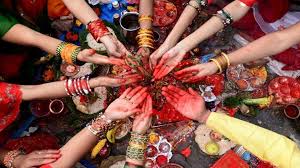
Nepali women across the country are celebrating Rishi Panchami today by worshipping Arundhati and the Saptarishi (Seven Sages). This festival, observed annually on the fifth day of the waxing moon in the month of Bhadra, holds special significance for women.
As part of the tradition, women rise early, perform their daily rituals, and visit nearby rivers, streams, ponds, or lakes. They brush their teeth using 365 stalks of a medicinal herb, cleanse themselves with cow dung, mud, and ash, and take a ritual bath. According to Professor Dr. Devmani Bhattarai, a member of the Nepal Panchanga Nirnayak Vikas Samiti and an expert in religious studies, while both men and women observe the Haritalika Teej fasting and worship, Rishi Panchami is specifically intended for women, as per the scriptures.
The festival is considered a means for women to atone for any ritual impurities or lapses that may have occurred during menstruation. Various religious texts mention that by worshipping Arundhati and the Saptarishi on this day, women can seek absolution from such impurities. According to ancient beliefs, women undergo purification through bathing and using items like the datyun, cow dung, mud, and ash, followed by the consumption of Panchagavya, a mixture of cow products, to eliminate any lingering impurities.
After the purification rituals, women worship the Saptarishi, which includes Atri, Gautama, Bharadvaja, Jamadagni, Vashishta, Kashyapa, and Vishvamitra, along with Arundhati, the wife of sage Vashishta. This worship is the central element of Rishi Panchami, symbolizing the reverence for these seven sages.
Rishi Panchami is deeply connected to a legend about menstruation. According to ancient texts, the festival originates from a tale where Lord Indra sinned Brahmahatya (killing a Brahmin) by slaying Vishvarupa. As a result, Indra was burdened with the guilt of Brahmahatya. To relieve him of this sin, Lord Brahma assigned a portion of the guilt to four entities—the earth, trees, water, and women. This is why, it is believed, that menstruation in women and other natural phenomena such as barren land and tree sap are linked to this sin.
It is believed that touching others during menstruation can transfer impure energies that may cause illness or harm, which is why women refrain from contact during this time. If a woman accidentally makes contact during menstruation, worshipping the Saptarishi on Rishi Panchami is believed to absolve her of any associated sin.
Professor Bhattarai explains that menstruation, known as Rajaswala, is seen as impure in traditional beliefs. However, modern research has shown that these customs were likely rooted in health practices. He emphasizes the need for further studies from scientific and health perspectives to better understand these traditions.
After the cleansing rituals and worship, women consume a single meal known as Havishyanna, which includes foods like Sama, Kaguno, tubers, and leafy vegetables. In Kathmandu, the Risheshwar Temple at Teku and other temples across the country see large crowds of women devotees offering their prayers to Arundhati and the Saptarishi. Those unable to visit temples worship at riversides or in their own homes.
Rishi Panchami continues to hold a sacred place in the religious and cultural lives of Nepali women, offering them a unique opportunity for spiritual purification and connection with ancient traditions.