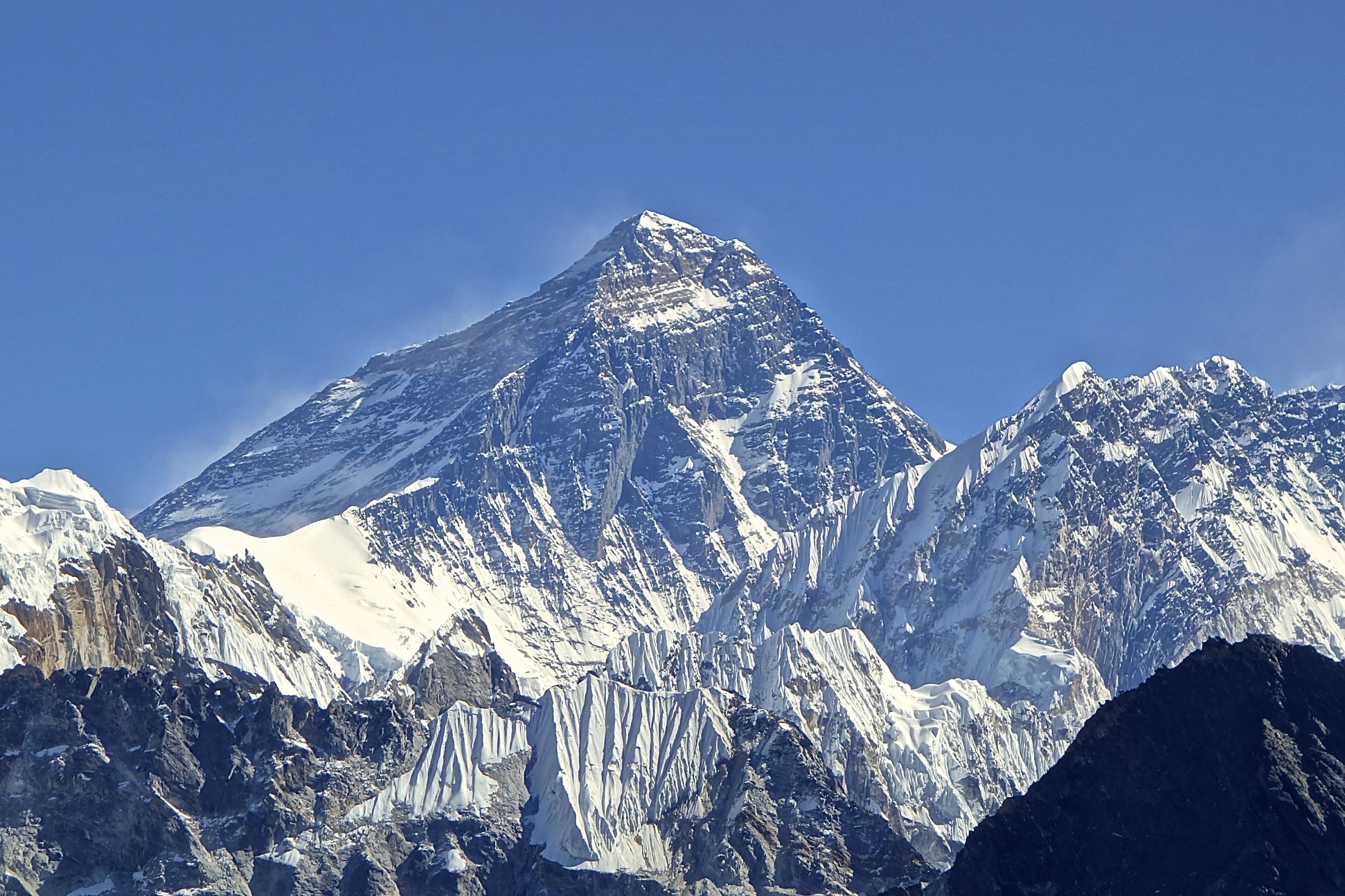
Mount Everest, standing at an impressive height of 5.5 miles (8.85 km) above sea level, is not only Earth’s tallest mountain but is also still on the rise. Recent studies have uncovered that Everest is growing more than anticipated due to geological changes linked to the merger of two nearby river systems.
This upward movement of the Himalayas has been ongoing for approximately 50 million years, a result of the Indian subcontinent colliding with Eurasia. However, researchers have found that Everest has gained an estimated 49 to 164 feet (15 to 50 meters) in height due to changes in the regional river system. Specifically, the Kosi River merged with the Arun River around 89,000 years ago, contributing to an uplift rate of approximately 0.01 to 0.02 inches (0.2 to 0.5 millimeters) per year.
The process behind this phenomenon is known as isostatic rebound. This geological process occurs when land masses rise as the weight of the surface diminishes. The Earth’s crust, which floats atop a semi-liquid mantle, adjusts in response to the removal of heavy loads like ice or eroded rock.
Geoscientist Jin-Gen Dai of the China University of Geosciences, one of the study’s lead authors, explained, “Isostatic rebound can be likened to a floating object adjusting its position when weight is removed. When a heavy load is removed from the Earth’s crust, the land beneath slowly rises, similar to a boat rising in water when cargo is unloaded.” The main gorge of the merged river system is situated about 28 miles (45 km) east of Everest.
The study, published in the journal Nature Geoscience, utilized numerical models to simulate the evolution of the river system and concluded that isostatic rebound accounts for roughly 10% of Everest’s annual uplift rate. This process is not isolated to the Himalayas; similar geological phenomena can be observed in Scandinavia, where land is still rising in response to the melting of ice sheets from the last Ice Age.
Furthermore, GPS measurements confirm that Everest and the rest of the Himalayas continue to rise, with this uplift surpassing the erosion caused by natural elements like wind, rain, and river flow. As erosion persists, it is anticipated that the uplift rate from isostatic rebound may further increase.
Neighboring peaks, including Lhotse (the fourth highest) and Makalu (the fifth highest), also benefit from the same geological processes, with Lhotse experiencing a similar uplift rate to Everest.
Dai remarked on the broader implications of this research, stating, “This research underscores our planet’s dynamic nature. Even a seemingly immutable feature like Mount Everest is subject to ongoing geological processes, reminding us that Earth is constantly changing, often in ways imperceptible in our daily lives.”
Mount Everest, known as Sagarmatha in Nepali and Chomolungma in Tibetan, holds a unique place in human consciousness. As Earth’s highest point, it not only represents an immense physical achievement but also carries cultural significance, being sacred to local Sherpa and Tibetan communities. Globally, it symbolizes the ultimate challenge, embodying human endurance and the drive to surpass perceived limits.