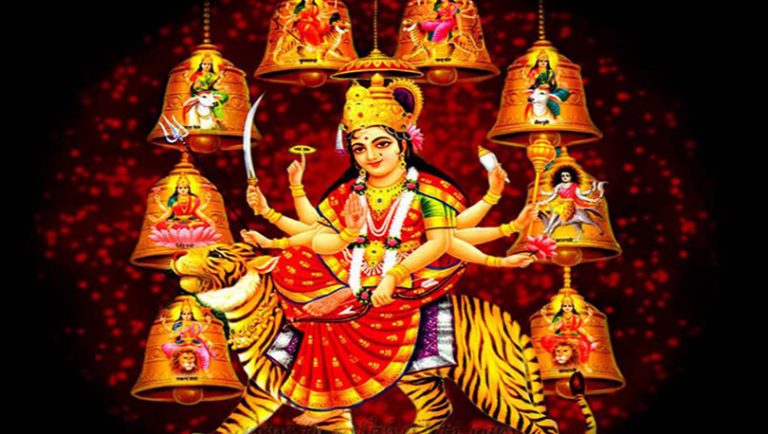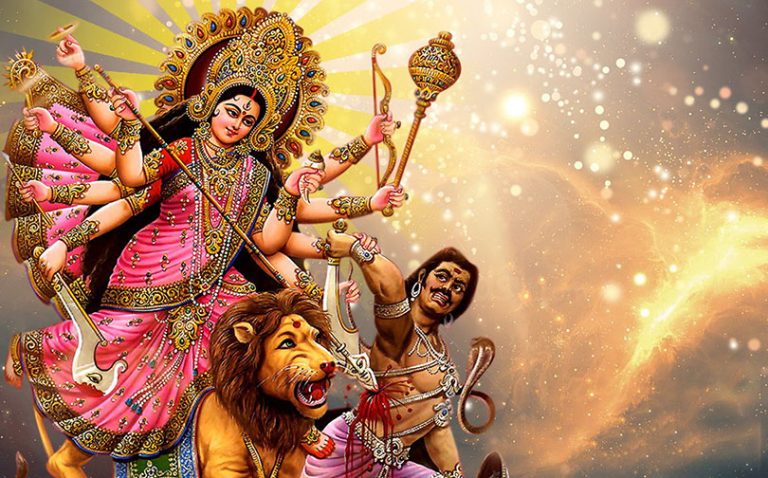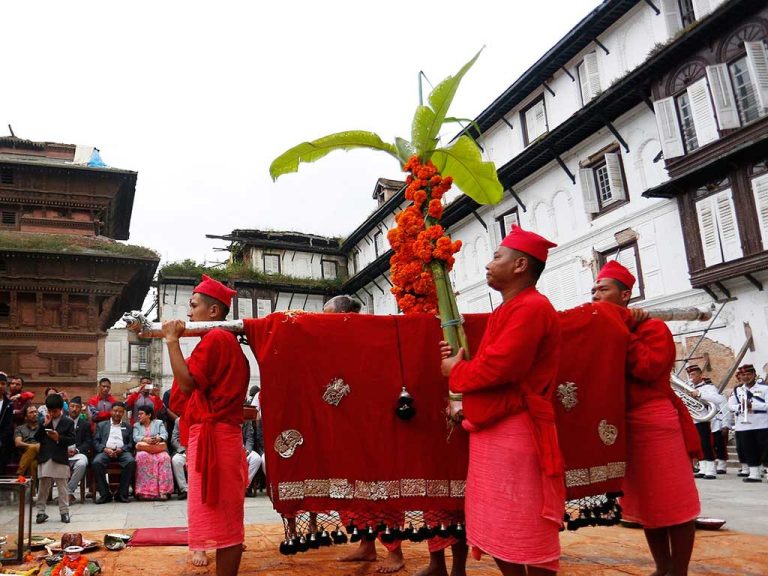
On the second day of Navratri, devotees are honoring Brahmacharini Devi in the Dashainghar, or Pooja room, as part of the nine-day celebration dedicated to the nine forms of Goddess Durga.
The festivities began on Thursday, the first day of Navratri, with the Vedic ritual of Ghatasthapana, during which barley jamara was placed in the worship space. On the same day, the first goddess, Shailputri, was invoked and worshiped with due reverence.
Today, Brahmacharini Devi is being worshiped in a similar manner, with rituals performed at the designated Pooja area. Throughout the nine days of Navratri, sacred texts such as Durga Saptashati (Chandi) and Shri Maddevi Bhagwat are recited, reinforcing the spiritual significance of the occasion. It is widely believed that sincere worship during Navratri can bestow blessings of power, wealth, and knowledge.
According to Vedic Sanatan Dharma, special worship of Goddess Durga is conducted every year from Ashwin Shukla Pratipada to Navami. The prasad (offering) prepared during these nine days is carried from Vijayadashami to the day of Kojagrat Purnima, marking the end of the festival.
Brahmacharini, one of the nine Durga forms, is revered for her dedication to guiding beings toward the realization of Satchidananda, the ultimate reality. Traditionally, she is depicted holding a lotus, akshamala (rosary), and kamandalu (water pot).
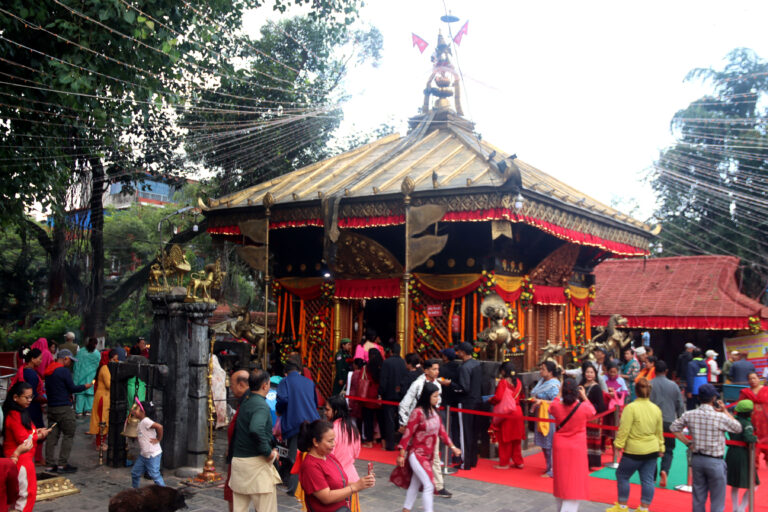
Across the country, devotees are flocking to various Shakti Peeths for worship and darshan. In the Kathmandu Valley, popular sites such as Guhyeshwari, Jayabageshwari, Maitidevi, and Kalikastan have witnessed large crowds of worshippers since early morning.
Similarly, temples outside the Kathmandu Valley are also experiencing a surge in devotees. Many believe that worshiping at these sacred sites during Navratri fulfills their wishes and spiritual aspirations.
Source: RSS