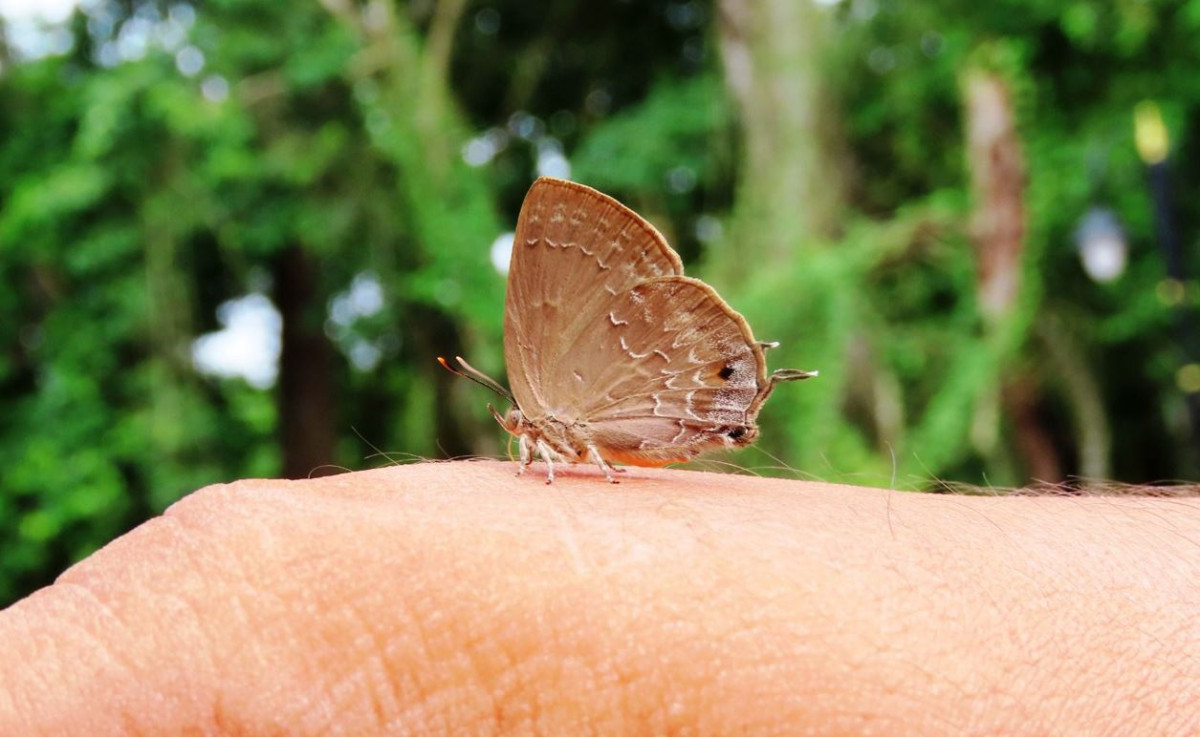
In a significant discovery for Nepal’s biodiversity records, a rare butterfly species known as the Silver Streaked Acacia Blue (Cigaritis syama, formerly known as Zinaspa todara) has been spotted at the gate area of Chitwan National Park. The butterfly, considered extremely rare in Nepal, was sighted on Shrawan 20 (August 5) at around 12:30 PM, as confirmed by Manashant Ghimire, President of the Pokhara Bird Society.
Discovery by Nature Guides and Experts
The butterfly was first noticed by experienced Sauraha-based nature guide Rojen Subedi, who immediately alerted his colleagues for verification. A team comprising Milan Tamang, Bishal Lama, Basu Bidari, and butterfly expert Tek Bahadur Gurung responded swiftly and confirmed the species. The team meticulously documented the sighting for further scientific validation.
The final identification and confirmation were made in collaboration with a panel of butterfly specialists, including Sajan KC from Pokhara, renowned Dutch expert Piet Van Pole, Surendra Pariyar, and Tek Bahadur Gurung from Chitwan. Manashant Ghimire stated that the sighting was verified based on photographs, field observations, and expert comparison with existing records.
Second Sighting in Nepal After Five Decades
This remarkable discovery marks only the second time the Silver Streaked Acacia Blue has been recorded in Nepal. The species was first documented 51 years ago in 1974 in Makwanpur by Colin Smith, a pioneering butterfly researcher affectionately known as “Putali Baje” in Nepal. Since then, the elusive butterfly had not been seen or recorded in the country, until now.
The rediscovery of this butterfly in Chitwan is being hailed as a milestone in Nepal’s conservation and biodiversity history. The region’s dense tropical forests and unique ecological environment make it a haven for many rare flora and fauna. Experts note that this sighting reaffirms the ecological significance of Chitwan and highlights the importance of continuous monitoring of its wildlife.
Boost to Chitwan’s Biodiversity Status
Nepal is currently home to an estimated 692 recorded butterfly species. Among these, over 300 species have been documented within Chitwan National Park and its buffer zones alone. The addition of the Silver Streaked Acacia Blue to Chitwan’s butterfly records is being viewed as a valuable contribution to the region’s biodiversity portfolio.
Conservationists emphasize that this rediscovery enriches the scientific understanding of Nepal’s lepidopteran diversity and opens up new avenues for research. It also brings global attention to Nepal as a biodiversity hotspot, particularly for entomologists and nature tourists.
Inspiration for Nature Lovers and Researchers
The sighting of such a rare species has sparked enthusiasm among local nature guides, researchers, and biodiversity enthusiasts in the Sauraha area. The successful identification and collaboration among local and international experts demonstrate the growing capabilities of Nepal’s citizen science and conservation networks.
Rojan Subedi, the nature guide who first spotted the butterfly, shared his excitement, stating, “I have been guiding tourists through Chitwan’s forests for many years, but this was the first time I encountered a butterfly of this kind. It’s a moment I will never forget.” He added that such discoveries motivate guides and conservationists to remain ever observant and curious about the natural world.
Call for Continued Monitoring and Documentation
The team involved in the identification has called for further exploration and documentation efforts, especially in the unexplored and under-researched habitats of Nepal. They believe there may be more such rare or thought-to-be-extinct species hidden within Nepal’s forests.
Manashant Ghimire highlighted the need for systematic butterfly monitoring programs in protected areas like Chitwan. “Nepal’s biodiversity is vast and often underreported. With proper scientific tools and enthusiastic naturalists, we can continue to uncover incredible species that have long remained unnoticed,” he remarked.
He also suggested that tourism authorities could develop butterfly watching tours in biodiversity-rich areas like Chitwan, integrating eco-tourism with scientific awareness.
Scientific and Ecological Importance
Butterflies are considered vital indicators of a healthy ecosystem. Their presence and diversity reflect the quality of the environment, including the richness of plant life, climate stability, and forest health. Rare species like the Silver Streaked Acacia Blue offer insights into the microhabitats of specific forest zones and highlight the success of conservation policies in those regions.
This rediscovery, especially after more than five decades, raises new questions about the species’ population, habitat preferences, and potential threats. It also calls for targeted conservation actions to protect such rare butterflies from habitat degradation, climate change, and human disturbances.