The 2,569th Buddha Jayanti is being celebrated with reverence across Nepal today, with major celebrations taking place at Buddha’s birthplace, Lumbini, and prominent Buddhist shrines including Swayambhunath, Boudhanath, and other stupas, viharas, and monasteries across the country.
Buddha Jayanti at Swayambhunath
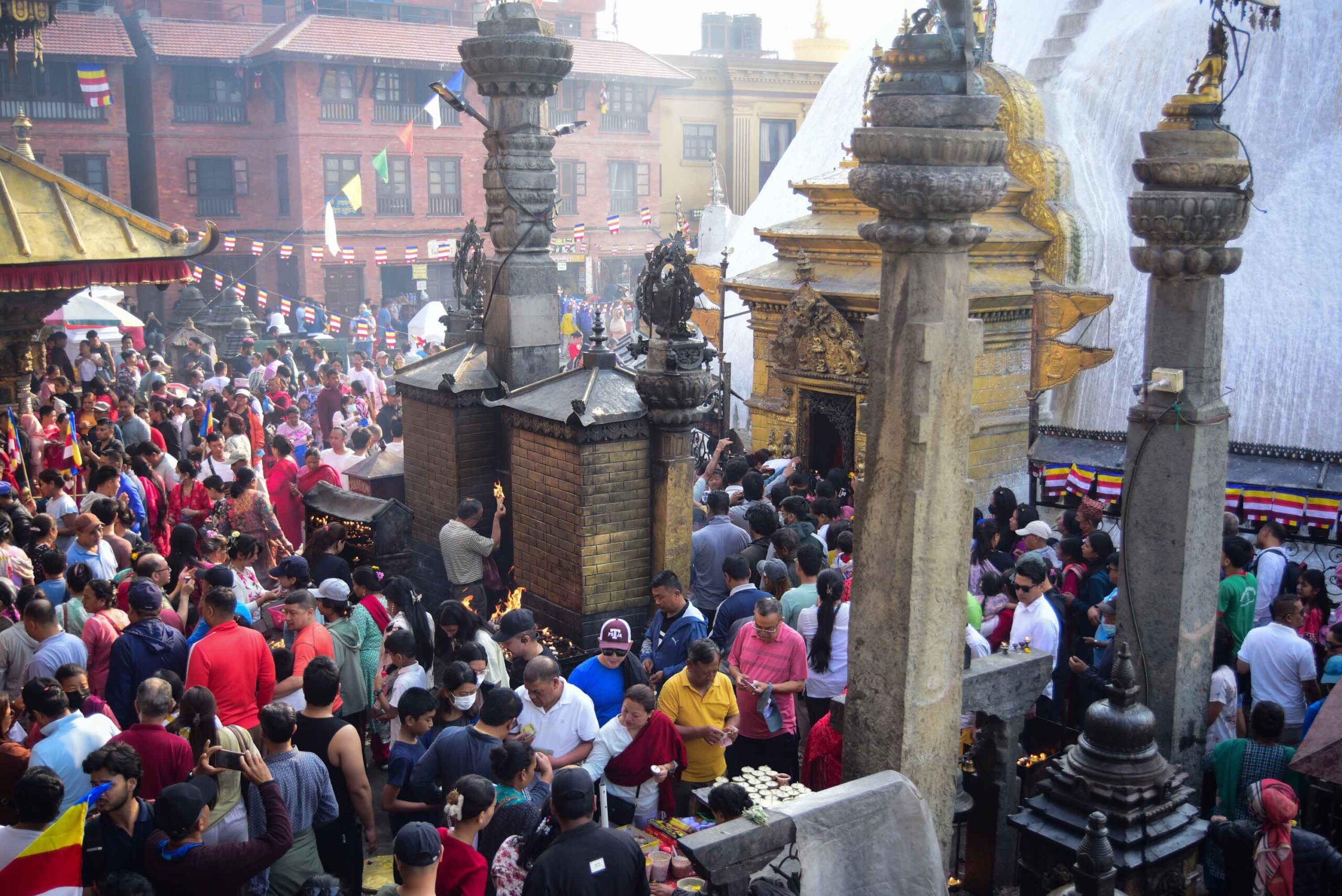
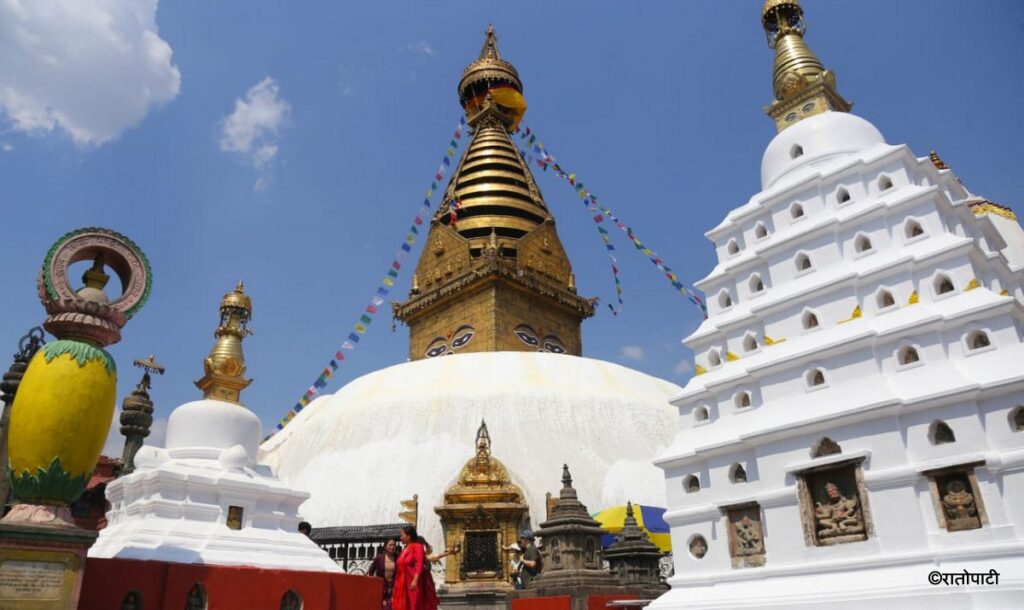
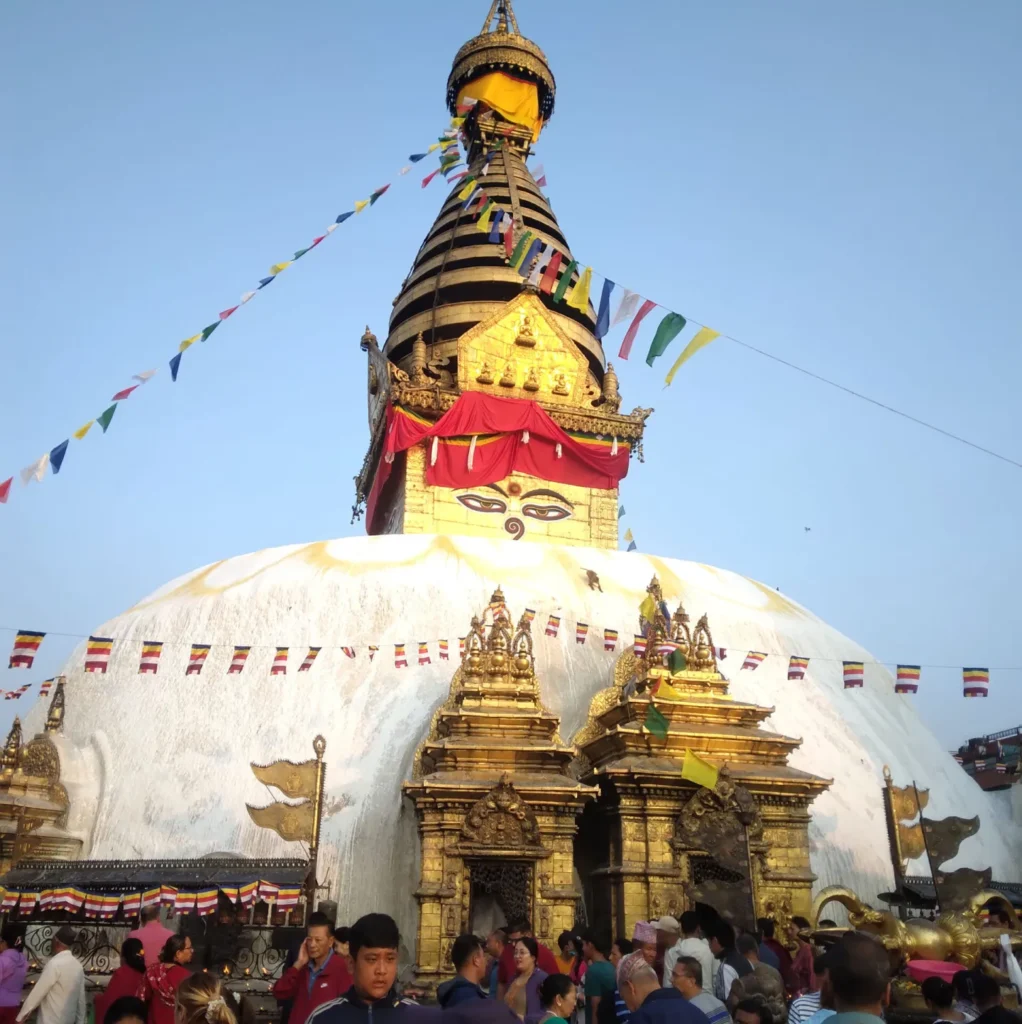
Swayambhunath, a UNESCO World Heritage Site, saw a large turnout of Buddhist devotees and the general public from early morning. On the special occasion of Buddha Jayanti, the Buddha temple located at the heart of the Swayambhu Mahachaitya complex is hosting special puja and offerings.
According to the Swayambhu Management and Conservation Committee, senior government officials, renowned Buddhist monks, diplomats, and distinguished guests from various countries will participate in the ceremonial offerings and rituals at Swayambhunath today. These events highlight the global recognition and spiritual importance of Buddha Jayanti in Nepal’s religious and cultural landscape.
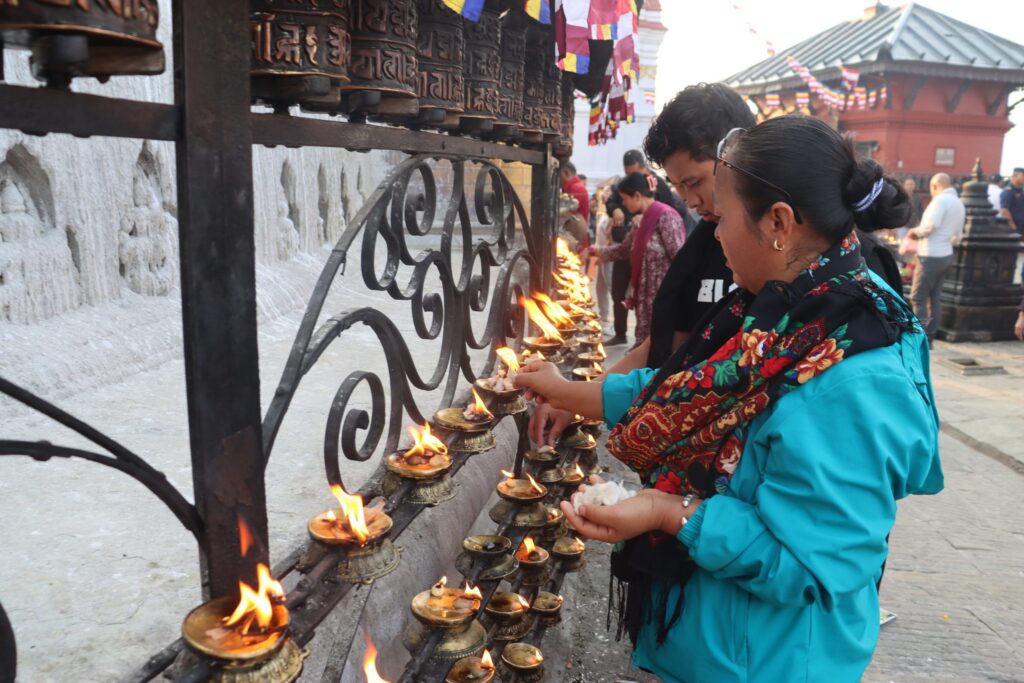
Buddhist devotees are seen lighting butter lamps, spinning prayer wheels, and chanting sacred mantras while circumambulating the stupa in clockwise motion, symbolizing respect and spiritual merit. The entire Swayambhu area has been decorated with colorful prayer flags, ceremonial canopies, and traditional Buddhist symbols in celebration of the event.
A key highlight of the celebration is the display of the Astudhatu (relics of Buddha) for public viewing and worship at Anandakuti Vihar, located within the Swayambhunath complex. Bhikshu Dharmamurti, the chairperson of the Swayambhu Management and Conservation Committee, informed that this sacred relic is displayed for public darshan only once a year on the occasion of Buddha Jayanti, attracting hundreds of spiritual seekers and pilgrims.
The afternoon will feature a special public Buddhist gathering (Bauddha Sabha), where religious leaders and dignitaries will speak on the teachings of Buddha and his message of peace, compassion, and non-violence. Cultural programs and performances showcasing Buddhist values and Nepal’s heritage are also scheduled.
In addition to worship and spiritual events, humanitarian activities like blood donation campaigns and the distribution of prasad (blessed offerings) are being organized in the Swayambhu area. These events aim to reinforce Buddha’s philosophy of compassion and service to others.
Celebrations are not limited to Kathmandu. In Lumbini, Buddha’s birthplace, thousands of devotees and visitors from around the world are attending spiritual discourses, peace rallies, and candle lighting events. The presence of international Buddhist monks and followers from countries like Sri Lanka, Thailand, Myanmar, Japan, and Tibet reflects the global nature of Buddha’s teachings.
Buddha Jayanti, also known as Baisakh Purnima, commemorates the three major events of Buddha’s life – his birth, enlightenment, and Parinirvana (passing away) – all of which are believed to have occurred on the same full moon day. As such, this day holds profound spiritual significance for Buddhists worldwide.
This year’s Buddha Jayanti celebrations also come at a time when Nepal is seeking to promote its Buddhist heritage as part of spiritual tourism.
With sites like Lumbini, Swayambhunath, Boudhanath, and others attracting pilgrims from across the globe, events like Buddha Jayanti play a crucial role in highlighting Nepal as the spiritual homeland of the Buddha. Security arrangements, crowd management, and cleanliness have been given priority at the celebration sites.
Volunteers and local youth groups are working closely with authorities to ensure the safe and smooth flow of devotees throughout the day. As Nepal marks this sacred occasion with spiritual fervor and cultural pride, Buddha Jayanti serves as a reminder of Nepal’s unique position in the global spiritual map, as the land of peace, tolerance, and enlightenment.