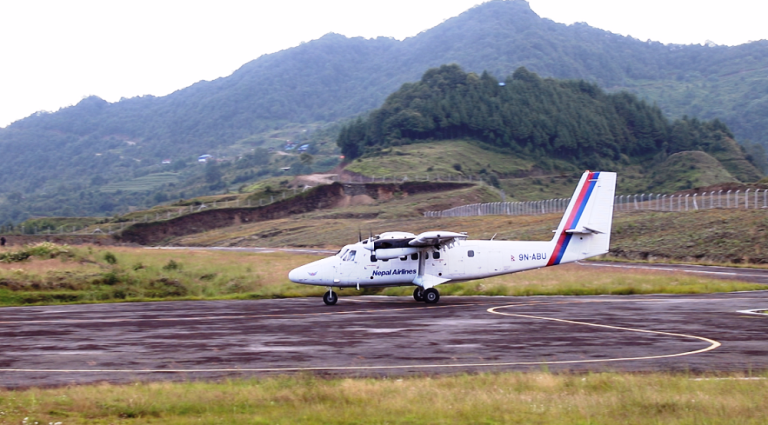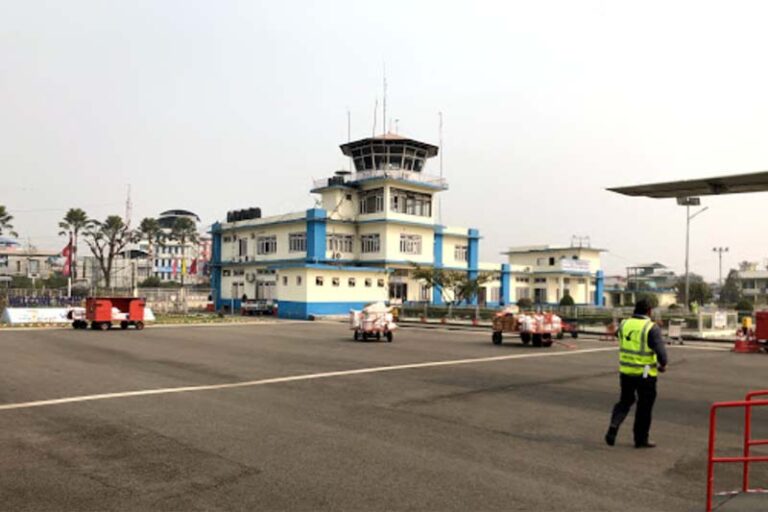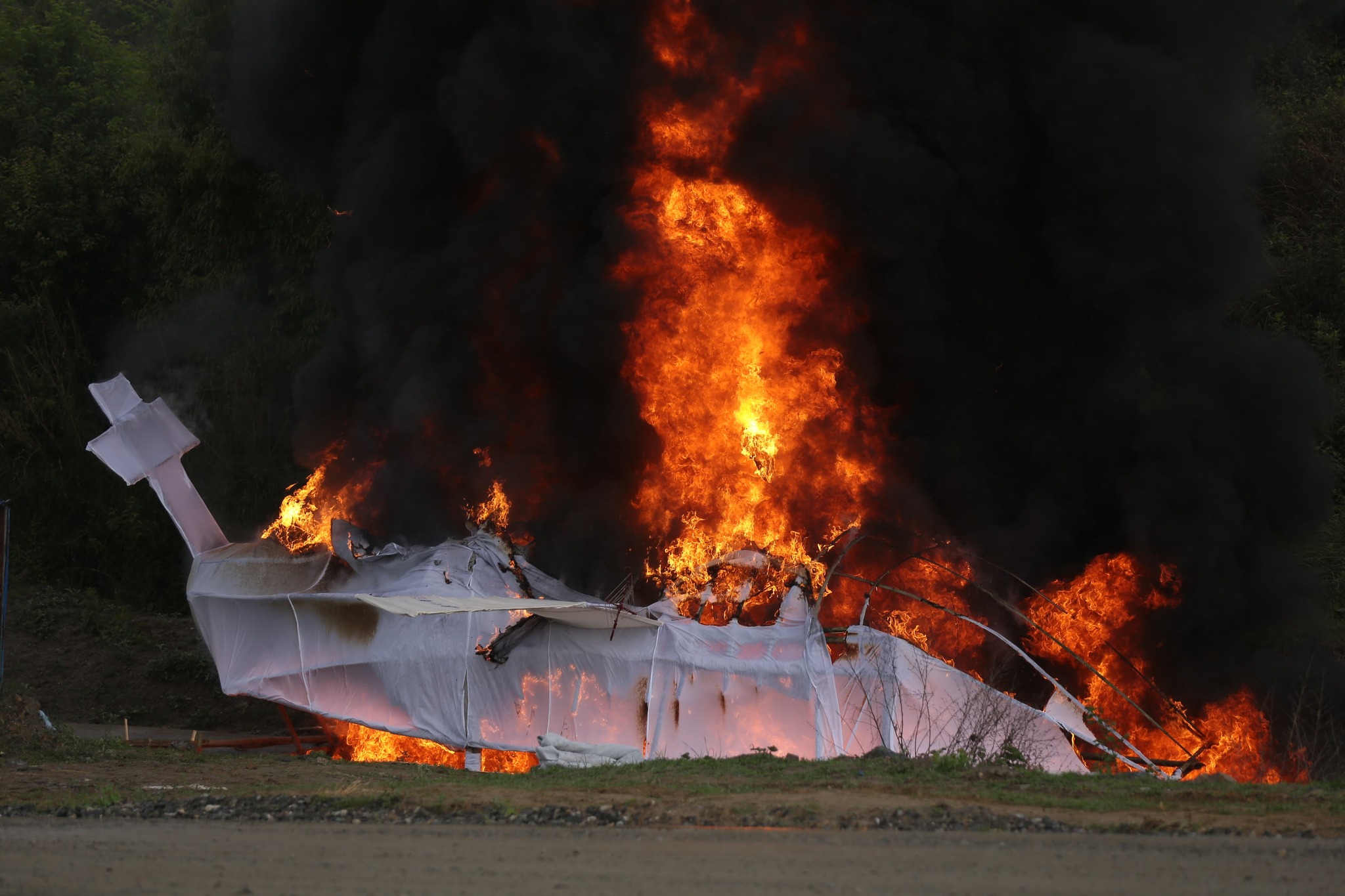
A full-scale emergency rescue simulation was conducted today at Tribhuvan International Airport (TIA) to strengthen preparedness in the event of an aircraft accident. The exercise, carried out in line with international aviation standards, aimed to improve coordination, response efficiency, and readiness among agencies responsible for handling aviation emergencies. Authorities believe such drills play a vital role in minimizing risks and ensuring effective disaster management during real incidents.
Regular Drill as per International Standards
According to Teknath Sitaula, the simulation was conducted in compliance with guidelines set by the International Civil Aviation Organization and the airport’s emergency response plan. He noted that full-scale emergency rescue exercises are conducted every two years as part of mandatory safety protocols. These drills are designed to evaluate preparedness levels and ensure all stakeholders can respond effectively in high-risk situations.
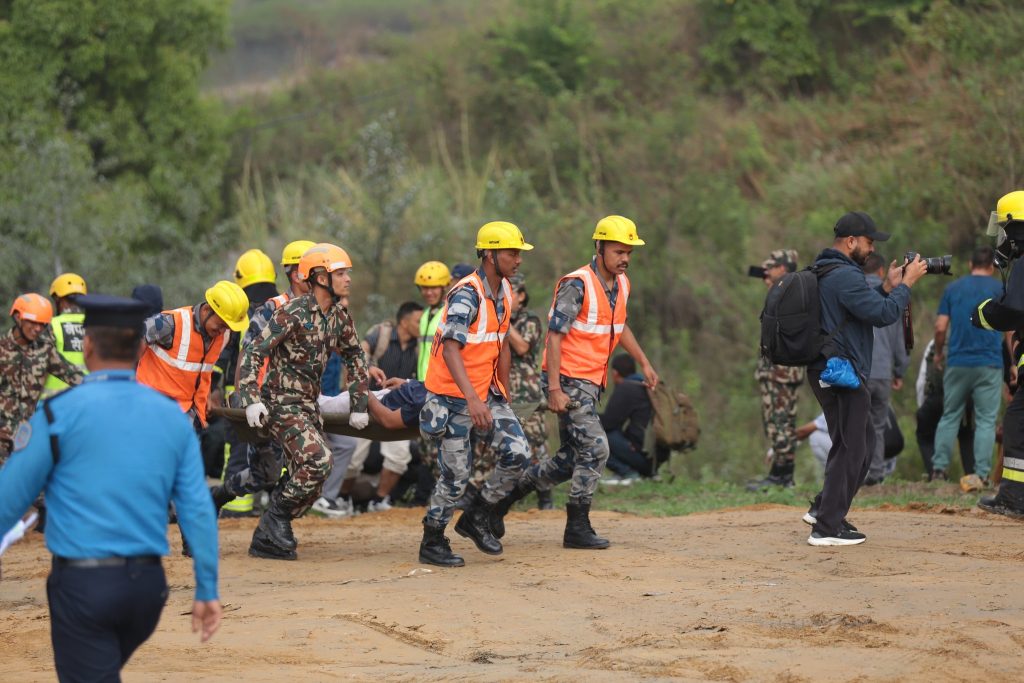
Realistic Accident Scenario Recreated with Rescue Drill
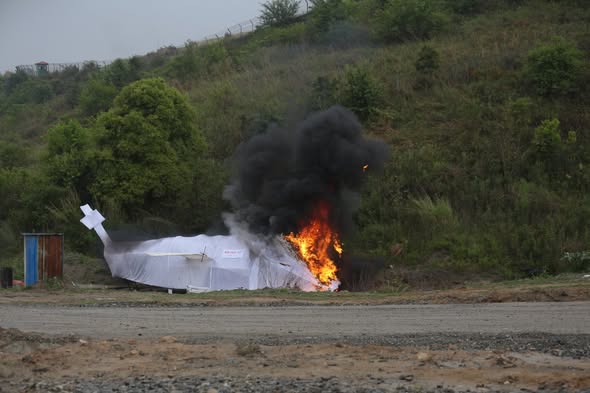
During the rescue drill exercise, a mock aircraft accident scenario was created to simulate real-life emergency conditions. The drill included coordinated actions such as fire suppression, rescue of injured passengers, provision of first aid, and safe evacuation to nearby hospitals. Teams also practiced incident site management, ensuring that the area was secured and operations were carried out systematically under simulated crisis conditions.
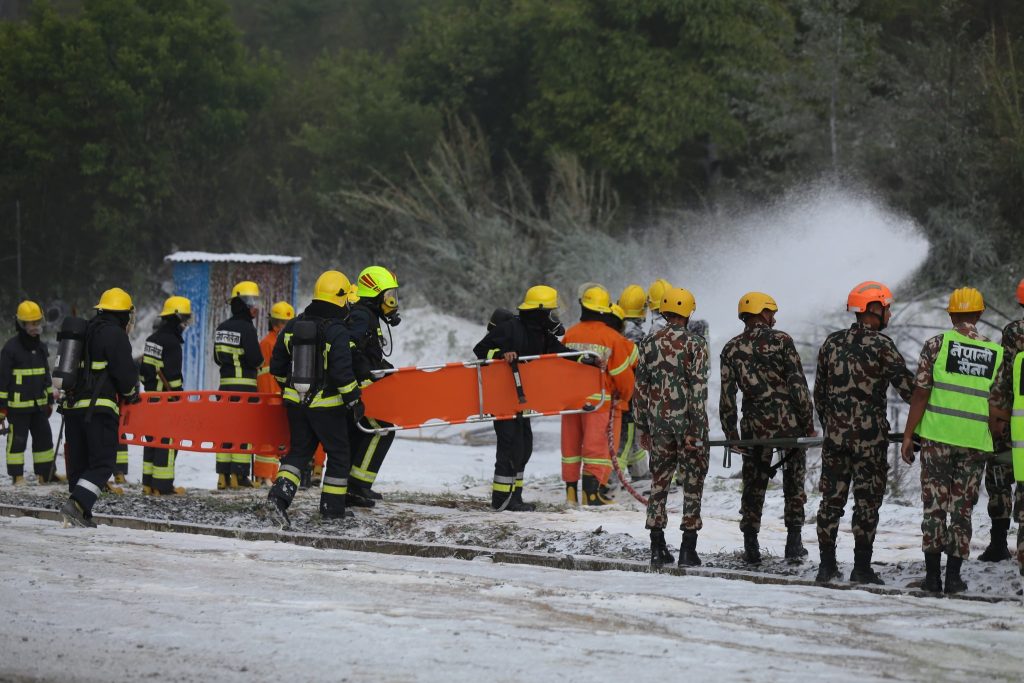
Multi-Agency Participation
The exercise saw active participation from multiple agencies, including the Nepal Army, Nepal Police, Armed Police Force, Civil Aviation Authority of Nepal, airport staff, fire brigade units, ambulance services, and other concerned stakeholders. Officials highlighted that collaboration among these agencies is crucial for effective disaster response, particularly in aviation emergencies where rapid and coordinated action is essential.
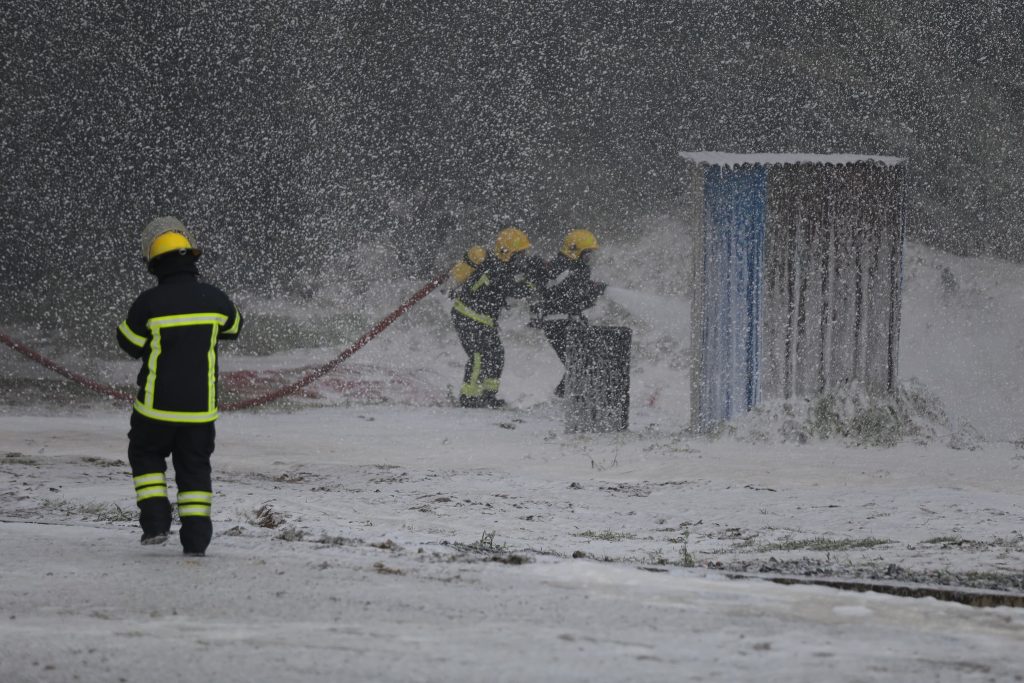
Identifying Gaps and Strengthening Response
General Manager Sitaula stated that such drills help identify potential weaknesses in emergency response systems and provide opportunities for improvement. He emphasized that in real-life accident scenarios, quick decision-making, efficient resource management, and seamless coordination among agencies are critical. “During an actual incident, every second counts. These exercises help us refine our preparedness and ensure that all teams can respond swiftly and effectively,” he said.
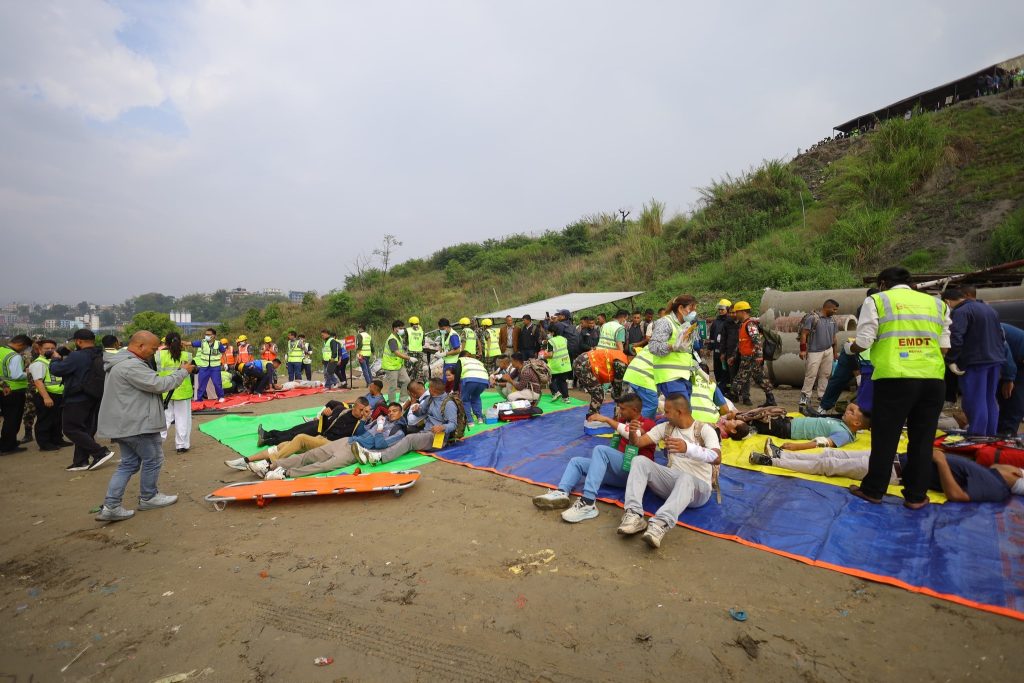
Commitment to Aviation Safety
The successful completion of the emergency drill underscores Nepal’s commitment to maintaining high aviation safety standards. Authorities believe that continuous training and simulation exercises are key to building a resilient and responsive aviation safety system. The airport administration reaffirmed that such preparedness initiatives will continue to be a priority to safeguard passengers, crew members, and airport infrastructure in the event of unforeseen emergencies.