Ethiopia has embarked on one of the most ambitious aviation infrastructure projects in its history. Flying between African cities currently often requires passengers to transit through major hubs outside the continent, such as London, Paris, or Dubai. A new $12.5 billion mega airport under construction in Ethiopia is expected to significantly change that pattern by strengthening direct connectivity within Africa.
Located nearly 30 miles southeast of Addis Ababa, construction began in January on what Ethiopian Prime Minister Abiy Ahmed Ali has described as “the largest aviation infrastructure project in Africa’s history.” The project marks a major step in reshaping the continent’s aviation landscape.

Bishoftu International Airport Planned as a Global-Scale Hub
The upcoming Bishoftu International Airport is scheduled to open in 2030. The airport will initially feature two runways and is designed to handle 60 million passengers annually, with long-term expansion plans pushing capacity to 110 million passengers. If achieved, this would place it ahead of current global leaders such as Atlanta’s Hartsfield-Jackson International Airport, which recorded around 106 million passengers in 2025.
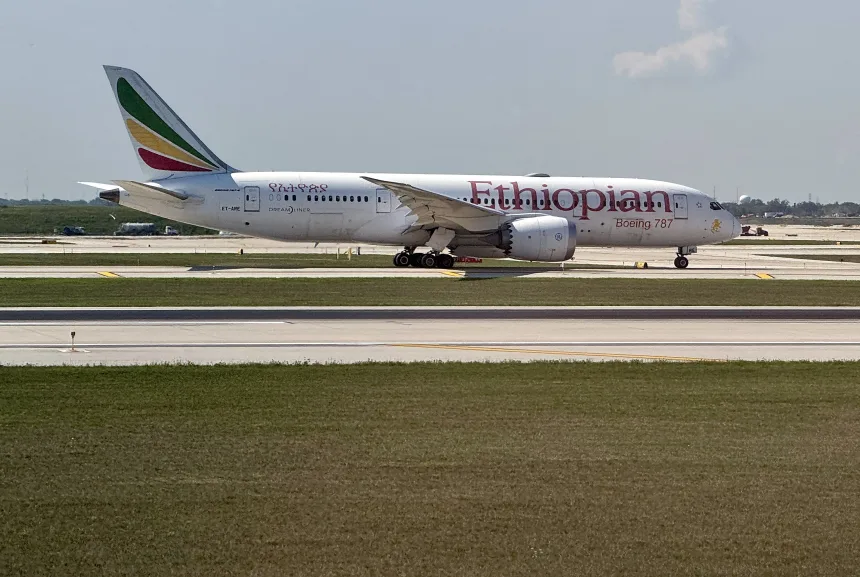
The project is being led by Ethiopian Airlines, Africa’s largest carrier in terms of fleet size, passenger traffic, and revenue. According to CEO Mesfin Tasew, the airline will contribute 30% equity investment toward the total cost, while the remaining $8 billion is still being negotiated with international partners, including the United States, China, and Italy.
Strengthening Addis Ababa’s Role as an Aviation Hub
Addis Ababa already serves as one of Africa’s key aviation hubs, but its current airport, Bole International Airport, is nearing full capacity with no room for expansion. The new airport is expected to primarily serve connecting passengers, positioning Ethiopian Airlines at the center of efforts to integrate African air travel. The expansion comes at a time when Africa’s aviation sector is among the fastest-growing globally. Industry experts believe the project could significantly enhance intra-African connectivity and reduce dependence on external transit hubs.
Boosting Cargo Capacity and Trade Integration
Beyond passenger travel, Bishoftu International Airport is also expected to play a major role in cargo transport. The facility is planned to handle up to 3.73 million tons of cargo annually, supporting regional and international trade flows. The development aligns with the objectives of the African Continental Free Trade Area (AfCFTA) by improving logistics infrastructure across the continent.
Landry Signé, executive director at Arizona State University’s Thunderbird School of Global Management and senior fellow at the Brookings Institution, noted that African airlines are currently experiencing strong freight demand growth of 15–16% annually, significantly higher than the global average of 5.5%. However, he cautioned that the success of the airport will depend heavily on supporting infrastructure, including roads, rail connectivity, power supply, and efficient customs systems.
Financing Challenges and Development Timeline
While the project has generated strong international interest, significant financial gaps remain. Around $8 billion is yet to be secured, and experts have raised concerns about whether funding timelines can be met. Signé warned that delays in financing could make the 2030 completion target for the first phase difficult to achieve, despite strong early momentum. He noted that while investment signals are encouraging, securing such a large amount within a short timeframe remains a major challenge.
World-Class Design Inspired by Ethiopia’s Landscape
The airport’s design is being led by internationally renowned firm Zaha Hadid Architects, known for landmark aviation projects such as Beijing Daxing Airport and Mumbai’s airport terminal. The design draws inspiration from Ethiopia’s Great Rift Valley. A central structural spine will run through the terminal, branching into four concourses featuring landscaped interiors that reflect the country’s cultural and ecological diversity.
The terminal has been conceptualized to create a unique passenger experience. According to ZHA aviation director Cristiano Ceccato, travelers will “feel and touch Africa” through immersive design elements that reflect Ethiopian identity.
Semi-open spaces and courtyards are planned to take advantage of Bishoftu’s mild climate, allowing passengers to experience partially outdoor airport environments, an uncommon feature in global aviation infrastructure. Sustainability features include locally sourced materials, solar energy integration, and a stormwater system designed to create new wetlands within the airport ecosystem.
Environmental Debate and Community Concerns
Despite its ambitious vision, the project has also faced criticism due to its social and environmental impact. Reports indicate that the construction has displaced more than 15,000 people across approximately 9,000 acres of agricultural land. Ethiopian Airlines has stated that it is allocating around $350 million for resettlement programs, including the construction of 1,400 homes equipped with electricity, water supply, schools, and healthcare facilities.

However, some affected residents have claimed they have not received compensation or adequate relocation support. Local authorities have denied these allegations. The situation highlights ongoing tensions between large-scale infrastructure development and community rights in rapidly growing economies.
A High-Stakes Vision for African Aviation
The Bishoftu International Airport project represents one of the most ambitious aviation developments in Africa’s history. If completed as planned, it could transform Ethiopia into a dominant global transit hub and significantly reshape air connectivity across the continent. However, its success will depend not only on financing and engineering execution but also on addressing environmental concerns, ensuring fair resettlement, and building the necessary supporting infrastructure.