The traditional cultural festival of Gaijatra has once again filled the streets of the capital with color, music, and laughter. On the occasion of this centuries-old celebration, various neighborhoods of Kathmandu saw lively cultural processions, particularly from the Newar community, commemorating loved ones lost in the past year.
Eight Days of Tradition and Remembrance
Observed annually from Bhadra Krishna Pratipada to Ashtami for eight consecutive days, Gaijatra is a blend of cultural pride, religious belief, and social satire. This year, too, Newar communities from different parts of the city organized processions in honor of their deceased relatives, adorning children or actual cows as symbols of the festival.
While many families dressed up young children to represent cows, believed to be divine companions for the souls of the departed, some brought real cows decorated with colorful cloths, flowers, and ornaments. However, actual cows in the parades were notably fewer compared to the number of children participants.
Neighborhoods Filled with Festive Energy
The streets of Asan, Kamalachi, Chhetrapati, Lagan, Ombahal, Teku, Mahabouddha, Naya Bazaar, Bag Bazaar, Dillibazar, Kamalpokhari, Naxal, Chabahil, Jayabageshwori, Bouddha, Chunikhel, Budhanilkantha, Tokha, Gokarna, Alapot, Sankhu, and Jorpati came alive with cultural displays.
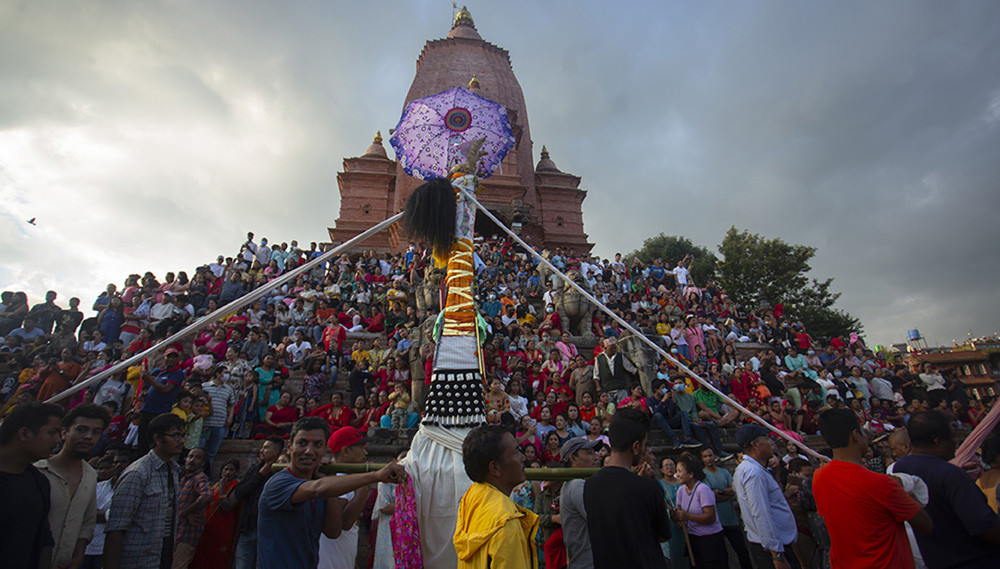
Crowds of onlookers lined both sides of the roads to witness the decorated participants, musical performances, and traditional dances. Many people captured the moments on their phones, while elders shared stories about the festival’s origins with younger generations.
Religious Belief and Symbolism
Gaijatra holds deep spiritual meaning. Families who have lost a loved one within the past year take part in processions with a cow or someone dressed as one, offering milk, fruits, bread, beaten rice, yogurt, grains, and monetary donations along the route.
According to tradition, this act ensures that the souls of the deceased can hold onto the tail of a cow to cross the mythical Vaitarani River, a symbolic passage in the afterlife. This belief is rooted in Hindu scriptures, which describe the cow as a sacred and guiding creature for the departed.
Historical Roots: A King’s Attempt to Ease Grief
The festival’s history dates back to the reign of King Pratap Malla in the 17th century. After the death of his son, Queen was overwhelmed with grief. To help her realize that sorrow was a universal human experience, the king ordered every household in the kingdom to bring out a cow procession in memory of their deceased family members and parade through the city.
When this alone did not lift her spirits, the king encouraged the inclusion of humorous performances and satirical acts, allowing people to mock societal flaws and authority without fear of punishment. This gave birth to Gaijatra’s unique tradition of combining mourning with comedy and social commentary.
A Tradition That Still Passes Through the Royal Palace
Since King Pratap Malla’s time, the processions have maintained a custom of passing through Hanuman Dhoka Palace (the royal courtyard) in Kathmandu Durbar Square. While Gaijatra is celebrated in various cities across Nepal, its grandeur and cultural richness are most evident in the Kathmandu Valley, where traditional music, dance, and elaborate costumes make it a feast for the senses.
Performances and Satire in Modern Times
In addition to the processions, Gaijatra is known for comic skits, satirical plays, and parody performances targeting social issues, political figures, and cultural trends. Performers often use wit and sarcasm to highlight societal flaws, echoing the festival’s centuries-old roots in free expression.
This year, several institutions, including Nepal Academy and the Cultural Corporation, hosted formal hilarious and satirical programs in open-air stages and auditoriums. Comedians, poets, and folk artists came together to entertain and provoke thought, keeping alive the spirit of humor amidst grief.
Music, Dance, and Community Spirit
The atmosphere of Gaijatra is unlike any other festival in Nepal. Drummers beat traditional instruments such as dhimey and nagara, flutists play soulful tunes, and dancers in colorful attire perform in front of cheering crowds. Young participants often wear masks and carry props, adding a theatrical touch to the parades.
For many, Gaijatra is not just about remembering the dead, it is also a celebration of life, resilience, and community unity. It reminds people that grief can be shared and lightened through collective expression, laughter, and art.
Gaijatra’s Relevance in Today’s Society
Even in modern Kathmandu, where urban lifestyles are rapidly changing, Gaijatra continues to hold an unshakable place in the cultural calendar. Its unique blend of religious rituals, street performances, and open social critique makes it one of Nepal’s most distinctive festivals.
By honoring the dead while embracing humor, Gaijatra delivers a timeless message: life and death are part of the same cycle, and laughter is a powerful way to cope with loss. As Kathmandu’s streets echoed with music and laughter today, the spirit of King Pratap Malla’s centuries-old idea lived on, uniting the city in shared remembrance and joy.