The Significance of Kheer in Nepali Culture
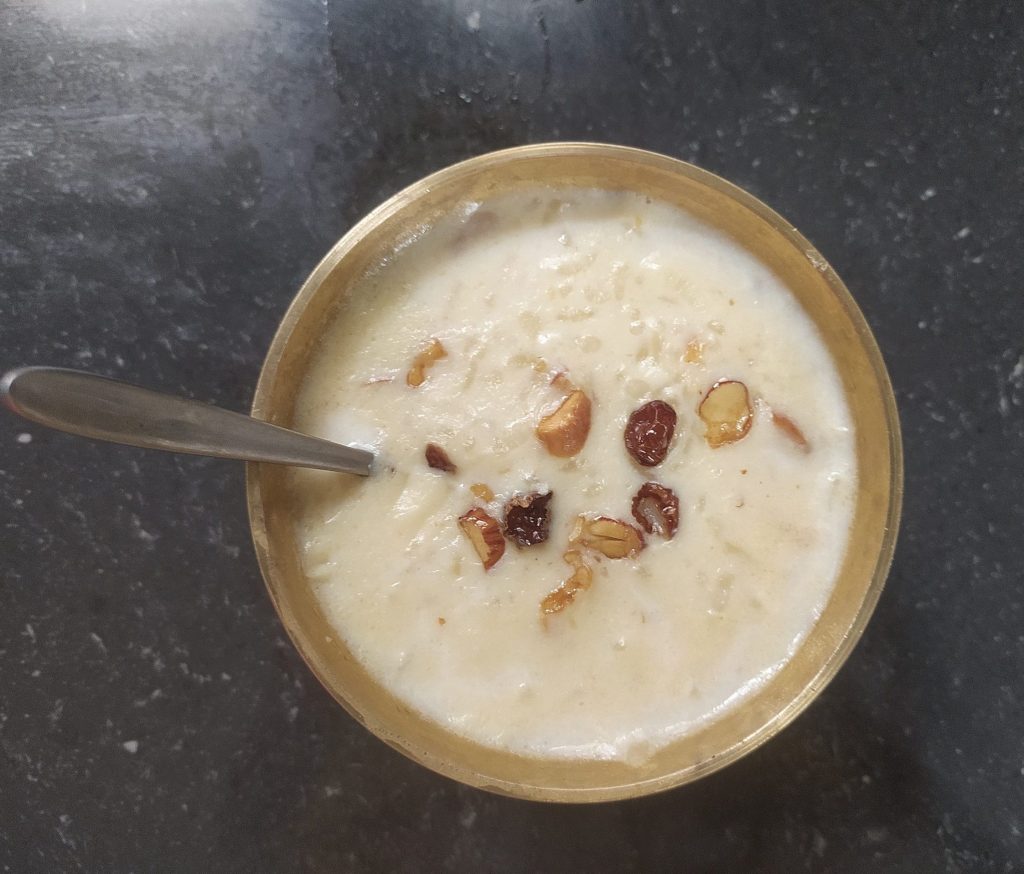
Kheer, also known as rice pudding, is more than just a dessert in Nepal. It holds a deep cultural and spiritual significance that stretches across generations and regions. Made by slow-cooking rice in milk and adding sugar, cardamom, raisins, and nuts, Kheer is regarded as a pure and holy food. It is widely served during religious rituals, family ceremonies, and social gatherings. Whether it is a wedding, a birthday celebration, or even a funeral, Kheer plays a role as a food of unity, sanctity, and tradition.
In Nepalese households, Kheer symbolizes purity and gratitude. Its simplicity represents humility, while its sweetness brings people together. It is usually served as a dessert or side dish, often accompanied by puri (fried bread) or sel roti (sweet rice bread). Kheer’s presence in Nepalese cuisine is not just culinary, it is ceremonial.
Shrawan 15: A Day to Celebrate the Fruits of Labor
Every year, on the 15th of Shrawan (the fourth month in the Nepali calendar), people across Nepal come together to celebrate Kheer Khane Din, a day dedicated to eating rice pudding. On this day, families prepare and share this beloved dish to mark the end of the strenuous rice planting season. The timing is significant: Ashadh and Shrawan are the peak months for rice cultivation in Nepal. The fields are green, the hard work of sowing is done, and farmers take a break to celebrate their progress and offer gratitude.
Kheer Khane Din serves as a joyful moment of rest and reflection, especially for those in the agricultural sector. After weeks of working under monsoon rains and muddy fields, farmers finally pause and honor their efforts by preparing rice pudding. It becomes a communal celebration where even city dwellers reconnect with their rural roots.
Historical and Spiritual Roots
Historically, Shrawan 15 was seen as a symbolic midpoint in the monsoon season. During the agrarian era, this day was not only a time of culinary joy but also one of spiritual observance. Farmers would offer Kheer as Prasad (holy offering) to deities, especially to goddess Annapurna, the goddess of food and nourishment. They prayed for a good harvest, favorable weather, and protection of their crops.
Some also associate this day with Lord Shiva, as the month of Shrawan is considered holy in the Shaiva tradition. Devotees visit temples, especially Shiva temples, and observe fasts on Mondays throughout the month. On Shrawan 15, after fasting and rituals, devotees would break their fast with rice pudding, adding to its sacredness.
A Festival of Togetherness and Gratitude
The beauty of Kheer Khane Din lies in its inclusivity. It is not limited to any caste, region, or economic class. From rural farmers to urban professionals, everyone marks the day in their own way. Families gather to prepare Kheer, neighbors exchange bowls of the sweet dish, and children look forward to it like a festival.
In rural communities, people sometimes organize feasts, bringing together neighbors and relatives. Women sing traditional folk songs while preparing Kheer, and elders share stories of how the tradition was observed during their youth. In cities, offices and schools sometimes arrange Kheer for lunch, creating a sense of shared cultural memory even in the hustle of urban life.
Connecting Food with Agriculture and Identity
Kheer Khane Din is a reflection of Nepal’s deep agrarian roots. Despite modernization and urbanization, agriculture still forms the backbone of Nepal’s economy and identity. The day serves as a gentle reminder of the hard work of farmers and the importance of food security. It encourages people to respect the land, value the labor behind every grain of rice, and celebrate self-reliance in food production.
Moreover, by eating Kheer on this specific day, Nepalis acknowledge the role of rice—not only as a staple food but as a cultural emblem. Rice farming is not just about production; it’s about harmony with nature, the rhythm of seasons, and community cooperation.
A Modern Revival of Tradition
In recent years, Kheer Khane Din has seen a revival, especially among the younger generation. Social media platforms are filled with photos of homemade Kheer, with captions celebrating tradition and heritage. Some restaurants and food outlets offer special Kheer menus on this day, adding a commercial but festive touch to the occasion. In schools, teachers often explain the cultural significance to students, helping to pass the tradition to the next generation.
This renewed interest is heartening, as it keeps alive a unique tradition that blends food, faith, and farming. Kheer Khane Din becomes a modern celebration of ancient values: gratitude, simplicity, and togetherness.