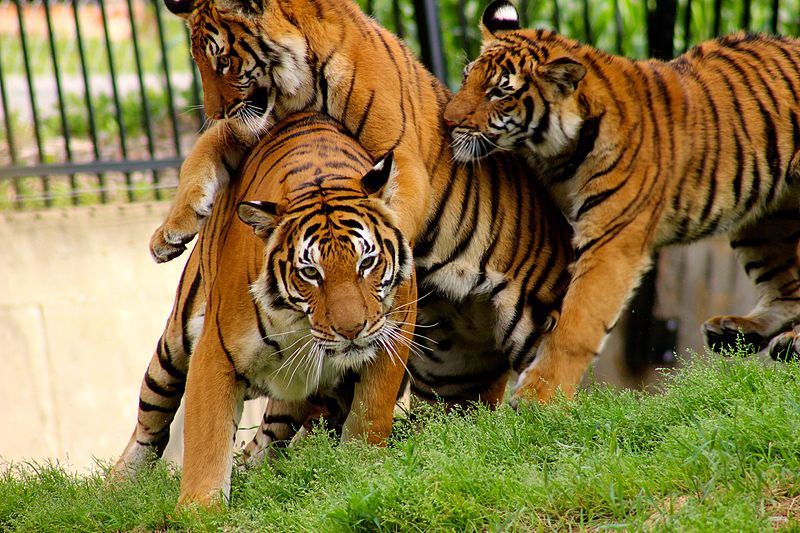
In a groundbreaking move aimed at enhancing wildlife conservation and monitoring, Shuklaphanta National Park in far-western Nepal has initiated a tiger naming campaign, assigning unique names to Bengal tigers based on their physical patterns, territories, and behaviors. This innovative effort has been jointly carried out by the National Trust for Nature Conservation (NTNC) and park authorities to ensure better identification, tracking, and management of individual tigers.
According to Laxmi Joshi, head of the Shuklaphanta Conservation Program under NTNC, the decision to name the tigers was taken to make it easier to distinguish one from another, especially in conflict situations. “Each tiger has unique stripe patterns, and through naming, we can avoid confusion when tigers are caught on camera traps, making rescue and conflict management much smoother,” Joshi said.
40 Tigers Identified Through Camera Trap Monitoring
A total of 40 Bengal tigers captured through camera traps during routine monitoring and population surveys have been individually named and their photographs archived in the park’s library. This visual catalog allows conservationists to pinpoint where each tiger resides and how they move across the landscape. According to Joshi, “Naming allows us to monitor tiger activity, understand their habits, and gather data on their health and habitat, which ultimately improves conservation planning and decision-making.”
The naming system further enhances the ability to track tigers on a map, enabling swift interventions against threats such as poaching and habitat encroachment. By understanding their reproductive cycles, dietary preferences, and social behaviors, researchers can now generate more accurate conservation strategies.
Previously, tigers had to be identified using general signs or codes, which often led to uncertainty in field operations. Naming was adopted to eliminate such difficulties and to introduce a more systematic approach.
Symbolic Names Reflect Nature and Culture
The names given to the tigers, both male and female, are inspired by natural features, behavioral traits, and cultural symbolism. Among the male tigers, names like Lauripate, Madhuramale, Kalikiche, Ghumante, Rajkumar, Chure King, Baba Tal, Mahakal, Shaktiman, Captain, Chakramukhi, Siddhababa, Arjuni King, Ankushe, Sikari, Trinetra, Laghupuchhre, Dashgaja, Ganesh, Laxman, and Maharaja stand out.
Similarly, the female tigers have been given names such as Tara Tal, Trishuldhari, Batuli Lampuchhre, Mangleshwari, Trinetri, Simpa, Barkaula, Laghu Dharke, Trirekha, Panjika, Baluwa Tal, Shanti, Shukla, Karaiya, Gajalu, Chaudhar, Sidharni, and Rajkumari. These names not only help in identification but also reflect the tiger’s home range, physical appearance, or the area where it was first documented.
Population on the Rise: A Conservation Success
Over the course of a year, the number of tigers in the park has increased from 36 to 43, with 21 males and 19 females, marking a positive trend in tiger conservation. According to Chandrashekhar Chaudhary, Senior Conservation Officer at Shuklaphanta, the rise in tiger population is largely due to adequate prey availability, habitat improvements, and strong anti-poaching measures.
“Tigers need about 65 square kilometers of territory to roam,” Chaudhary stated, highlighting the spatial demands of this apex predator. Despite being one of Nepal’s smaller protected areas, Shuklaphanta stands out as a habitat with high tiger density.
Long-Term Protection and Legal Safeguards
The Royal Bengal Tiger is listed as a protected species under Schedule 1 of Nepal’s National Parks and Wildlife Conservation Act, 2029 (1973), recognizing it as one of the most charismatic and endangered species globally. Since 1974, Shuklaphanta National Park has remained a priority site for tiger conservation, with annual monitoring officially starting in 1999.
The park spans 305 square kilometers, providing critical habitat not only for tigers but also for other flagship species like the swamp deer (barasingha), Asian elephants, one-horned rhinoceros, Hispid hare, python, gharial, blackbuck, and over 464 bird species.
More than 52% of the park is covered by dense sal forests, while 19% comprises grasslands, ideal conditions for sustaining prey species and providing tigers the shelter and seclusion they need to thrive.
Buffer Zones and Community Involvement
To enhance the effectiveness of wildlife conservation and reduce human-wildlife conflict, a buffer zone of 243.5 square kilometers surrounding the park has been designated as a community-managed area. This inclusion of local stakeholders is a key strategy in Nepal’s conservation model, allowing communities to benefit from conservation through eco-tourism and livelihood programs.
The naming of tigers represents a significant advancement in wildlife monitoring, enabling rangers and researchers to approach conservation with greater clarity and precision. It also serves an educational purpose by allowing the public and local communities to form personal connections with individual animals, fostering greater appreciation and commitment toward tiger conservation.
As the tiger population continues to grow and the landscape management improves, Shuklaphanta National Park sets a remarkable example of how scientific methods, community involvement, and strategic planning can together ensure a sustainable future for one of the world’s most iconic wild species.