The newly operational Gongabu Bus Park has improved public transport management in Kathmandu, but the absence of a separate terminal for tourist buses continues to create persistent challenges for both domestic and international travelers.
Despite tourism being recognized as a key pillar of Nepal’s economy, the capital city still lacks a dedicated and well-organized tourist bus park. As a result, thousands of tourists traveling to major destinations such as Pokhara, Chitwan, Lumbini, and Janakpur are forced to rely on unmanaged roadside boarding points, particularly around Sohrakhutte.

Sohrakhutte Becomes Unofficial Transit Hub
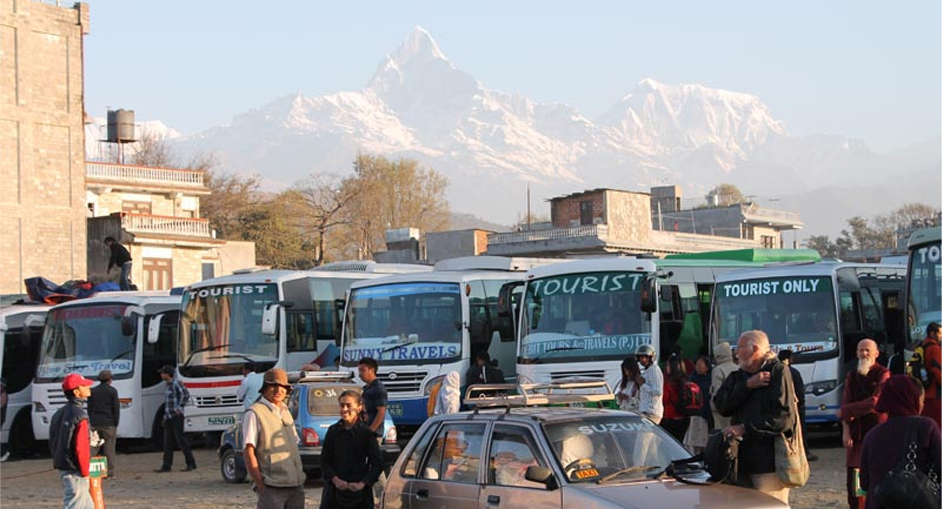
Since 2018, tourist buses that previously operated from Kantipath for nearly three decades have shifted their operations to Sohrakhutte Road. In the absence of a designated terminal, this area has effectively become an unofficial hub for tourist transport services.
Every day, buses pick up and drop off passengers along the roadside between 5:00 am and 7:00 pm. During nighttime, the same vehicles are parked in nearby garages, often under informal arrangements and additional fees. This unstructured system has contributed to congestion, safety concerns, and inconvenience for travelers.
Stakeholders Express Longstanding Frustration
Bhishma Neupane, President of the Tourist Bus Association of Nepal (TBAN), said that the association has repeatedly urged concerned authorities to establish a separate tourist bus park, but the demand has not been addressed effectively.
According to him, TBAN has already proposed several potential locations for the development of a dedicated terminal. However, the lack of institutional interest and coordination has delayed implementation.
“We have informed relevant authorities multiple times about possible sites for a tourist bus park, but there has been no serious progress,” Neupane stated, adding that the absence of proper infrastructure has directly affected service quality.
Policy Confusion Between Transport and Tourism Laws
The issue has also been linked to inconsistencies between Nepal’s Transport Act and Tourism Act, which have created regulatory ambiguity regarding the operation of tourist buses. Stakeholders argue that unclear jurisdiction over tourist transport services has prevented the development of a unified policy framework. As a result, both infrastructure planning and operational regulation have remained fragmented.
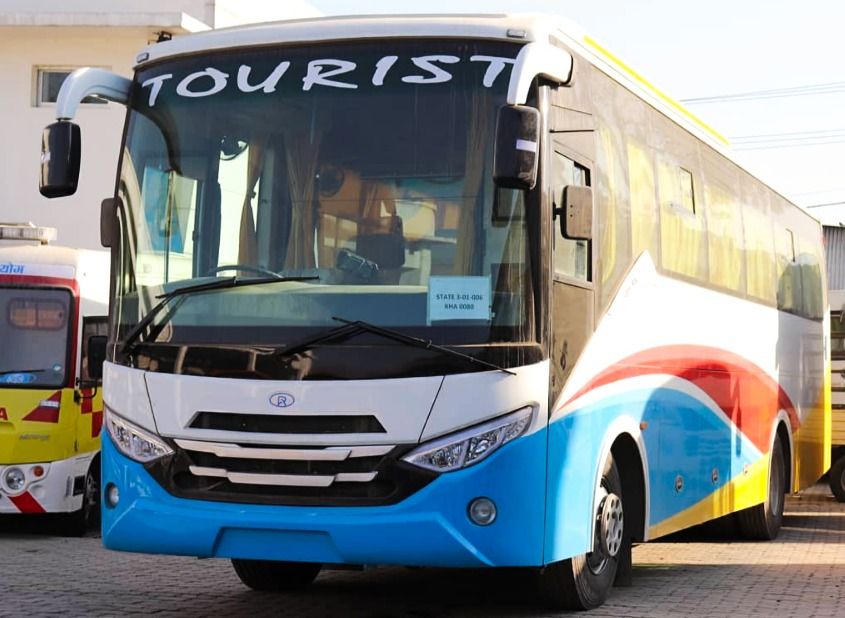
Neupane further stressed that the lack of a dedicated “pick and drop” system for tourist transport has caused inconvenience not only to operators but also to passengers who expect structured and reliable services.
Negative Impact on Tourism Experience
Tourism entrepreneurs say that the current situation leaves a poor first impression on visitors arriving in Kathmandu. Haphazard parking, roadside ticketing counters, and unmanaged boarding points undermine Nepal’s image as a tourism-friendly destination.
Kumar Mani Thapaliya, Chair of the Nepal Association of Tours and Travel Agents (NATTA), said that despite continuous advocacy for a modern and well-equipped tourist bus park, the issue has remained unresolved for years.
He emphasized that transport infrastructure plays a crucial role in shaping tourist satisfaction and overall destination branding. According to him, the lack of systematic facilities weakens Nepal’s competitiveness in the regional tourism market.
Growing Passenger Volume Without Infrastructure Upgrade
At present, approximately 100 tourist buses operate daily from Kathmandu, carrying around 3,000 to 4,000 passengers to major destinations including Pokhara, Sauraha in Chitwan, Lumbini, and Janakpur. However, this increasing flow of passengers has not been matched by corresponding infrastructure development. The mismatch has intensified pressure on urban roads, especially in Sohrakhutte, where unmanaged bus operations frequently cause traffic congestion.
Municipal Efforts and Ongoing Gaps
The Kathmandu Metropolitan City has recently initiated steps to regulate public transportation from the New Bus Park area. However, tourism transport operators argue that these measures do not specifically address the needs of tourist buses. Industry stakeholders maintain that tourism transport requires separate planning due to its service-oriented nature, international visibility, and seasonal passenger flow patterns.

Call for Immediate Infrastructure Development
Tourism entrepreneurs and transport operators have jointly stressed the need for a secure, modern, and dedicated tourist bus park in Kathmandu. They argue that such infrastructure is essential for ensuring organized operations, improved safety, and enhanced visitor experience. They also believe that establishing a centralized tourist transport terminal would help reduce urban congestion and improve the overall efficiency of travel services.
While Nepal continues to promote tourism as a major economic driver, the absence of essential supporting infrastructure, such as a dedicated tourist bus park in the capital, highlights a critical gap in implementation. Stakeholders warn that without urgent attention, operational inefficiencies and negative visitor experiences could undermine long-term tourism growth potential.