Mata Tirtha Aausi, one of the most revered Hindu festivals in Nepal, stands as a profound expression of love, gratitude, and spiritual reverence towards mothers. Observed on the new moon day (Aausi) of the Nepali month of Baisakh, the festival is dedicated to honoring both living and departed mothers, blending devotion, tradition, and cultural identity into a deeply meaningful occasion. It reflects the central role of motherhood in Nepalese society, where mothers are regarded as the foundation of family, values, and life itself.
Meaning and Spiritual Essence of the Festival
The term “Mata Tirtha Aausi” carries a sacred meaning; “Mata” refers to mother, “Tirtha” signifies a holy pilgrimage site, and “Aausi” denotes the new moon day. Together, the phrase represents a spiritual journey of reverence towards mothers. On this day, devotees express gratitude through prayers, rituals, and remembrance, seeking blessings for their living mothers and peace for those who have passed away.

Spiritually, the festival underscores the unconditional love, sacrifice, and nurturing role of mothers. It is considered a day of reflection, where children acknowledge the lifelong care and emotional strength provided by their mothers. Culturally, it reinforces Nepal’s deeply rooted traditions that place motherhood at the heart of family and society, preserving values of respect and gratitude across generations.
Pilgrimage to Mata Tirtha Pond
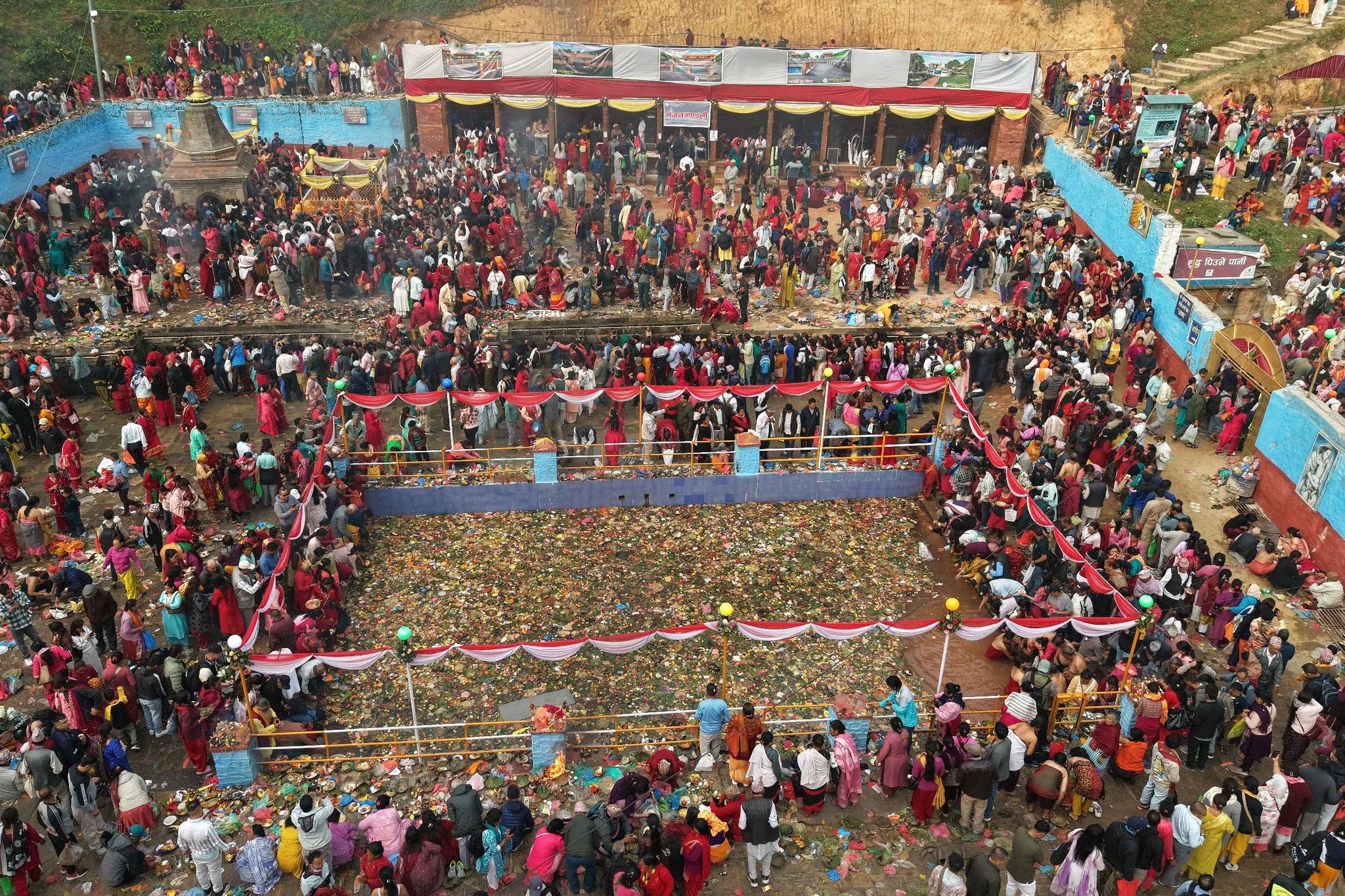
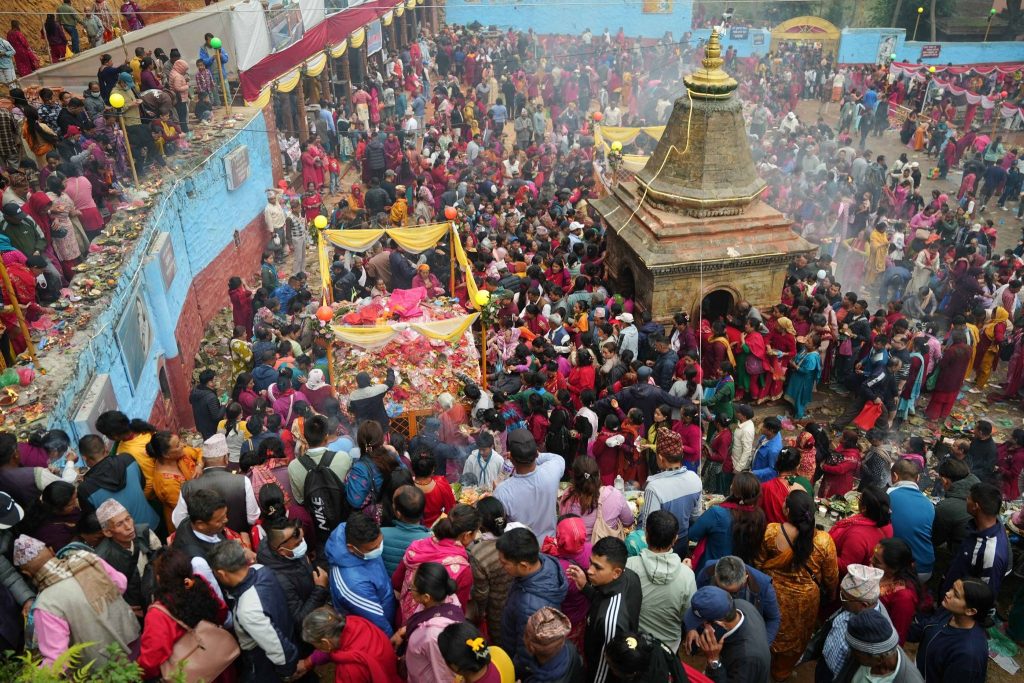
A major highlight of the festival is the pilgrimage to the sacred Mata Tirtha Pond, located in Chandragiri Municipality, southwest of Kathmandu. Thousands of devotees from across Nepal and abroad gather at this holy site to perform ritual baths, offer milk, water, and flowers, and conduct prayers dedicated to their mothers.
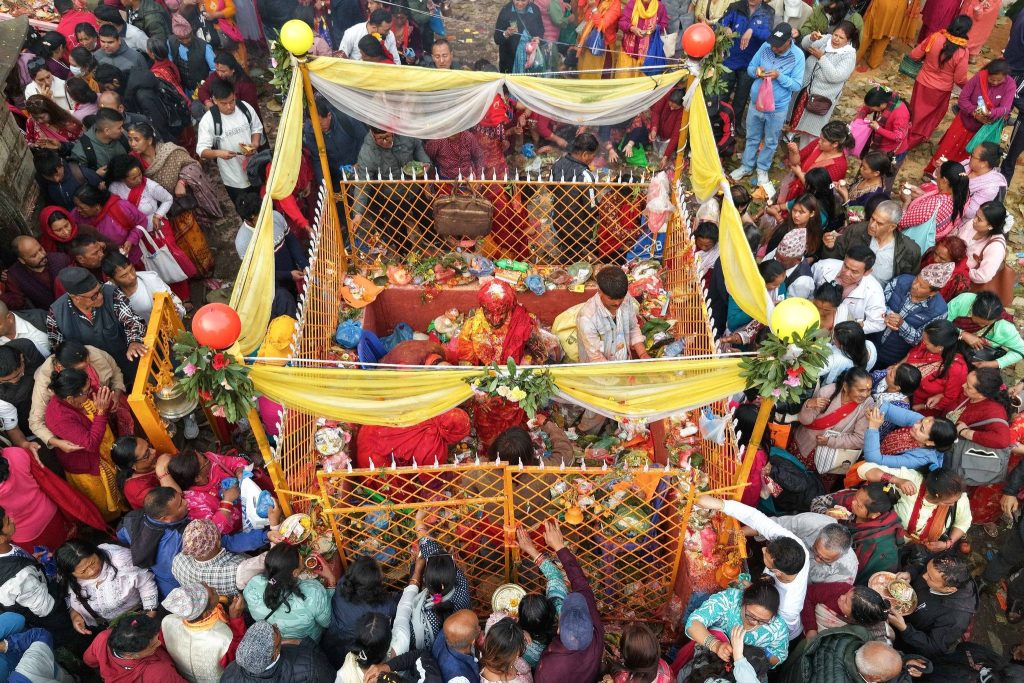
It is widely believed that performing rituals at Mata Tirtha Pond on this auspicious day brings peace to the souls of departed mothers and blessings to the devotees. The atmosphere transforms into a deeply spiritual setting, filled with chants, incense smoke, and devotional offerings, reflecting a powerful blend of faith and emotion.
Family Traditions and Acts of Love
Beyond the pilgrimage, Mata Tirtha Aausi is also celebrated within households across Nepal. Children honor their living mothers by offering sweets, flowers, new clothes, and thoughtful gifts as expressions of love and respect. Families often prepare special meals and spend quality time together, strengthening emotional bonds and creating cherished memories.
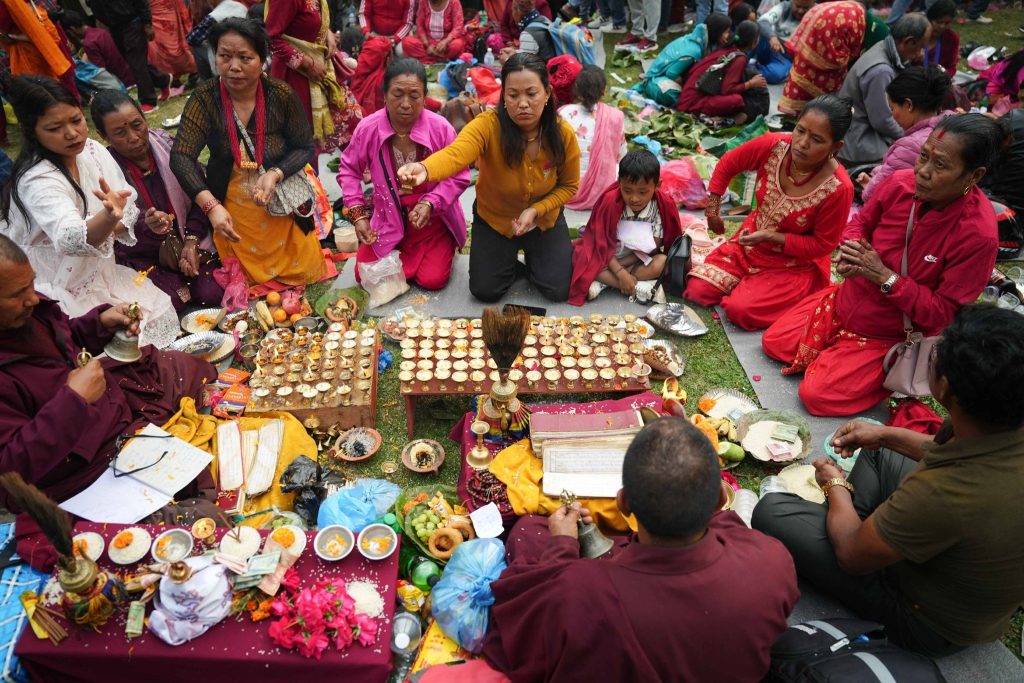
These home-based rituals highlight the festival’s emotional dimension, where gratitude is expressed through simple yet meaningful gestures. The day becomes an opportunity for families to reconnect, appreciate maternal care, and reaffirm the importance of familial unity in everyday life.
Mythological Belief and Sacred Origins
The origins of Mata Tirtha Aausi are deeply rooted in folklore. According to legend, a cowherd once witnessed a divine vision of his deceased mother in the waters of Mata Tirtha Pond while offering prayers. This miraculous experience led to the belief that the sacred site serves as a spiritual bridge between the living and departed mothers. Since then, devotees have believed that prayers and offerings made at the pond on this day help connect them spiritually with their mothers, offering peace, forgiveness, and divine blessings. This myth continues to inspire thousands of pilgrims each year to visit the site with devotion and emotional longing.
Modern Relevance and Cultural Impact
In modern times, Mata Tirtha Aausi continues to hold strong cultural relevance despite rapid social and lifestyle changes. The festival plays an important role in preserving family values, reinforcing gratitude, and maintaining Nepal’s cultural identity. It serves as a reminder of emotional bonds that remain timeless, even in an increasingly fast-paced world.
The festival has also contributed to religious and cultural tourism in Nepal, attracting not only devotees but also researchers, anthropologists, and international visitors interested in observing living traditions. The gathering at Mata Tirtha Pond provides a unique cultural experience that showcases Nepal’s spiritual heritage.

Additionally, the influx of pilgrims supports local economies by benefiting small businesses, vendors, and hospitality services around the pilgrimage area, promoting community-based tourism and local livelihoods.
A Timeless Celebration of Maternal Love
Mata Tirtha Aausi is more than a religious festival, it is a celebration of unconditional love, gratitude, and eternal connection between mothers and children. It bridges tradition and modernity, spirituality and emotion, past and present. As devotees across Nepal come together to honor their mothers, the festival continues to strengthen the cultural fabric of the nation while preserving the sacred values of respect, love, and remembrance that define Nepalese society.