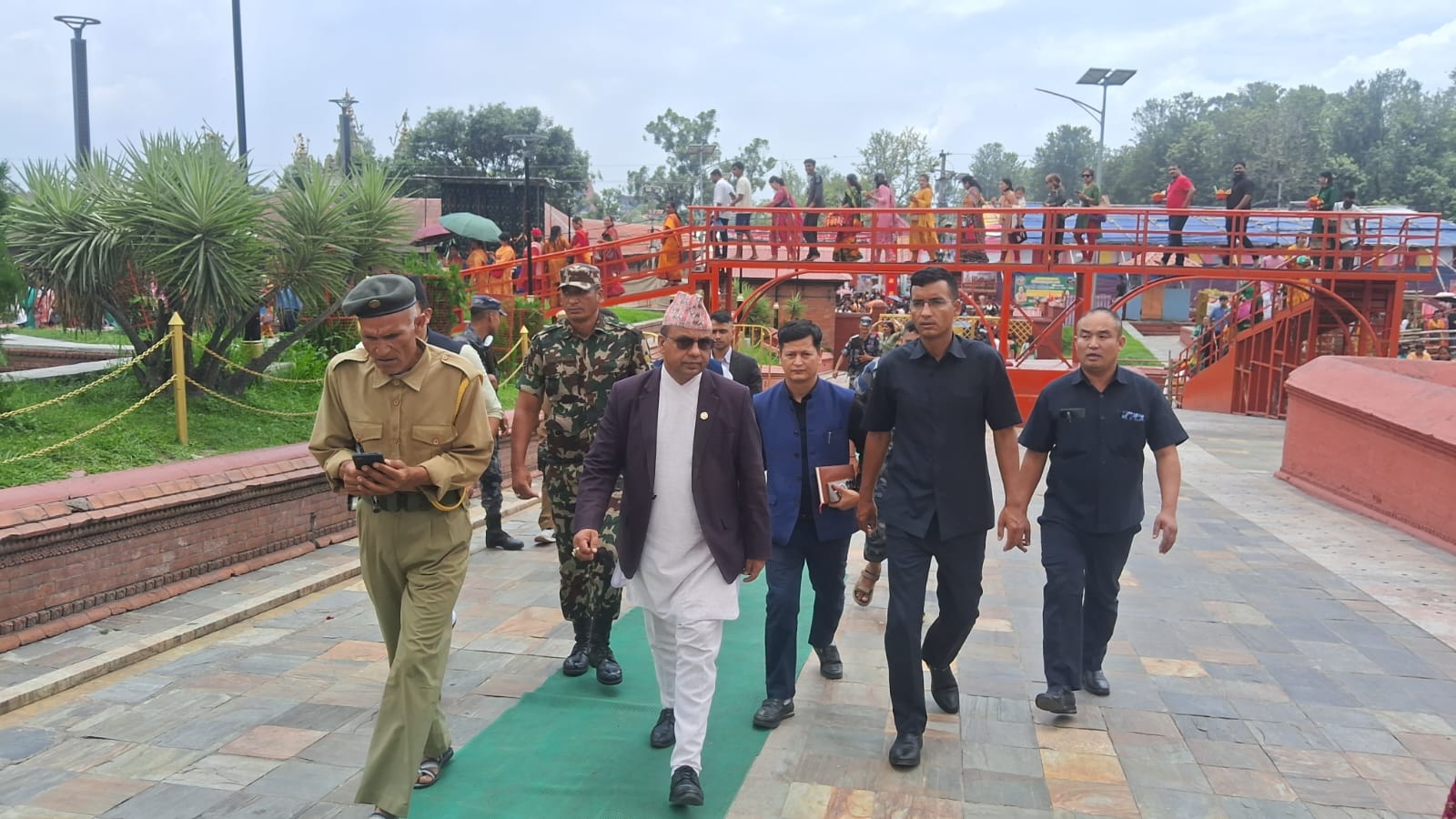
Pashupatinath, where the month of Shrawan holds deep religious significance for Hindus, particularly in the worship of Lord Shiva. Every Monday during this month, thousands of devotees gather at major Shiva temples across Nepal to offer prayers, perform rituals, and seek blessings. Among these, Pashupatinath Temple in Kathmandu stands as the most revered pilgrimage site, attracting massive crowds from early morning until late evening.
Minister Pandey Conducts Site Inspection
On the second Monday of Shrawan, Minister of Culture, Tourism and Civil Aviation, Mr. Badri Prasad Pandey, paid a special visit to the Pashupatinath area to observe the situation firsthand. Minister Pandey, who also serves as the Chairperson of the Pashupati Area Development Trust (PADT) Governing Council, was keen to assess whether pilgrims were receiving proper access to the temple and whether adequate safety and crowd management measures were in place.
Focus on Devotee Access and Safety
During the visit, Minister Pandey interacted with officials and staff members of the PADT, inquiring specifically about the arrangements made for devotees entering the main temple, also known as the Mool Mandir. He emphasized the importance of ensuring that devotees could enter the temple smoothly and safely, without unnecessary delays or discomfort.
He also reviewed the security provisions, crowd flow, and the overall cleanliness and spiritual atmosphere of the premises. In response, the Member Secretary of PADT, Mr. Subhash Chandra Joshi, assured the minister that they were continuously working to improve management and service quality during the Shrawan period.
Directives for Efficient Management
Minister Pandey issued clear instructions to PADT officials and staff to make arrangements that would allow pilgrims to easily and respectfully worship Lord Pashupatinath. He called for enhanced coordination between staff, volunteers, and security personnel to manage the flow of visitors efficiently while maintaining order and safety within the temple premises.
Early Temple Opening and Free Transportation Services
As part of the special Shrawan Monday arrangements, all four gates of the Pashupatinath Temple were opened as early as 3:00 AM, allowing devotees to enter the complex before sunrise. According to PADT Member Secretary Joshi, the Trust had also deployed four vehicles to transport pilgrims from different parts of the Ring Road (Chakrapath) directly to the temple. These transport services were provided free of cost throughout the day to facilitate easy access for elderly and long-distance travelers.
Devotion Unshaken by Rain
Despite intermittent rainfall throughout the day, common during the monsoon season in Nepal, devotees continued to arrive in large numbers. Clad in raincoats or holding umbrellas, worshippers lined up with patience and devotion, determined to offer their prayers to Lord Shiva. From early morning until evening, the temple grounds echoed with chants, bells, incense, and the spirit of devotion.
Over 150,000 Devotees Visited in a Single Day
According to PADT estimates shared by Member Secretary Joshi, approximately 150,000 devotees were able to enter the main temple and receive darshan of Lord Pashupatinath by 7:00 PM. The count includes both local worshippers and pilgrims who had traveled from across the country and even from India, where Shrawan Mondays are also celebrated with great reverence.
Coordinated Effort for Seamless Worship
The smooth flow of devotees and the disciplined atmosphere throughout the day reflect the strong coordination among various agencies, including the PADT, local police, volunteers, and transportation authorities. The use of controlled entry gates, queue management systems, and volunteer assistance proved essential in handling the large turnout while avoiding crowd-related issues or accidents.
Commitment to Improving Pilgrim Experience
Minister Pandey’s visit highlights the government’s commitment to enhancing religious tourism and ensuring a meaningful spiritual experience for all pilgrims. By personally inspecting the facilities and taking feedback from officials and the public, he has reaffirmed the ministry’s focus on both preserving cultural heritage and improving temple infrastructure.
In addition, such visits by high-level officials during major festivals signal the importance of maintaining transparency, accountability, and service orientation in managing Nepal’s most sacred sites.
Pashupatinath as a National and International Pilgrimage Hub
Located in the heart of Kathmandu and listed as a UNESCO World Heritage Site, the Pashupatinath Temple is not just a national pride but a global religious landmark. It serves as a focal point for faith, attracting not only Nepalese Hindus but also thousands of Indian and international pilgrims annually, particularly during auspicious occasions like Maha Shivaratri and Shrawan Mondays. With increased efforts in infrastructure development, security, and crowd management, Pashupatinath continues to stand as a shining example of Nepal’s rich spiritual legacy and living culture.