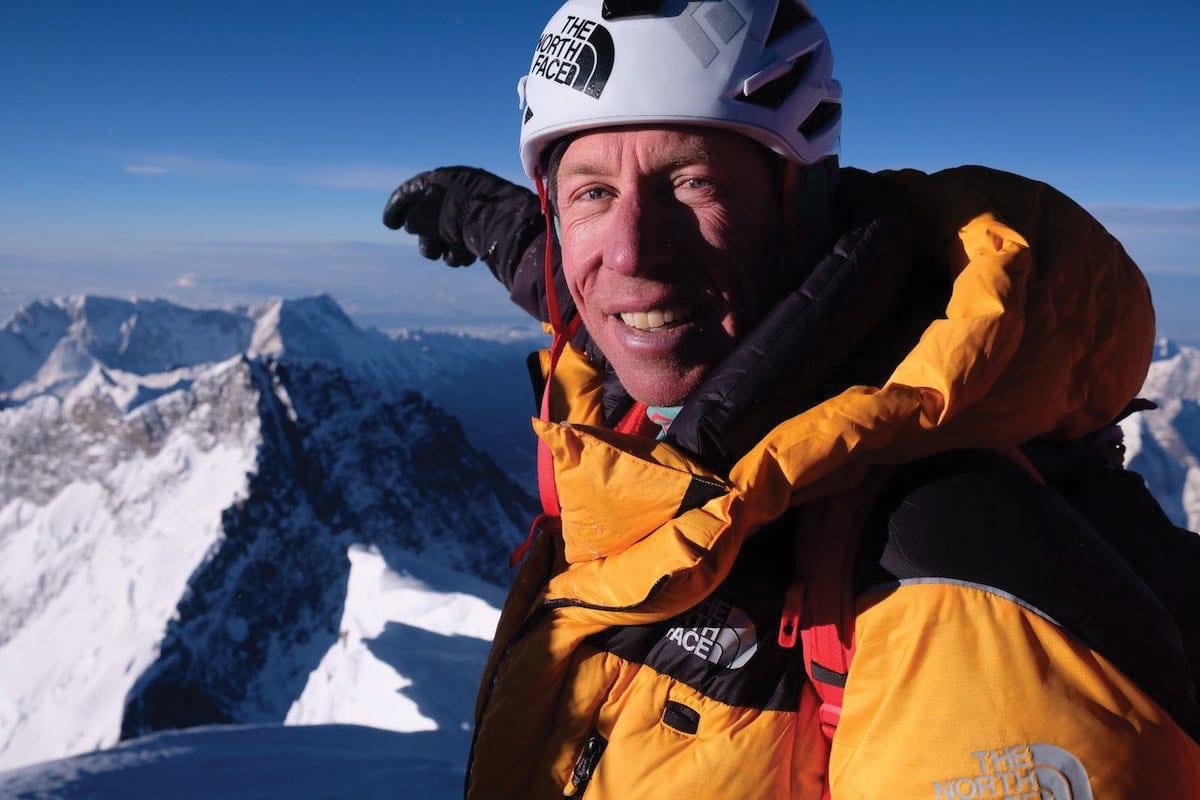
In an unprecedented feat of courage, skill, and emotional resolve, American mountaineer and professional skier Jim Morrison has made history by completing the first-ever ski descent of Mount Everest’s North Face, navigating the legendary Hornbein Couloir, a near-vertical line so challenging it had remained untouched by skiers for over sixty years.
The 50-year-old adventurer descended the perilous route on Wednesday, completing the ski in just four hours after summiting the world’s highest mountain earlier that day. Morrison reached the 8,848.86-meter summit at 12:45 p.m. local time, before launching into what many are calling one of the most daring descents in mountaineering history.

The expedition was part of a multi-million-dollar National Geographic project, supported by a dedicated team that included Nepali climbing Sherpas, route fixers, and a National Geographic film crew led by Oscar-winning filmmakers Jimmy Chin and Chai Vasarhelyi, known for their documentary Free Solo.
A Deeply Personal Mission
For Morrison, the climb and descent were more than a professional milestone, they were a profoundly personal journey. At the summit of Everest, he released the ashes of his late partner, Hilaree Nelson, a pioneering ski mountaineer who tragically lost her life during a ski expedition on Manaslu in 2022.
“It felt like finishing what we started together,” Morrison said, reflecting on the moment. “This was for Hilaree, for her spirit, for our dream, and for everyone who believes in the beauty of the mountains.”
Nelson and Morrison shared a legacy of groundbreaking achievements in high-altitude ski mountaineering. Together, they became the first duo to ski down Lhotse (8,516m) in 2018, a defining accomplishment that inspired a new generation of climbers and skiers to push the limits of what’s possible on the world’s tallest peaks.
Conquering the Hornbein Couloir: A Line of Legends
The Hornbein Couloir, named after American alpinist Tom Hornbein, who first ascended it in 1963, is one of the most dangerous and technically demanding routes on Everest. The narrow snow chute plunges nearly 9,000 vertical feet straight down the North Face, a section of the mountain known for extreme winds, unstable ice, and unpredictable snow conditions.
Few climbers have even dared to attempt it in recent decades, and none before Morrison had managed to ski its full length. The successful descent marks a new chapter in Himalayan exploration, one that combines endurance, artistry, and precision under the harshest conditions on Earth.
Experts have hailed the achievement as a defining moment in ski mountaineering, likening it to Reinhold Messner’s first oxygen-less ascent of Everest in 1978 for its combination of boldness, technical expertise, and historical significance.
Years of Determination and Setbacks
Morrison’s triumph comes after two previous attempts to ski the Hornbein Couloir. His first try in 2023 was derailed by permit delays, preventing a summit bid before the weather window closed. In 2024, he successfully reached an altitude of 7,000 meters (22,966 feet) and managed a partial descent, calling the snow conditions “surprisingly good.”
However, tragedy struck during that expedition when team member Yukta Gurung was hit by a small avalanche, sustaining serious injuries. The team launched an intense high-altitude rescue operation, later described by Morrison as a “Herculean effort” that ultimately saved Gurung’s life.
The setback forced the team to abandon the attempt, but it strengthened Morrison’s resolve to return, both to complete his unfinished mission and to honor the spirit of perseverance shared by his late partner and the climbing community.
A Defining Career in High-Altitude Ski Mountaineering
With this achievement, Jim Morrison cements his reputation as one of the greatest ski mountaineers of his generation. Over his career, he has tackled some of the most challenging peaks on the planet, combining mountaineering expertise with elite skiing technique to redefine what’s possible at high altitude.
His Everest descent stands as the culmination of decades of training, endurance, and innovation. By skiing the North Face’s most formidable line, Morrison has entered the annals of mountaineering history, joining the small circle of pioneers who have not only summited Everest but also reimagined the way it can be descended.
This latest success also underscores the growing prominence of Nepali Sherpas and local support teams, whose technical skill and leadership continue to make such high-risk endeavors possible. The expedition included six Nepali guides, four Tibetan guides, and ten base camp staff, all of whom played crucial roles in ensuring the climb’s success and safety.

A New Era of Everest Exploration
The National Geographic Society confirmed that Morrison’s historic descent will feature in an upcoming documentary film, directed by Jimmy Chin and Chai Vasarhelyi, further immortalizing the feat for audiences around the world. The film is expected to explore not only the physical and technical aspects of the expedition but also its emotional and spiritual depth.
Morrison’s groundbreaking achievement symbolizes a new evolution in Everest exploration, one that combines extreme adventure with storytelling, technology, and personal meaning. It reflects the human capacity to confront loss, embrace challenge, and turn grief into greatness. As the snow settles on the Hornbein Couloir, Jim Morrison’s tracks will remain etched into the mountain, a lasting reminder that even on the world’s highest peaks, courage and love can carve a path never before seen.