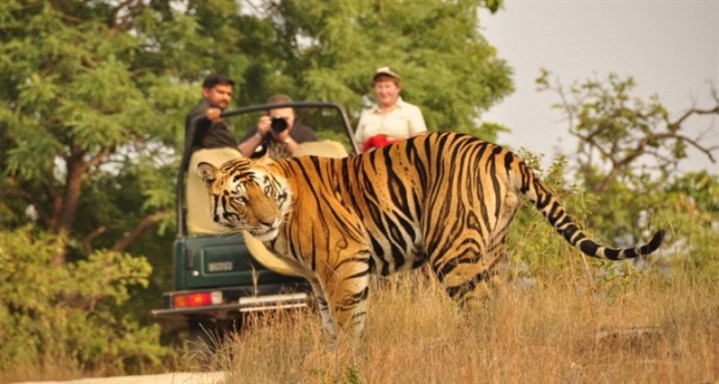
The International Tiger Day is being marked across Nepal today, July 29, with a series of programs organized nationwide to raise public awareness about the conservation of Royal Bengal tigers. This global event, also known as Global Tiger Day, is observed every year with the aim of inspiring collective action for tiger conservation. Various events involving government agencies, conservation organizations, schools, communities, and media are being held to emphasize the importance of protecting tigers and their habitats.
This annual observance was initiated following the Tiger Summit held in St. Petersburg, Russia, in 2010, where heads of state and government from tiger range countries pledged to work collaboratively to double the world’s wild tiger population by 2022. The day is not only symbolic but also a reminder of the promises made and the work yet to be done.
Ministry of Forest and Environment Leads the Initiative
The Ministry of Forest and Environment (MoFE) is leading this year’s celebrations in Nepal with a variety of conservation-focused events. These include public rallies, educational workshops, photo exhibitions, awareness campaigns, and interactive sessions in schools and protected areas. The Ministry, in coordination with local conservation bodies, aims to increase community involvement and highlight the crucial role citizens play in tiger conservation.
A key message being disseminated this year is the importance of tiger conservation in promoting biodiversity, strengthening ecosystems, and supporting eco-tourism-based livelihoods. MoFE has reaffirmed its commitment to sustainable wildlife conservation, especially amid rising challenges such as climate change and habitat degradation.
Nepal Achieves Historic Milestone in Tiger Conservation
Nepal has emerged as one of the most successful countries in fulfilling the goal set during the 2010 Tiger Summit. According to the 2022 tiger census, the country recorded 355 wild tigers, a figure that far exceeds its earlier commitment to double its tiger population from 121 in 2009.
This remarkable achievement is credited to various conservation efforts including anti-poaching measures, habitat protection, wildlife corridors, community involvement, and regular scientific monitoring. Nepal’s protected areas, such as Chitwan National Park, Bardiya National Park, Shuklaphanta Wildlife Reserve, and Parsa National Park, have become secure habitats for these majestic big cats. However, with this population increase, the country is now grappling with new challenges.
New Challenges Arise with Growing Tiger Numbers
While Nepal’s conservation efforts have drawn global praise, the surge in tiger numbers has led to several emerging issues. One of the major concerns is the growing human-wildlife conflict, especially in buffer zones and forest edges where human settlements overlap with tiger habitats. Cases of tigers straying into villages, attacking livestock, and occasionally harming humans have been reported in recent years.
Alongside this, the question of tiger habitat management and sustainability has become critical. With limited land and growing populations, maintaining a balance between conservation and human needs is increasingly complex.
Debate on Nepal’s Tiger Carrying Capacity
In light of these developments, discussions have begun regarding Nepal’s tiger carrying capacity, the maximum number of tigers the country’s ecosystems can sustainably support. Some conservation experts argue that Nepal’s carrying capacity could be around 400 tigers, beyond which ecological stress and conflict could increase.
To address this, the Ministry of Forest and Environment, in coordination with the Department of National Parks and Wildlife Conservation, National Trust for Nature Conservation, World Wildlife Fund (WWF), and the Zoological Society of London, has initiated a scientific study to assess the actual tiger carrying capacity of Nepal. The findings of this study are expected to help policymakers develop more effective strategies for long-term tiger management, ensuring both tiger safety and human well-being.
Nepal’s Legacy of Tiger Conservation
Nepal has been celebrating Global Tiger Day since 2067 BS (2010 AD) and has regularly conducted tiger censuses to monitor progress and inform conservation strategies. Its approach is rooted in community-based conservation, where local people are empowered to protect natural resources and are rewarded through eco-tourism and other nature-based opportunities. This inclusive strategy has not only preserved tiger habitats but also promoted a sense of stewardship among local communities.
Global Context of Tiger Conservation
Royal Bengal tigers are native to 13 countries: Nepal, India, Bhutan, China, Russia, Bangladesh, Vietnam, Myanmar, Malaysia, Indonesia, Thailand, and Laos. These nations have been working under various global frameworks to halt and reverse the decline of tiger populations.
Globally, the number of tigers was estimated to be around 100,000 in 1900. By 2010, the figure had plummeted to just 3,200, primarily due to habitat loss, poaching, and illegal wildlife trade. Thanks to enhanced conservation efforts, the World Wildlife Fund (WWF) reported a modest recovery, with the global tiger population reaching approximately 4,500 by 2022.
A Shared Responsibility Moving Forward
As Nepal observes International Tiger Day with pride in its accomplishments, the day also serves as a call to action. The need for ongoing vigilance, scientific research, cross-border cooperation, and local participation remains high. The future of the Royal Bengal tiger depends on sustained efforts not just by governments but by every individual who shares the planet with these magnificent creatures.
Nepal’s example demonstrates what is possible when conservation is made a national priority. However, the road ahead is filled with both opportunities and responsibilities. Protecting tigers is about more than saving a species, it’s about preserving the integrity of our ecosystems and ensuring a healthier planet for all.