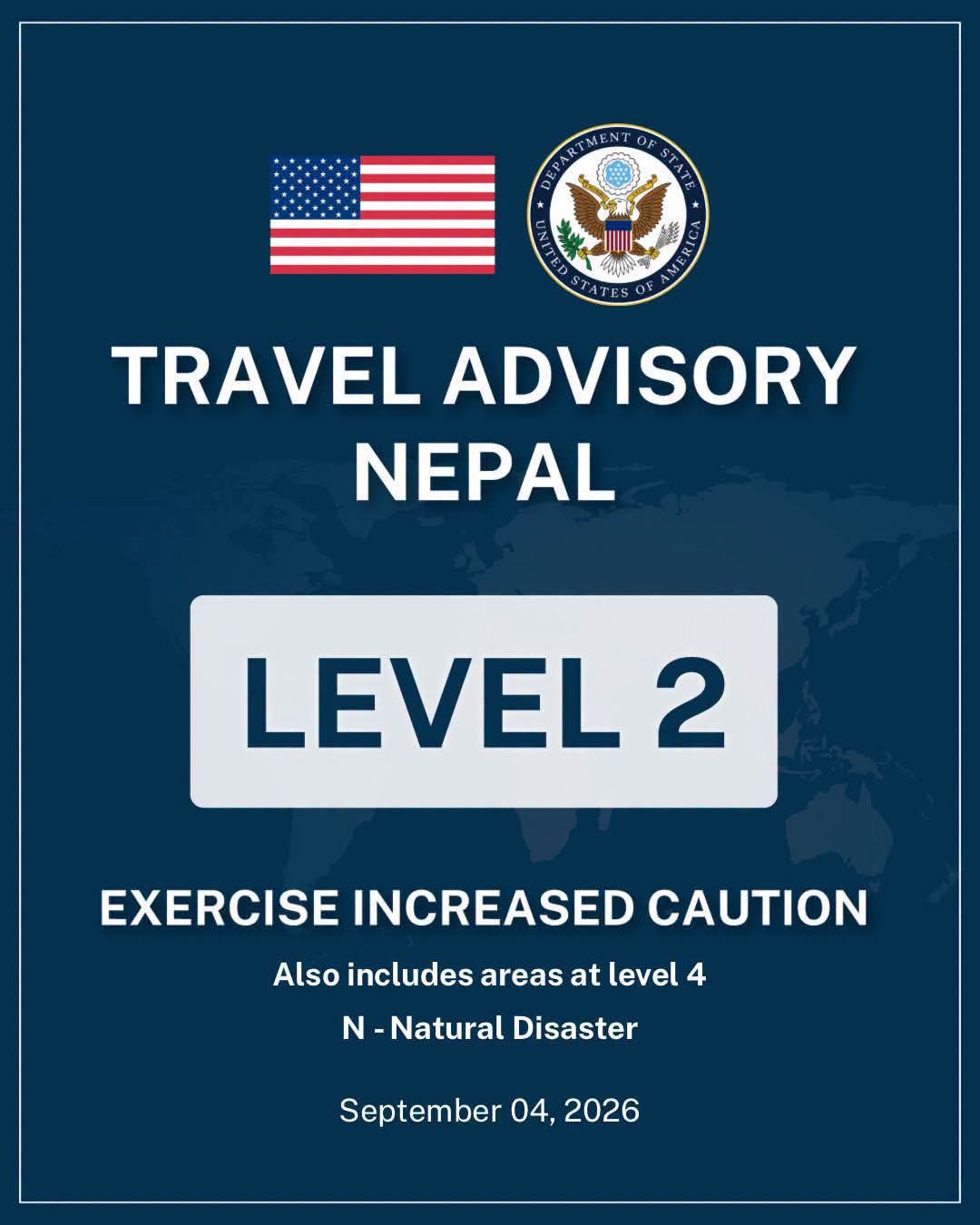
Nepal remains open to international travelers, with the United States raising its overall travel advisory for Nepal to Level 2: Exercise Increased Caution, while issuing a separate Level 4: Do Not Travel warning for the disaster-affected area of Rasuwa following the devastating flash flood and landslide of August 26.
The updated advisory highlights the ongoing risks posed by natural disasters, particularly during Nepal’s monsoon season, while distinguishing the affected areas from the rest of the country.
Nepal Under Level 2 Travel Advisory
Under the revised advisory, travelers visiting Nepal are urged to exercise increased caution due to the possibility of natural disasters, including floods and landslides.

The advisory comes amid recovery efforts following recent severe flooding and landslides that have damaged infrastructure and disrupted transportation and communication in affected areas.
Despite the elevated caution level, the overall advisory does not classify Nepal as a country that travelers should avoid. Nepal continues to remain open for tourism, with travelers advised to take precautions and stay informed about local conditions.
Rasuwa Area Under Level 4 ‘Do Not Travel’ Warning
While Nepal as a whole remains under Level 2, the Rasuwagadhi–Timure–Syafrubesi area of Rasuwa has been placed under a separate Level 4 ‘Do Not Travel’ warning.
The warning also covers the Nepal–China border crossing in the affected area. The heightened warning follows the August 26 flash flood and landslide, which caused significant destruction in the region and continues to affect transportation, communication and access.
Damaged Infrastructure and Disrupted Connectivity
The travel advisory cites extensive damage to infrastructure in the affected area, along with disruptions to transportation and communication services.
Ongoing search-and-rescue operations are also taking place as authorities and rescue teams continue efforts to locate and assist people affected by the disaster.
The difficult conditions have made access to some locations challenging, while damaged roads and other infrastructure have further complicated movement in the affected region.
Risk of Further Floods and Landslides
The possibility of additional floods and landslides remains a concern, particularly during the monsoon season.
Travelers are therefore advised to remain alert to changing weather and local conditions and avoid areas where authorities have identified ongoing risks.
The warning underscores the importance of checking conditions before travelling to disaster-affected regions rather than making travel decisions based on outdated information.
Travelers Urged to Follow Local Authorities
Travelers in the country are advised to monitor local developments and follow instructions issued by Nepali authorities.
Those planning trips are encouraged to remain updated on road conditions, transportation disruptions and weather-related risks, particularly if their itinerary includes mountainous or flood-prone areas.
Travelers should also avoid entering areas affected by the recent disaster until authorities determine that they are safe for travel.
Travel Insurance and Medical Evacuation Coverage Recommended
The travel advisory also recommends that travelers ensure their travel insurance provides appropriate protection, including medical evacuation coverage.
Such coverage can be particularly important when travelling in remote mountainous areas where access to medical facilities and emergency transportation may be limited.
Nepal Continues to Welcome Travelers Where Safe
The updated travel advisory provides an important distinction between the disaster-affected areas and the rest of Nepal. Nepal remains open to travelers as the U.S. raises its advisory to Level 2, while issuing a Level 4 “Do Not Travel” warning specifically for flood-affected areas of Rasuwa.

While Rasuwa’s Rasuwagadhi–Timure–Syafrubesi corridor remains subject to the highest travel warning because of the ongoing impact of the disaster, its overall travel advisory remains at Level 2.
This means travelers can continue to visit Nepal while exercising increased caution, staying informed and avoiding areas currently considered unsafe.
Nepal is open, but travelers should travel responsibly, stay informed and respect restrictions in disaster-affected areas.