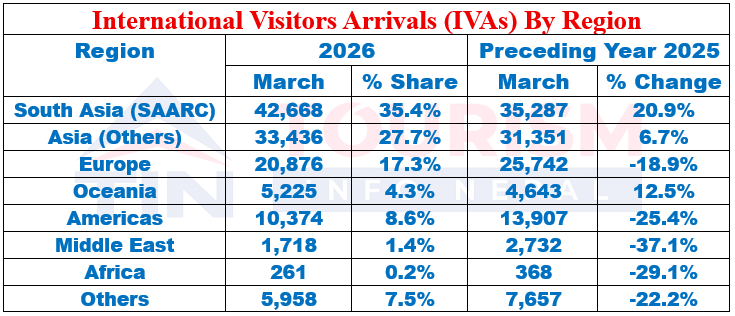
Nepal recorded the arrival of 120,516 foreign tourists in March 2026, according to the latest data released by the Nepal Tourism Board (NTB). While the figures indicate a stable recovery trend, global uncertainties and regional conflicts have continued to influence overall growth in international arrivals.
Strong Growth from South Asian Markets
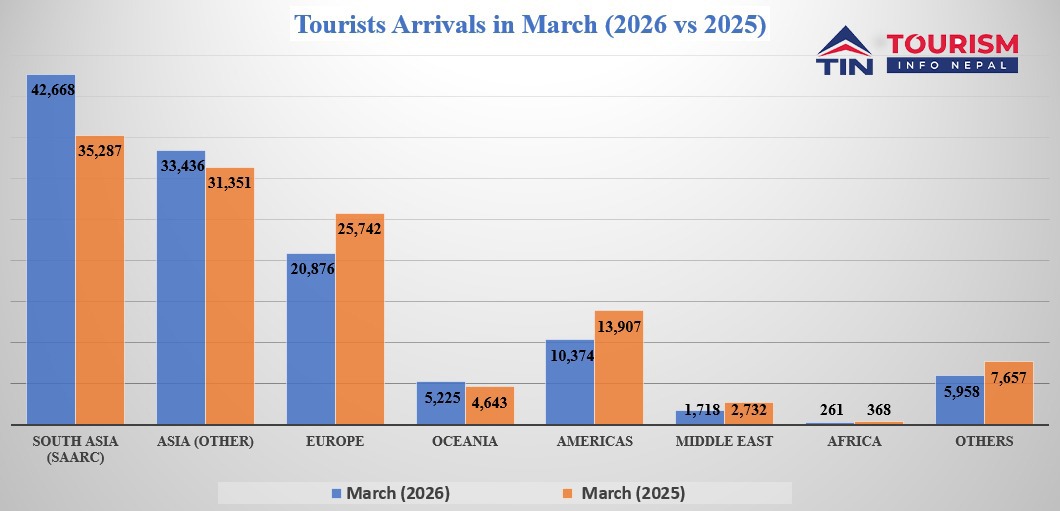
Tourist arrivals from South Asian (SAARC) countries showed a significant rise during the month. A total of 42,668 visitors, accounting for 35.4 percent of total arrivals, entered Nepal from the region.
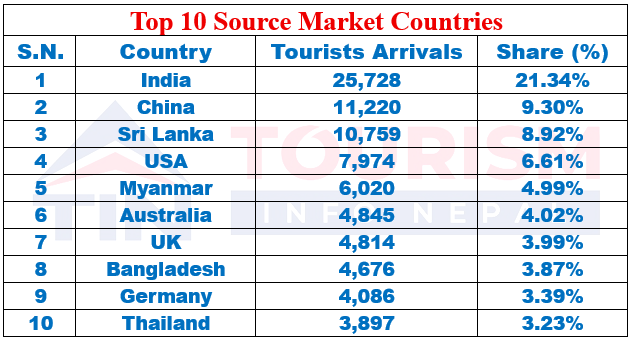
India remained the largest source market, with 25,728 Indian tourists visiting Nepal in March. Similarly, 10,759 visitors from Sri Lanka and 4,676 from Bangladesh contributed to the strong regional inflow.
The high number of Indian tourists highlights the continued popularity of Nepal for religious, cultural, and short-duration travel, reinforcing the importance of neighboring markets in sustaining tourism growth.
Encouraging Influx from Other Asian Countries
Tourist arrivals from other Asian countries also showed promising growth. A total of 33,436 visitors, representing 27.7 percent of total arrivals, came from non-SAARC Asian nations.
Among them:
- China: 11,220 tourists
- Myanmar: 6,020 tourists
- Thailand: 3,897 tourists
Additionally, countries such as Japan, Malaysia, and South Korea recorded notable arrivals, indicating Nepal’s growing appeal across diverse Asian markets.
European and American Markets Remain Stable
Although there was no significant growth in arrivals from Europe and the Americas, the numbers remained relatively stable. The Nepal Tourism Board noted that the ongoing conflict in West Asia has affected international travel patterns, impacting long-haul markets. Despite lower volumes compared to Asian countries, tourists from Europe and the United States continue to be valued as high-spending visitors, contributing significantly to Nepal’s tourism revenue.
Comparison with Previous Years
Tourist arrivals in March 2026 were slightly lower compared to March 2025, which recorded 121,687 visitors. However, the figures remain below pre-pandemic levels, when 127,351 tourists visited Nepal in March before the onset of COVID-19. In February 2026, Nepal welcomed 105,441 tourists, indicating a steady month-on-month increase as the peak season approached.
Peak Season Impacted by Global Situation
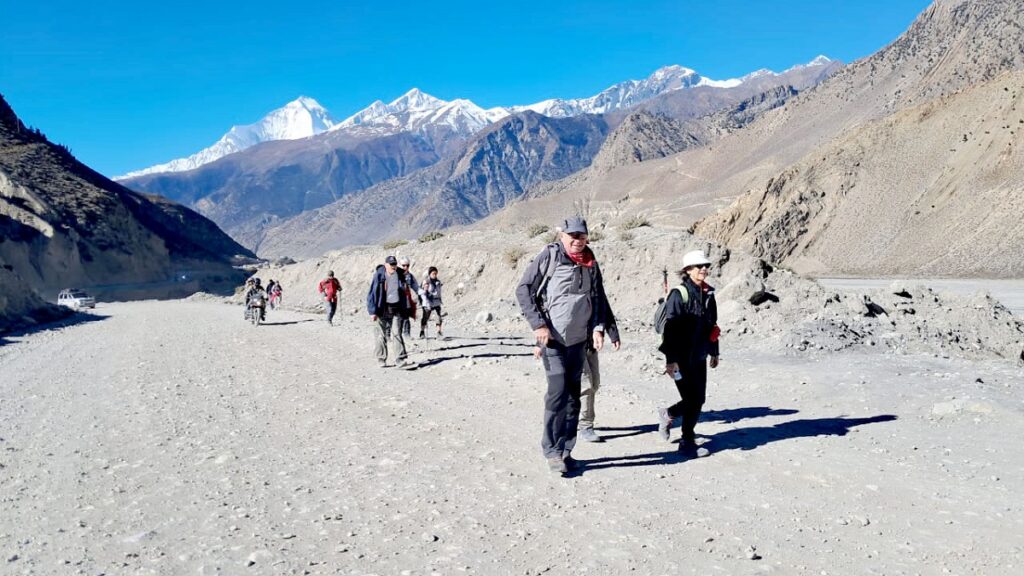
March and April are typically considered peak months for tourism in Nepal, driven by favorable weather, trekking seasons, and mountaineering activities. However, this year’s peak season has been partially affected by the escalating conflict in West Asia.
The disruption of international flights and travel advisories issued by several countries have limited the expected surge in tourist arrivals. Traditionally, this period attracts a higher number of visitors for trekking, mountaineering, adventure tourism, and cultural exploration.

NTB CEO Calls for Balanced Strategy
Nepal Tourism Board CEO Deepak Raj Joshi stated that despite global challenges, the current figures are not discouraging.
“Although arrivals from Europe and the United States have slightly declined, the increase in tourists from neighboring countries, especially India, is a positive sign,” he said.
He further emphasized that NTB is prioritizing promotional efforts in neighboring markets while also strengthening Nepal’s presence in high-value markets such as Europe and the Americas through international tourism fairs and marketing campaigns.
Cautious Optimism for the Future
Joshi noted that while the current situation does not warrant alarm, it also calls for careful planning. “The evolving situation in West Asia remains uncertain and could impact the global tourism market in the coming days,” he said, adding that NTB is working on balanced and sustainable strategies, including expanding into alternative markets.
Outlook for Nepal’s Tourism
Despite global headwinds, Nepal’s tourism sector continues to show resilience, supported by strong regional demand and ongoing promotional efforts. With strategic market diversification and sustained collaboration between stakeholders, the country remains optimistic about maintaining growth and strengthening its position as a leading travel destination in Asia.