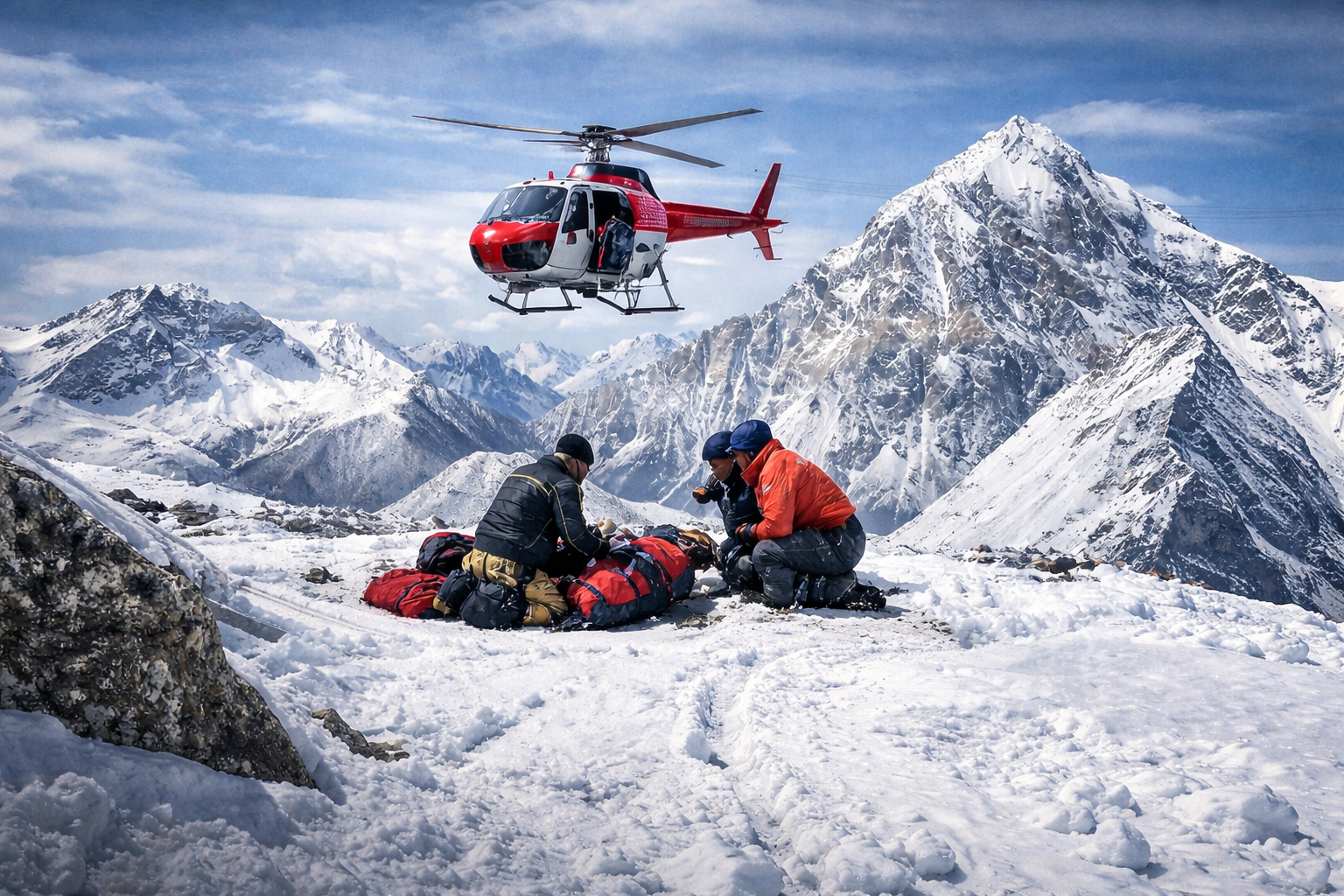
The Trekking Agencies’ Association of Nepal (TAAN) has expressed serious concern over the increasing number of search and rescue incidents involving trekkers and climbers in Nepal’s mountain regions, warning that the growing trend of “fake rescue” operations is making Nepal’s mountain tourism more expensive, risky, and reputationally damaged. In an official statement, TAAN noted that incidents of trekkers and climbers meeting with accidents, going missing, falling ill, or even dying have been rising steadily.
While genuine rescues are a necessary part of mountain tourism, the association highlighted a disturbing trend where rescue operations are being misused or deliberately staged as fake rescues, tarnishing the image of Nepal’s adventure tourism sector.

TAAN Reaffirms Support for CIB Investigation and Legal Process
In the context of ongoing investigations into fake rescue cases, TAAN informed all stakeholders that the Government of Nepal’s Central Investigation Bureau (CIB) has been conducting inquiries into several tourism companies involved in rescue operations during trekking and climbing activities. The association stated that it has been providing necessary coordination and support to the investigating authorities.
TAAN further expressed confidence that since the CIB has already completed its investigation and entered the judicial process, the court will conduct an impartial inquiry, ensuring that the guilty are punished while the innocent receive an honourable clean chit. The association emphasized its commitment to the principle that “innocent individuals and organizations should not suffer unnecessarily, nor should the guilty be allowed to escape.”
TAAN Condemns Misleading Media Reports on Food Poisoning Allegations
TAAN also directed serious attention to misleading news reports published by some national and international media outlets, which claimed that guides were mixing toxic substances into tourists’ food to make them ill and then conducting fake rescues. The association noted that the Central Investigation Bureau has already denied such claims, stating that no evidence has been found to substantiate these allegations.
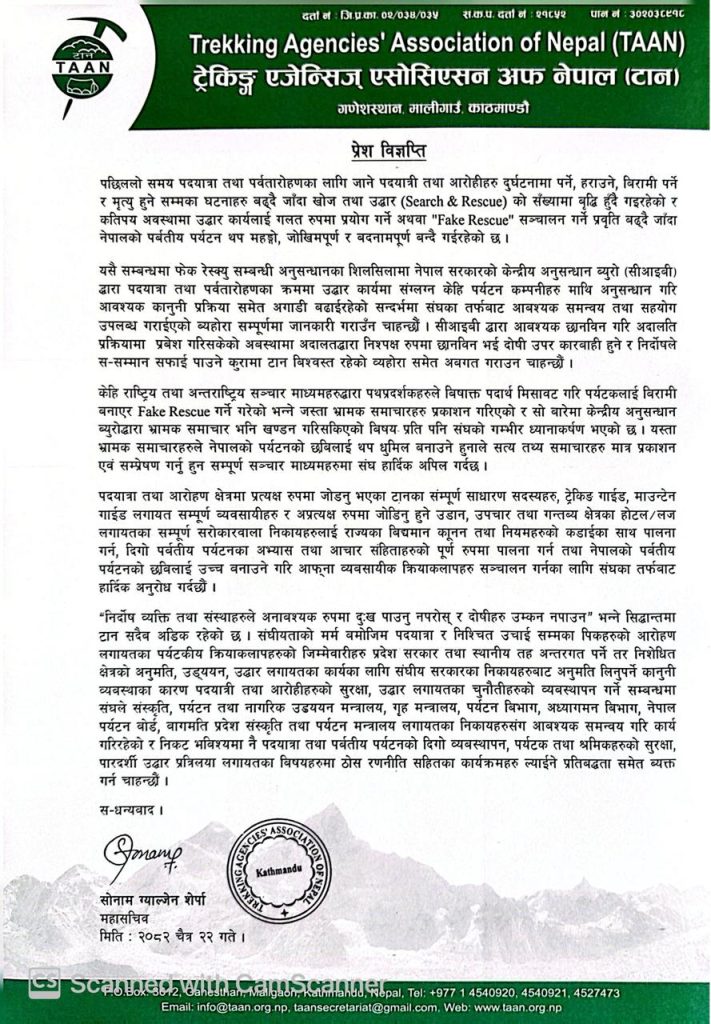
TAAN warned that such misleading reports would further damage the already fragile image of Nepal’s tourism industry. The association made a heartfelt appeal to all media outlets to publish and broadcast only factual and verified news, emphasizing that sensational and unverified reports only serve to harm the livelihoods of thousands of honest tourism professionals.
TAAN Urges Strict Adherence to Laws and Code of Conduct
The association urged all its general members directly involved in the trekking and climbing sector, including trekking guides, mountain guides, and all entrepreneurs, as well as indirectly involved stakeholders such as aviation companies, healthcare providers, and hotel and lodge operators in destination areas, to strictly adhere to the existing laws and regulations of the state.
TAAN also called for full compliance with sustainable mountain tourism practices and codes of conduct. The association appealed to all stakeholders to conduct their professional activities in a manner that enhances the image of Nepal’s mountain tourism, emphasizing that ethical business practices are the foundation of long-term sustainability in the industry.

Commitment to Coordination with Government Bodies
TAAN reaffirmed its commitment to coordinating with various government bodies to address the challenges related to trekker and climber safety, rescue management, and sustainable mountain tourism. The association noted that under the federal structure, responsibilities for trekking and climbing of certain peaks fall under provincial and local governments. However, permits for restricted areas, aviation, and rescue operations still require approvals from federal government agencies, creating a complex regulatory environment.
TAAN stated that it has been working closely with the Ministry of Culture, Tourism and Civil Aviation, the Ministry of Home Affairs, the Department of Tourism, the Department of Immigration, the Nepal Tourism Board, and the Bagamati Province Ministry of Culture and Tourism to coordinate necessary actions. The association also expressed its commitment to launching programs with concrete strategies in the near future for the sustainable management of trekking and mountain tourism, the safety of tourists and workers, and the establishment of transparent rescue protocols.