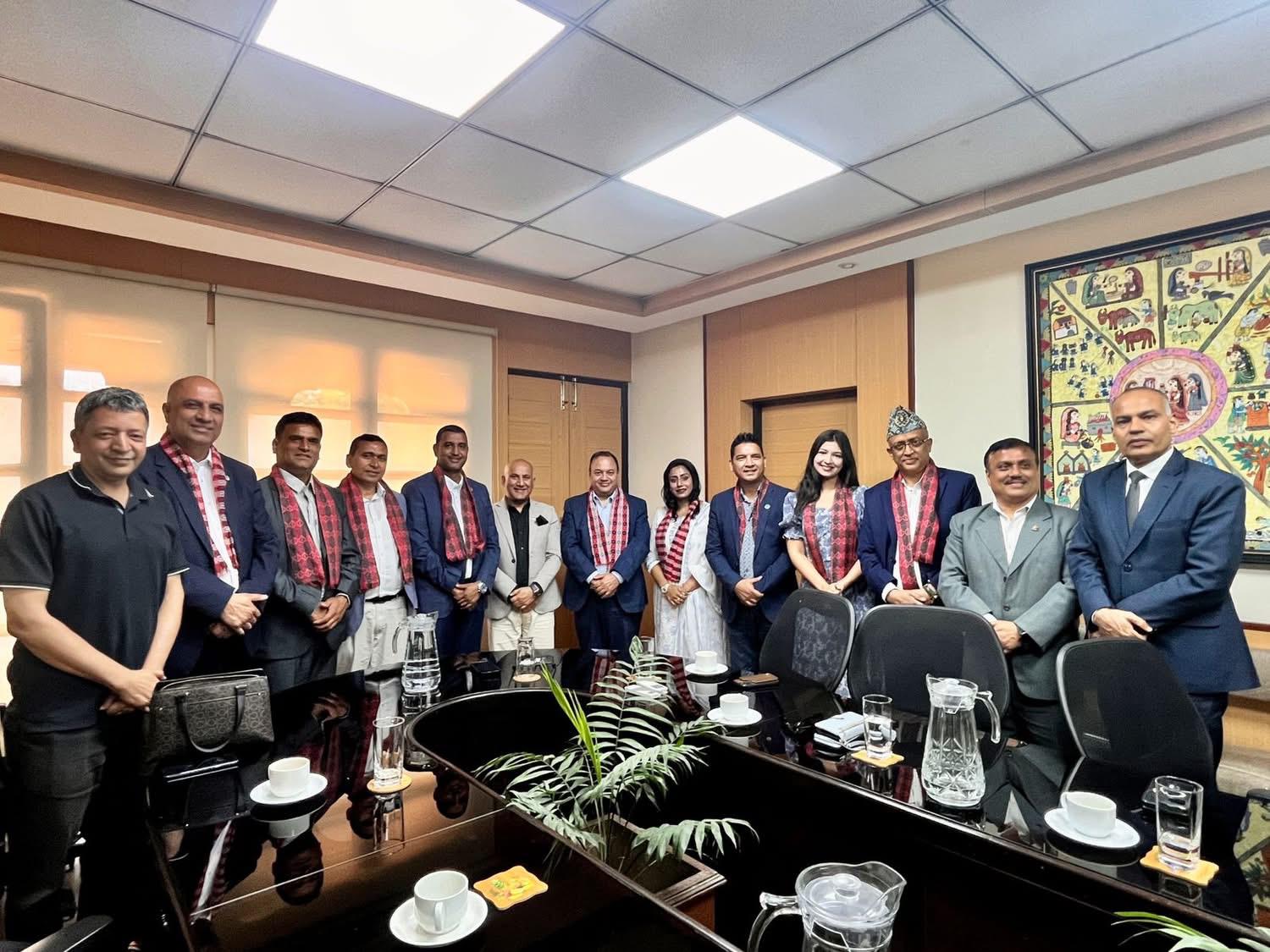
A delegation from the Non-Resident Nepali Association (NRNA) held a meeting with the Nepal Tourism Board (NTB) on April 5, 2026, at the NTB office in Kathmandu, marking the beginning of what both sides have described as a promising long-term collaboration to promote Nepal as a premier global tourism destination. The meeting, led by newly elected NRNA President Dr. Hem Raj Sharma, was warmly received by NTB CEO Deepak Raj Joshi and other board officials. The discussion focused on leveraging the vast global network of the Nepali diaspora to boost tourist arrivals, cultural exchange, and investment in Nepal’s tourism infrastructure.
Warm Welcome and Strong Representation from the Global Nepali Diaspora
The meeting was primarily introductory in nature, with CEO Joshi welcoming the newly elected NRNA team and expressing appreciation for their proactive engagement. The NRNA delegation included members of the NRNA International Executive Committee (IES) as well as NCC (National Coordination Council) Presidents of various countries, ensuring strong representation from Nepali communities around the world.

Som Nath Sapkota, Spokesperson and Chair of the Nepal Tourism Promotion Committee at NRNA ICC, facilitated the program and shared NRNA’s expectations for collaboration with NTB. The presence of NCC Presidents highlighted the grassroots reach of the association, which maintains active chapters in dozens of countries where Nepali diaspora communities have established themselves.
NRNA President Proposes Honorary PR Representatives to Boost Nepal’s Presence
During the meeting, Dr. Hem Raj Sharma outlined the various ways NRNA is already promoting Nepal globally through its extensive diaspora network. He shared the organization’s plans and emphasized areas where NRNA sees potential to further enhance Nepal’s international presence. The most significant proposal put forward by Dr. Sharma was to appoint NCC Presidents worldwide as Honorary PR Representatives (HPRRs) of the Nepal Tourism Board.
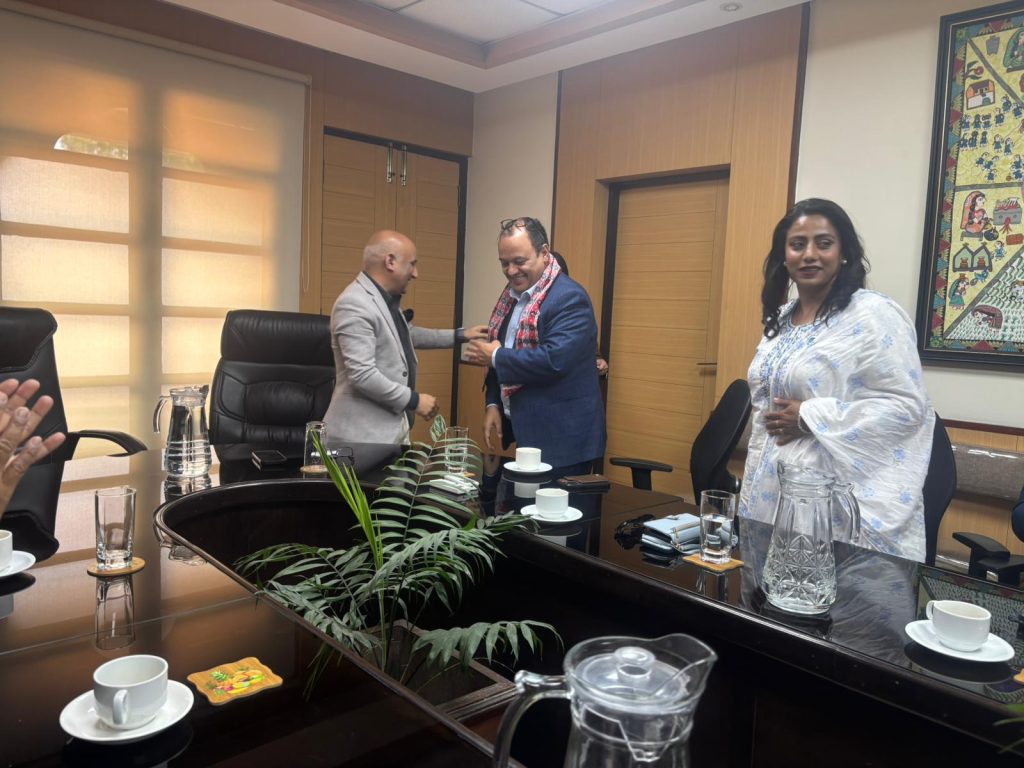
Such a move, he argued, would create an immediate, cost-effective, and culturally competent promotional network in key source markets for tourism. These representatives would be well-positioned to organize promotional events, connect with local travel trade associations, and share authentic narratives about Nepal’s tourism offerings. Dr. Sharma reiterated that NRNA stands ready to provide continued support to NTB in all collaborative initiatives, emphasizing that the diaspora’s emotional and economic connection to Nepal makes them natural ambassadors for the country.
CEO Joshi Welcomes Collaboration and NRNA’s Proactive Engagement
CEO Deepak Raj Joshi expressed his appreciation for the unity and proactive engagement of NRNA, noting that such collaboration strengthens tourism promotion in Nepal and lays the foundation for a long-term and sustainable partnership. He welcomed NRNA’s involvement in promoting cultural programs, tourism initiatives, and investment opportunities for Nepal.
Joshi recognized that the diaspora represents an underutilized asset in Nepal’s tourism marketing efforts, and the proposed partnership could unlock significant value. He also noted that the timing of the collaboration is particularly opportune, as Nepal is actively working to rebuild international visitor numbers and diversify its source markets beyond traditional countries.
Key Areas of Collaboration Identified
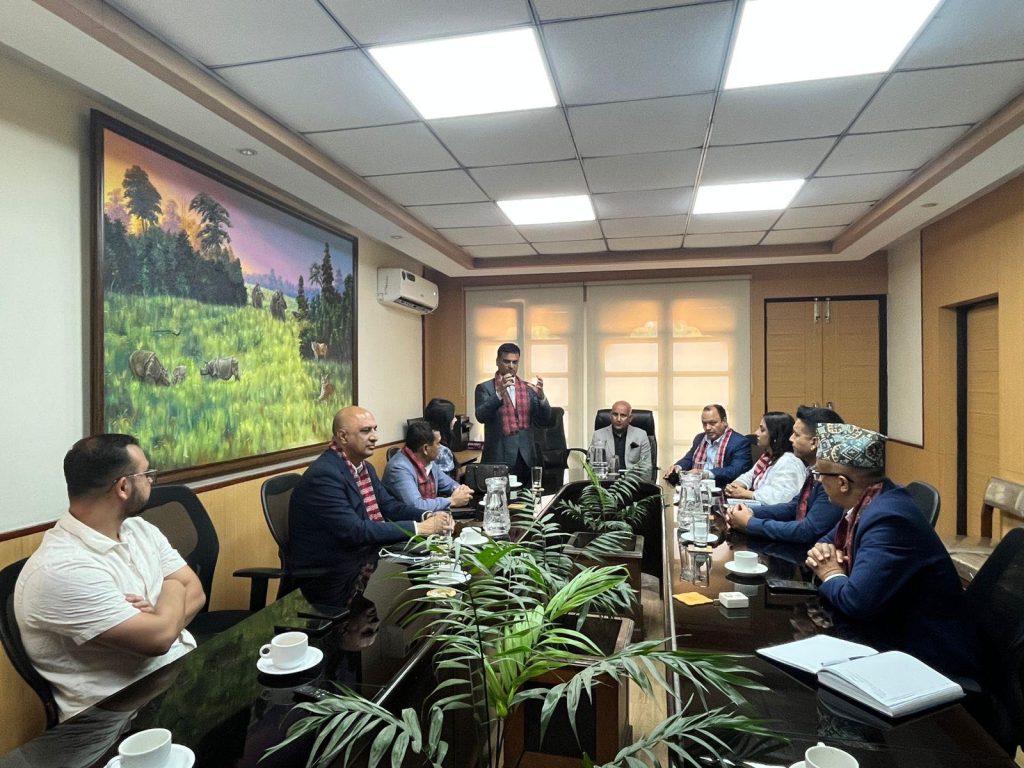
The meeting covered several key areas of potential collaboration. Both parties discussed promoting Nepal’s tourism and cultural festivals to international audiences, with the diaspora playing a crucial role in marketing these events in their countries of residence. Engaging the next generation of Nepalis, those born abroad who may have limited direct connection to their ancestral homeland, was identified as a priority, with tourism activities serving as a bridge to cultural heritage.
The planning and organizing of cultural programs through the Nepal Festival concept was discussed as a recurring platform for showcasing Nepali art, music, cuisine, and handicrafts in major international cities. Additionally, both sides explored developing the concept of “Nepal House”, a dedicated cultural and tourism information center in key foreign cities, to serve as a permanent showcase for Nepal’s attractions and a point of contact for potential travelers and investors.
MoU and Investment Initiatives on the Horizon
Both parties discussed preparing a formal Memorandum of Understanding (MoU) to institutionalize the collaboration between NRNA and NTB, ensuring continuity beyond individual leadership terms. The MoU would outline specific roles, responsibilities, timelines, and performance indicators for joint activities. Additionally, the meeting explored possibilities for research support, including market studies and traveler sentiment analysis, as well as tourism-related investment initiatives.
The diaspora has already demonstrated interest in investing in Nepal’s hospitality sector, and the proposed collaboration could help channel that interest into viable projects, from boutique hotels in emerging destinations to adventure tourism infrastructure in rural areas.

Shared Commitment to Making Nepal a Premier Global Destination
The meeting concluded with both NRNA and NTB agreeing to pursue long-term collaboration to promote Nepal globally. Under the understanding reached, NRNA will leverage its international network and diaspora for tourism promotion, while NTB will facilitate strategic appointments and joint programs to strengthen global outreach.
The discussions reaffirmed a shared commitment to making Nepal a premier cultural and tourism destination worldwide. With the diaspora numbering in the millions across more than 80 countries, the potential reach of this partnership is immense. As Nepal continues its post-pandemic tourism recovery, the active involvement of its global citizens may prove to be one of the most effective and sustainable promotional strategies available.