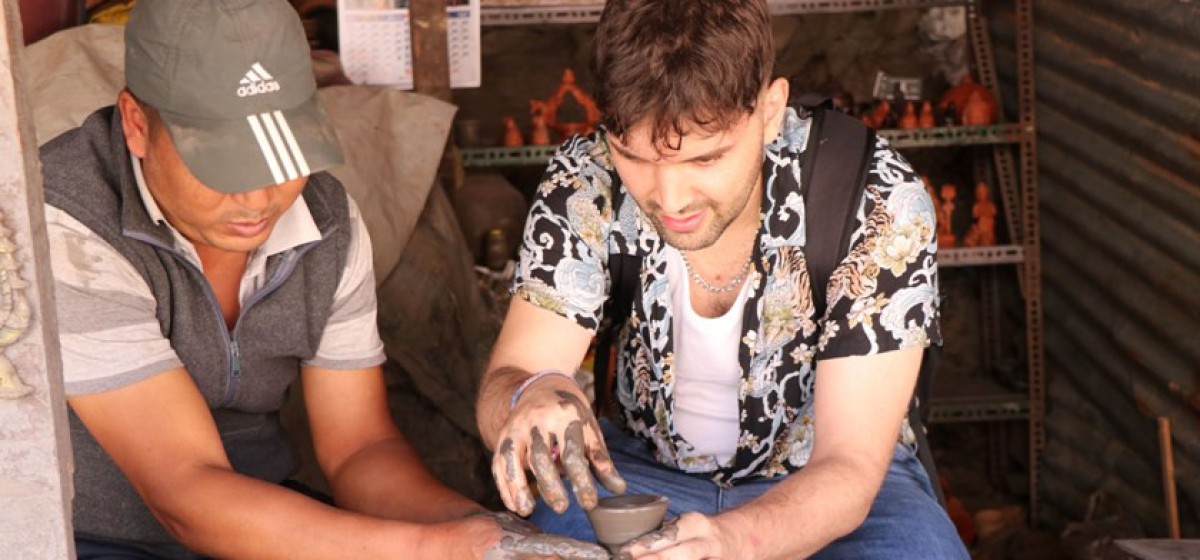
After the world-famous Bhaktapur Durbar Square, the nearby Pottery Square has emerged as a new cultural attraction for both domestic and international tourists. Visitors are increasingly captivated by the art of traditional pottery, handmade earthenware that reflects the centuries-old heritage of the Newar community.
Located in Bhaktapur Municipality–4, Talakwa, Pottery Square is home to the Prajapati community, whose generations have carried on the craftsmanship of clay pottery. The area, once known only to locals, is now evolving into a must-visit destination for tourists seeking authentic cultural experiences.
A Community Keeping Tradition Alive
Members of the Prajapati community can be seen working diligently, crafting clay lamps, pots, and incense holders, especially in preparation for the upcoming Tihar festival. The potters not only produce clay goods but also invite visitors to try their hand at making pottery, turning the square into a lively, interactive hub of cultural exchange.

Most households have installed boards reading “Pottery Training Center,” offering tourists the chance to learn the process of molding clay on a spinning wheel. Veteran artisan Binod Prajapati, who has been in the trade for nearly two decades, said foreign visitors particularly admire the handmade items. “Tourists love the process and often pay to learn,” he shared, adding that this interaction has become a source of extra income for local families.
Hands-on Experience for Visitors
Tourists, both Nepali and foreign, can be seen with sleeves rolled up, hands dipped in wet clay as they learn the ancient craft. Australian tourist Herina Mark, who recently tried pottery-making at Pottery Square, described the experience as “deeply joyful and meditative.”
According to Binod, visitors spend around ten minutes crafting a pot and are charged between NPR 100 to 200 for the session. “It’s a meaningful way for tourists to connect with our culture while supporting our livelihood,” he said.
Preserving Centuries-old Craftsmanship
Eighty-one-year-old Lalit Prajapati, one of the oldest artisans in the area, takes pride in keeping alive the traditional wheel technique. “Tourists are fascinated when they see us shaping pots by hand on a manually spun wheel,” he said. Many watch intently, take photos, or even attempt to make a pot themselves.
Unlike the electric wheels commonly used today, some elders still rely on a wooden stick to spin large clay wheels, a method passed down from their ancestors. American visitor Lonark Mart, who witnessed this traditional method, said he found it mesmerizing and recorded the entire process on his phone.
Tourism Boosting Local Income
Local artisan Sajan Prajapati shared that tourism has significantly contributed to their income. “We are busy fulfilling festival orders and teaching visitors how to make pots,” he said. “The tourist season brings both economic opportunity and cultural pride.”
During this peak season, most tourists visiting Bhaktapur include Pottery Square in their itinerary. Visitors often arrive in groups and take turns learning pottery from different Prajapati households. Although learning the full art of pottery takes about six months, tourists enjoy a brief hands-on experience, often sharing photos and videos of their creations on social media, further promoting Bhaktapur’s traditional art worldwide.
Festive Season Brings More Demand
Local craftsman Krishna Prajapati said the demand for clay products like oil lamps, incense holders, and pots has surged with Tihar approaching. “We are overwhelmed with orders and barely keeping up with production,” he said, surrounded by rows of drying pots under the sun.
The festival season not only brings higher demand but also provides artisans with a vital source of seasonal income. According to Krishna, tourists are equally fascinated by the process of drying and firing the clay pots in large kilns, a sight that adds to the unique visual charm of Pottery Square.

Challenges in the Modern Market
Despite the tourism boom, local potters face growing challenges from the influx of plastic goods imported from India. “Plastic versions of our traditional products have reduced local demand,” said Binod Kumar Prajapati, who has been making pottery for 19 years. He explained that while the price of clay products remains unchanged, NPR 40 per dozen for small items like clay lamps, nearly 65 Prajapati families now struggle to compete in the market. “Even though tourism helps, stable domestic demand is essential for sustaining our heritage,” he added.
A Living Museum of Heritage
Today, Pottery Square stands not just as a marketplace, but as a living museum of Bhaktapur’s artistic legacy. The rhythmic spinning of wheels, the earthy scent of wet clay, and the joyful laughter of tourists learning to mold their first pot all combine to create a vivid cultural experience.
As Bhaktapur continues to blend heritage with hospitality, Pottery Square remains a shining example of how traditional crafts can adapt and thrive in a modern tourism economy, preserving identity while inspiring global admiration.