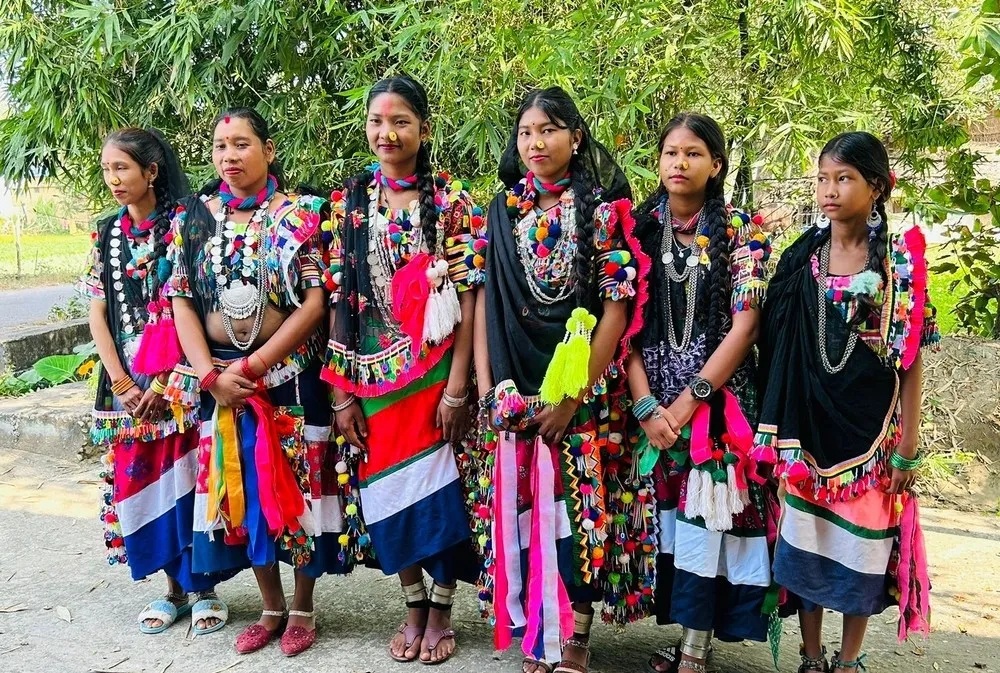
The homestay initiative run by the Rana Tharu community, indigenous to the Kailali and Kanchanpur districts of Sudurpashchim Province, has been thriving in recent years. Established a decade ago in Nayakatan, Ward No. 14 of Bhimdutta Municipality, Kanchanpur, the homestay has become a key source of income for the local community while showcasing their unique culture and way of life.
Close to Shuklaphanta National Park
Located adjacent to the world-renowned Shuklaphanta National Park, famous for its large herds of swamp deer, the Rana Tharu Community Homestay offers visitors a rare opportunity to observe diverse wildlife. According to homestay operators, guests can easily spot animals such as swamp deer, spotted deer, peacocks, wild boars, and a variety of bird species, particularly during the winter months.

“The proximity to the national park makes it an ideal spot for wildlife observation,” said Parshuram Rana, Chairperson of the Rana Tharu Community Homestay. “Before the park installed wire fencing, animals like deer and wild boars often damaged our crops. Now, many of the visitors who come to explore the park prefer to stay at our homestay.”
Although the number of both domestic and international tourists visiting the area has been increasing, Rana believes that more publicity is still needed. “Tourists visiting other national parks in Nepal are beginning to learn about Shuklaphanta as well,” he said. “Last year alone, we hosted nearly 3,000 guests.”
Growing Economic Impact
Currently, the homestay operates through eight households, each earning between NPR 150,000 and NPR 200,000 annually. Besides the park, the homestay’s location also provides easy access to other local attractions, including the Dohara-Chandani suspension bridge and the Pipariya elephant stable, which are popular among visitors.
“Most tourists arrive during the winter season and between the months of Falgun and Jestha,” Rana shared. “They enjoy traditional Rana Tharu dishes, cultural performances, and even local attire. Since the beginning of this fiscal year, over 200 tourists have already stayed here.”
While the community receives occasional support from donor agencies, Rana recalls that even when the homestay project first started a decade ago, it benefited from external assistance. “Our Tharu cultural dances are in high demand across various events,” he added.
Preserving Culture and Promoting Sustainability
With affordable accommodation and authentic cultural experiences, the homestay has become a favorite choice for visitors to Shuklaphanta National Park. Guests not only get to experience local wildlife but also savor organically grown local products and participate in traditional celebrations.
In addition to Nayakatan, Rana Tharu homestays have also been established in Bani of Krishnapur Municipality and Jonapur of Shuklaphanta Municipality, expanding the network of community-based tourism in the region.

Collaboration with the Private Sector
According to Rahul Bhatt, Secretary of the Kanchanpur Chamber of Commerce and Industry, the district’s homestays have made travel more convenient and enjoyable for tourists. “We are actively working to develop tourist-friendly packages and promote the district’s attractions,” he said. “Our chamber has always taken the lead in promoting local destinations.”
Bhatt emphasized the need for stronger cooperation between the private sector and community-based tourism operators to further expand and sustain the homestay model. “With coordinated efforts, Kanchanpur can become one of the key eco-tourism destinations in the country,” he added. As the Rana Tharu community continues to preserve its heritage and hospitality, the success of their homestays stands as a model for sustainable tourism, where conservation, culture, and community development go hand in hand.