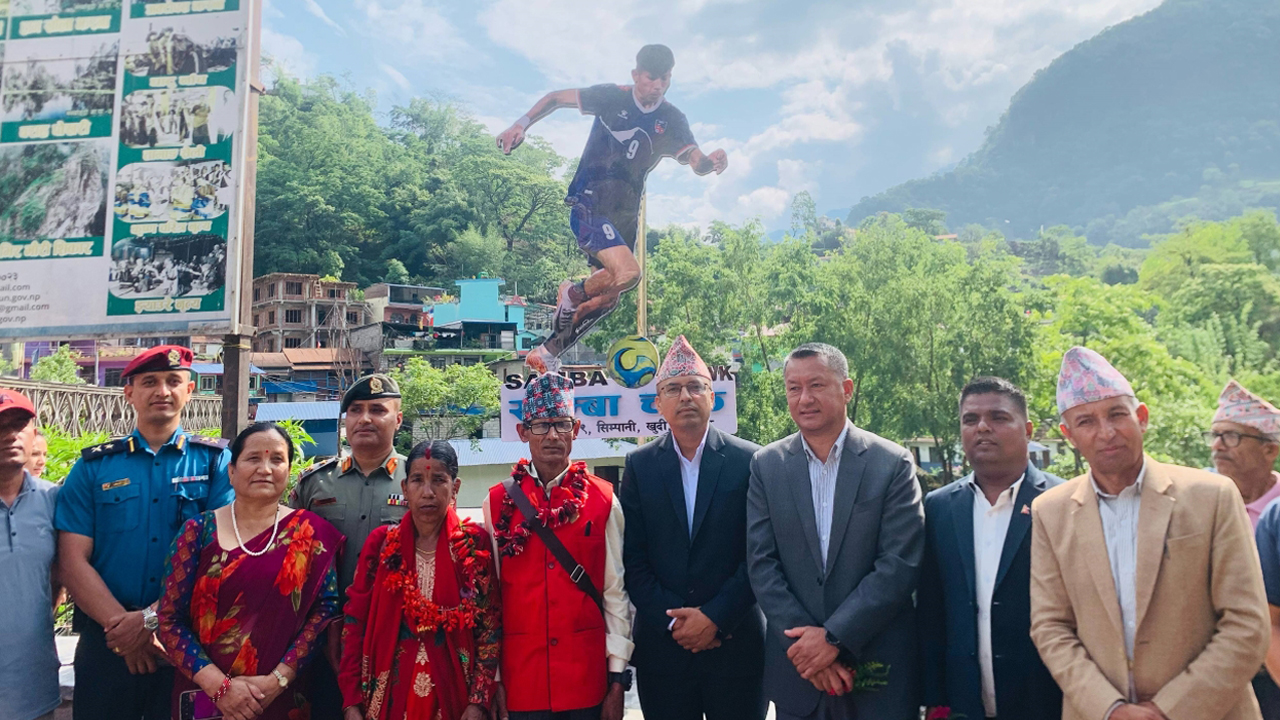
Samba Chowk, named in honor of renowned Nepali footballer Sabitra Bhandari ‘Samba,’ has recently emerged as a prominent tourist destination in Lamjung. Located in Marsyangdi Rural Municipality–9, on the Khudipul side, this spot has become a magnet for both domestic and international visitors after being officially named and adorned with a hoarding board and a commemorative pillar featuring Bhandari’s image.
According to Arjun Gurung, the Chairperson of Marsyangdi Rural Municipality, the naming of the chowk is a tribute to Bhandari’s significant contributions to Nepali football. As a result of this recognition, a rising number of tourists from various districts, including Manang, Gorkha, Tanahun, Kaski, and even the capital Kathmandu, have started flocking to the area to visit Samba Chowk.
Tourists Embrace Samba Chowk
Visitors are increasingly stopping by Samba Chowk to take selfies and photos with Sabitra Bhandari’s hoarding board, create social media content such as TikToks and short videos, and experience the ambiance of the newly established site. Local resident Pradeep Gurung shared that the chowk has become a favorite stop for travelers along the Dumre–Besisahar–Chame road corridor. Many people heading toward destinations like Khudi Bhulbhule, Ghanpokhara, Siurung, and the Himalayan district of Manang, or returning from those locations, often park their vehicles to take photos and enjoy the place.
More than 500 visitors arrive at Samba Chowk on a regular day, with numbers nearly doubling during public holidays and weekends. One such visitor, Shankar Ghimire, expressed his excitement, stating, “I came here after learning that a chowk was named after a female footballer, marked with a hoarding board and a pillar. It’s inspiring and made me feel truly happy and uplifted.”
A Symbol of Local Pride
For locals, Samba Chowk is not only a tribute but also a source of immense pride. Purna Gurung, a resident of Ward No. 3 of the same municipality, said, “It fills me with pride to see a chowk named after Sabitra, a daughter of our own village. If this place is promoted well, it could attract even more tourists in the future.”
Business owners in the vicinity have already started to notice positive impacts. As tourist numbers rise, local hotels and shops are benefiting from the increased footfall. With Samba Chowk now seen as a hotspot for sightseeing, rest stops, and recreational activities, the local tourism economy is experiencing a promising boost.
A Strategic Location Along Annapurna Circuit
Samba Chowk is located on the famous Annapurna Circuit route, specifically at the Khudibazaar Bridge intersection. Its strategic position on the road to Annapurna and Manang has further increased its visibility and accessibility. According to Ward Chairperson Harishchandra Thapa, naming the chowk after Sabitra Bhandari has helped promote her birthplace while simultaneously contributing to local tourism development.
Suresh Gautam, the information officer of Marsyangdi Rural Municipality, revealed that approximately NPR 175,000 (nearly two lakh) was spent on erecting the hoarding board and pillar. Since the official naming on Jestha 5 (mid-May 2025), the number of visitors has consistently risen. Locals have called for more promotional activities to increase awareness and attract additional tourists.
Samba Chowk is situated around eight kilometers from Besisahar, the district headquarters of Lamjung, and can be reached in about 20–30 minutes by vehicle, making it an easy and worthwhile visit for travelers.
From Village Fields to International Arenas
Sabitra Bhandari, popularly known as “Samba” in Nepal’s football circles, has played a critical role in putting Nepali women’s football on the global map. She was born on May 29, 1996 (Jestha 15, 2053 BS) in Pamchowk village, Masryangdi Rural Municipality–9, formerly part of Simpani VDC–7. She is the middle daughter of Thaman Bhandari and Muna Bhandari.
Bhandari began her professional football career with the Armed Police Force Club and has since become Nepal’s top female football goal-scorer. She also holds the record for the highest number of goals scored by a Nepali player in international competitions.
Before reaching national and international fame, Bhandari’s football journey started with the Manaslu Youth Club near her village in Khudi. Representing the club in a women’s football tournament held in Ghalegaun, one of South Asia’s model villages, her team won the championship. Her unique goal-scoring style, celebration techniques, and distinctive hairstyle earned her the nickname “Samba”, a nod to the flair and energy often associated with Brazilian football.
Breaking International Barriers
Bhandari made history by becoming the first Nepali female footballer to play professional football in Europe. She signed an 18-month contract with the French top-division club En Avant Guingamp. Prior to that, she played for Hapoel Ra’anana in Israel, marking her first foray into international club football. Her rise from village farmlands to stadiums across Europe is a remarkable journey that continues to inspire young athletes across Nepal.
A Tribute That Inspires
With Samba Chowk now serving as a symbol of inspiration and achievement, it reflects the pride of a community and a country that celebrates its sports icons. The initiative by Marsyangdi Rural Municipality not only honors a national hero but also contributes to local development through tourism. As interest continues to grow, locals hope for even greater recognition of Sabitra Bhandari’s achievements and the beautiful region she hails from.