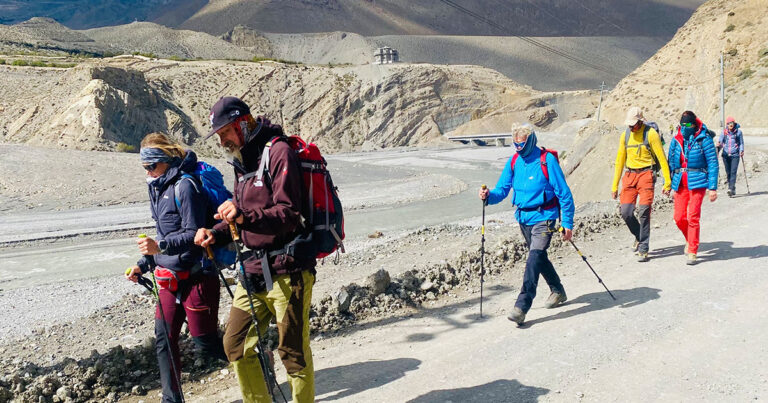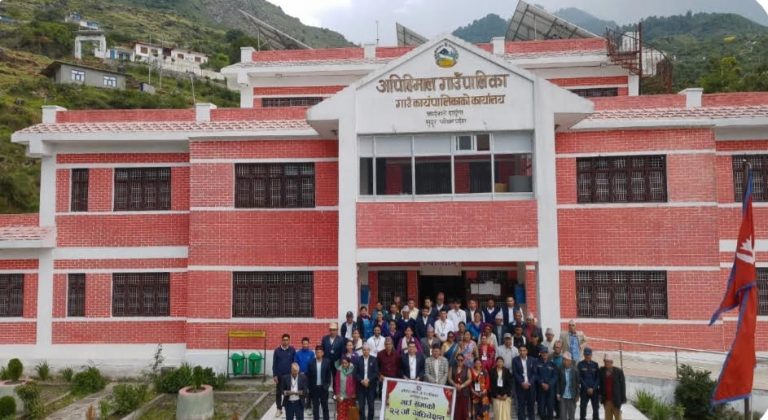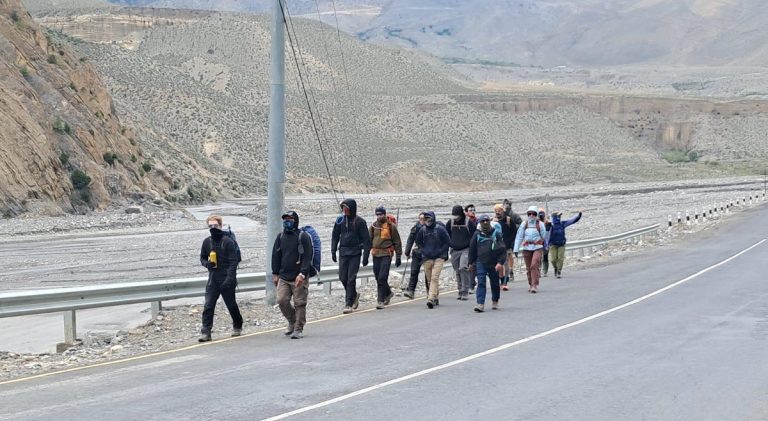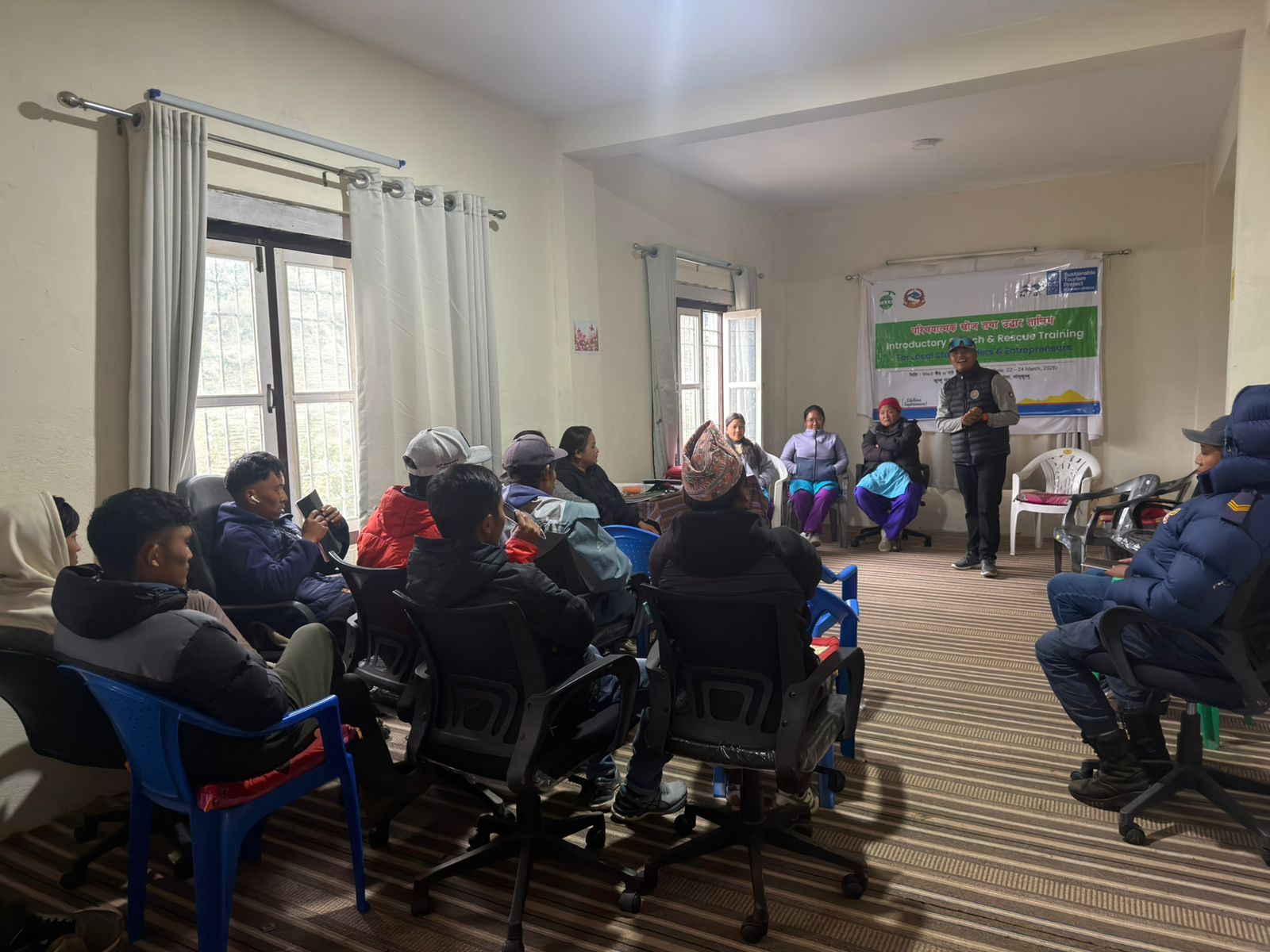
A three-day Introductory Search & Rescue Training has commenced in Kharikhola, a key gateway to the Everest region, aiming to enhance safety standards for trekkers and local communities. The training, which began on March 22, 2026, targets local stakeholders and tourism entrepreneurs of Ward No. 1 in Khumbu Pasanglhamu Rural Municipality, Solukhumbu.
Strengthening Safety in a Key Trekking Corridor
Kharikhola holds strategic importance as an entry point to both the Khumbu Valley and the Mera Peak region, two of Nepal’s most popular trekking destinations. With increasing footfall of international trekkers, ensuring preparedness for emergencies has become crucial. The ongoing training seeks to equip local stakeholders with essential skills in search and rescue operations, first aid response, and emergency handling.
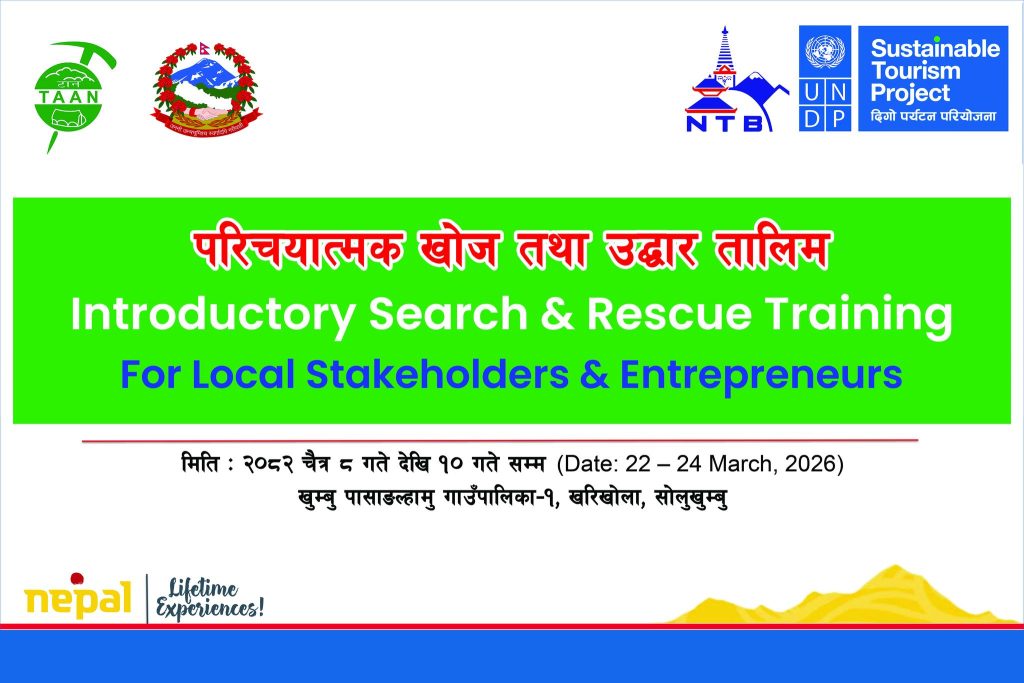
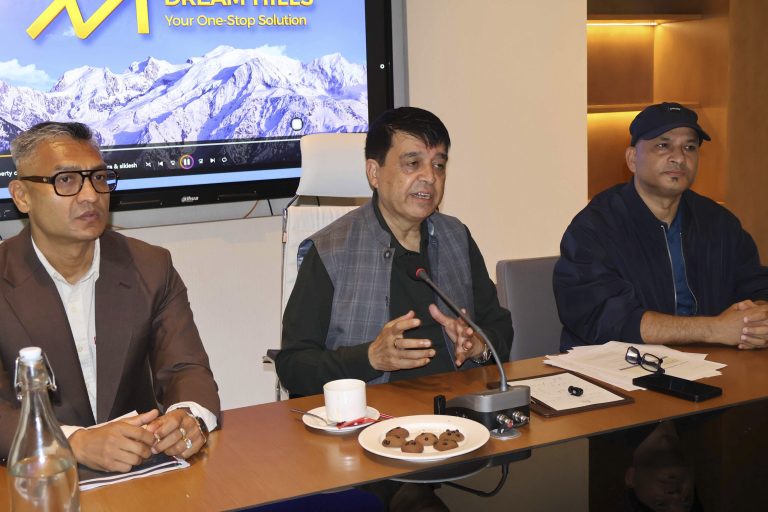
The initiative is jointly organized by the Trekking Agencies’ Association of Nepal, the Sustainable Tourism Project (STP), and the Trekking Guide Association of Nepal. The Sustainable Tourism Project (STP) itself is a collaborative effort between the Nepal Tourism Board (NTB) and the United Nations Development Programme (UNDP), reflecting a strong partnership between national and international stakeholders in promoting sustainable tourism.
Focus on Skills and Emergency Preparedness
The core objective of the training is to build the capacity of local communities to respond effectively to emergencies in remote trekking regions. Participants are being trained in basic search and rescue techniques, the use of life-saving equipment, and coordination during crises such as accidents, altitude sickness, or natural hazards.
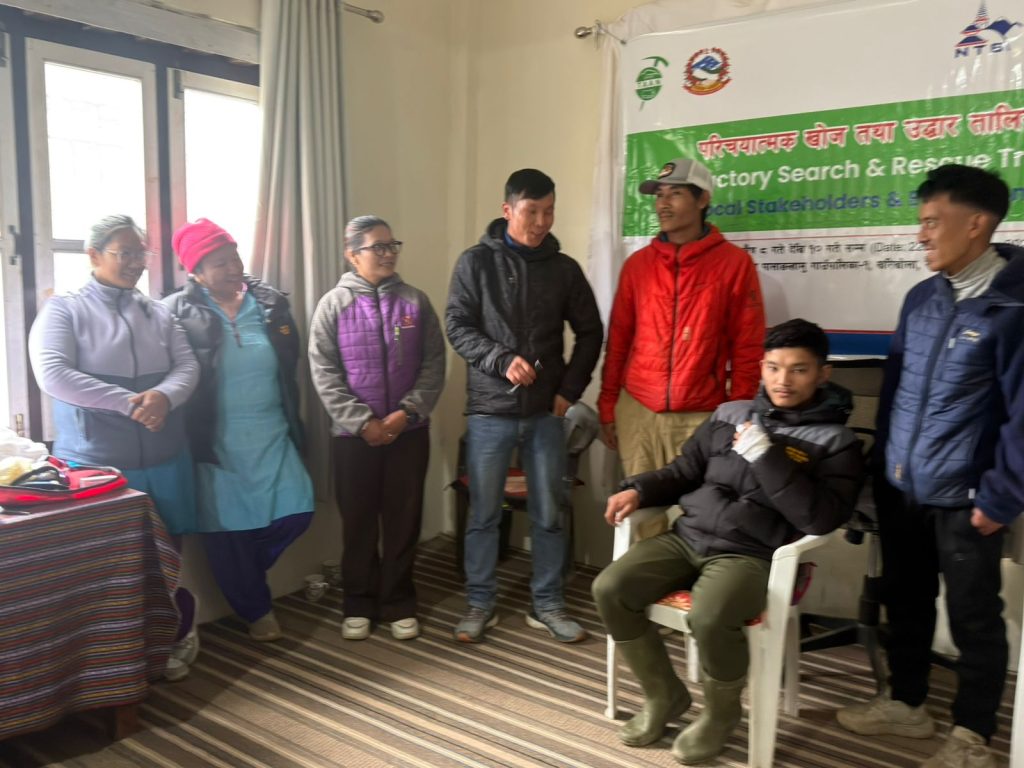
A total of 17 participants from diverse sectors are taking part in the program. These include representatives from the rural municipality, local police, health posts, youth clubs, tea-house lodge owners, trekking guides, yak herders, and entrepreneurs involved in non-timber forest products (NTFPs). This inclusive participation ensures that multiple layers of the local ecosystem are prepared to act in times of need.
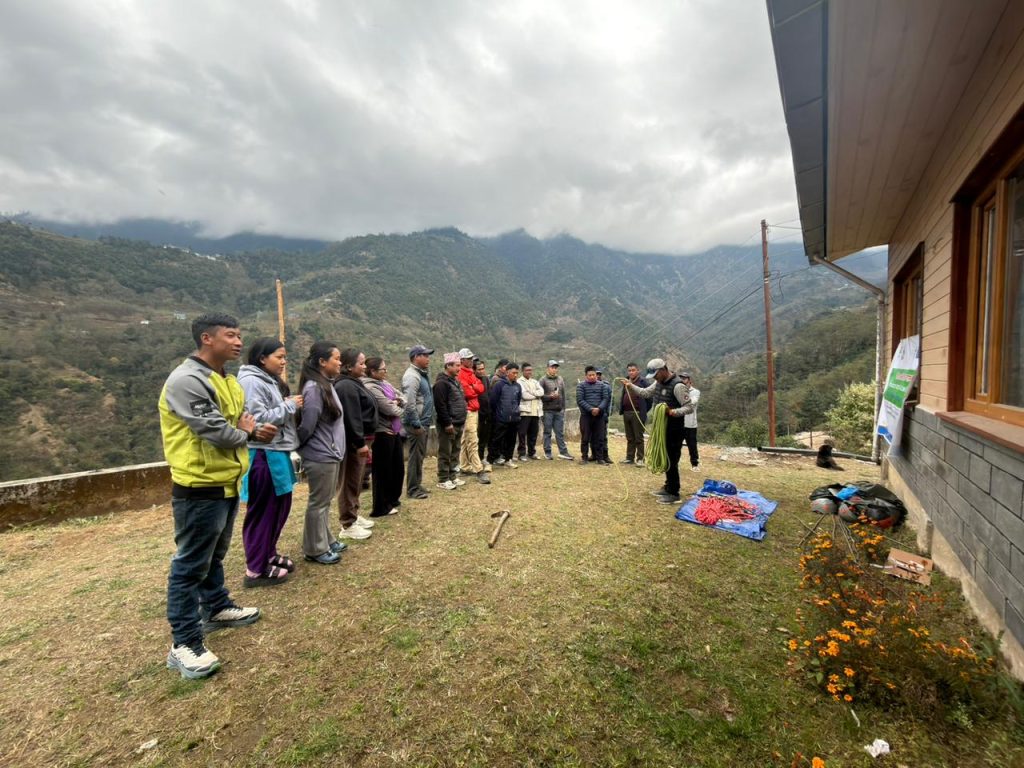
Training sessions are being conducted by experienced and qualified instructors, combining both theoretical knowledge and practical field exercises. Participants are learning how to use essential rescue tools, administer first aid, and coordinate evacuation procedures in challenging mountainous terrain.
Local Coordination and Community Ownership
The program is being locally coordinated by Ward No. 1 of Khumbu Pasanglhamu Rural Municipality, ensuring strong community ownership and engagement. Local authorities have played a key role in mobilizing participants and facilitating logistics, highlighting the importance of grassroots involvement in disaster preparedness initiatives.
Officials believe that empowering local stakeholders is vital in remote areas where immediate external rescue support may not always be available. By building the local capacity, response time can be significantly reduced, ultimately saving lives.
Equipment Support for Long-Term Impact
At the conclusion of the training, the Ward Office will be provided with essential search and rescue equipment. This includes rescue ropes, safety helmets, first aid kits, and carabiners, tools that are critical for immediate response during emergencies.
The provision of such equipment is expected to ensure that the knowledge gained during the training can be practically applied in real-life situations. It also strengthens the long-term resilience of the community by establishing a basic but effective local rescue system.
Boosting Confidence in Nepal’s Trekking Sector
Tourism experts view this initiative as a significant step toward enhancing the safety and reliability of Nepal’s trekking industry. As global travelers increasingly prioritize safety, such training programs can boost confidence among visitors planning to explore high-altitude regions like Everest.
By combining skill development with resource support, the initiative not only safeguards tourists but also protects the livelihoods of local communities that depend heavily on trekking and tourism activities. Stakeholders believe that similar programs should be expanded to other trekking routes across Nepal to create a more robust and responsive safety network nationwide.