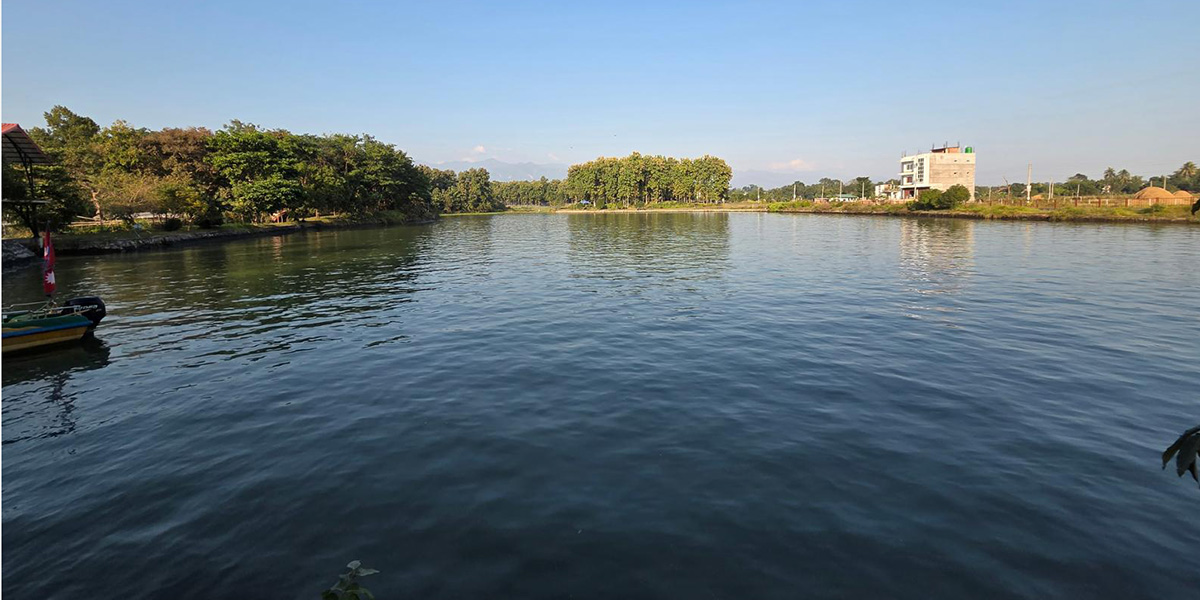
Talatalaiya, spanning Itahari Sub-Metropolitan Wards 2 and 3, is rapidly emerging as a major tourist attraction in eastern Nepal. Covering approximately 21.5 hectares, this picturesque area has gained popularity primarily as a picnic destination, drawing both domestic and international visitors throughout the year.
During the peak picnic season, Talatalaiya sees an influx of 12,000 to 15,000 tourists daily, according to Gangabahadur Raymajhi, chairman of the Talatalaiya Management Committee. On average, more than 500 tourists visit the area for sightseeing each day. With the capacity to accommodate over 70 groups simultaneously for picnics, the committee recommends advance bookings, ideally two to four days prior, for groups planning to visit.

Infrastructure Development for Tourists
To enhance the visitor experience, the management committee has developed six ponds within the Talatalaiya premises. Additionally, two motorboats have been introduced to provide recreational boating facilities. Raymajhi noted that tourist activity peaks from mid-November to mid-February (Mangsir to Magh in the Nepali calendar), with around 40% of visitors coming from various cities in India as well as from Siraha and Saptari districts in Nepal.
Another major attraction for tourists is the small zoo within Talatalaiya, which houses a variety of wildlife including ducks, peacocks, vultures, deer, horses, and monkeys. The increasing interest in observing these animals has contributed to a steady rise in visitor numbers.
Government Support and Infrastructure Expansion
In the fiscal year 2081/82, the Ministry of Urban Development allocated NPR 8.5 million to develop additional tourist facilities within Talatalaiya. The funding has been utilized to construct new restrooms, expand the zoo infrastructure, and provide other visitor-friendly amenities. A nursery, water fountains, and a children’s park have also been established, making the location particularly attractive for families during school holidays. Raymajhi mentioned that parents frequently bring their children to enjoy these recreational spaces, adding to the vibrancy of the site.
Boost to Local Economy
Local business owners have benefited significantly from the increasing number of visitors. Chandrakala Shrestha, a local vendor, said, “Having a tourist destination so close to home has greatly benefited small businesses. With 500 or more tourists visiting daily, the sale of snacks like momo, chowmein, and other items has increased, improving local incomes.”
Visitor Experiences
For many tourists, Talatalaiya offers an ideal getaway. Niroj Thapa, visiting from Kanepokhari, Morang, remarked, “With its wide-open spaces, boating facilities, attractive photo spots, flower gardens, and well-maintained structures, Talatalaiya is our preferred destination during holidays.”
Role in Promoting Local Tourism
Over time, Talatalaiya has established itself as one of the premier recreational and picnic destinations in eastern Nepal, playing a significant role in promoting local tourism. According to Raymajhi, the management committee has been working on the restoration of existing structures, wildlife conservation, and the development of additional tourist infrastructure, with support from both provincial and federal governments.

Facilities for Relaxation and Sightseeing
Visitors can now enjoy dozens of resting platforms, landscaped gardens, and various sculptures, all constructed with government assistance to enhance the overall tourist experience. The ongoing efforts to preserve natural beauty while providing modern amenities have positioned Talatalaiya as a model for sustainable tourism development in the region.
Talatalaiya’s combination of natural beauty, recreational facilities, and strategic development has transformed it into a key tourist hub in Sunsari. With continued government support and active community involvement, the site is expected to attract even more visitors, further contributing to the local economy and enhancing the profile of eastern Nepal as a must-visit destination.