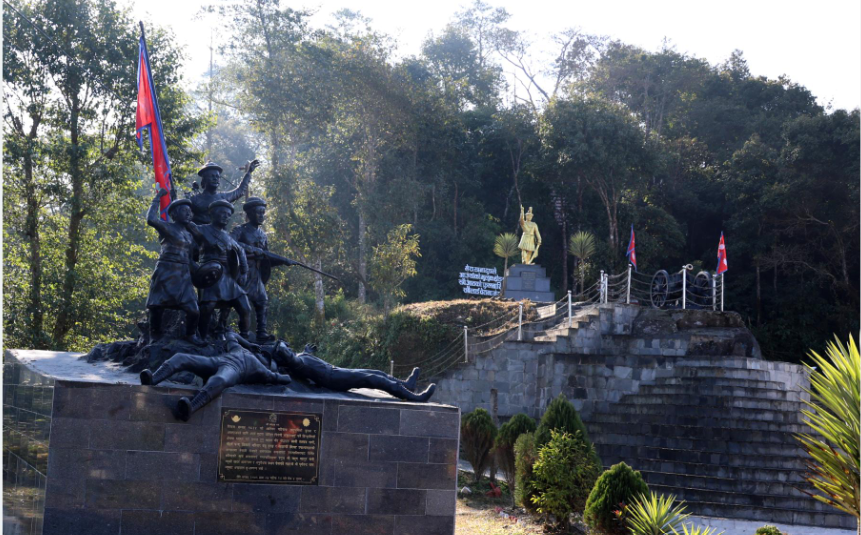
Sindhuli Gadhi, a historic fort renowned for its natural beauty and national significance, has witnessed a remarkable rise in tourist arrivals in recent months following major restoration works and the establishment of a war museum under a national pride project.
Located about 20 kilometers from Sindhulimadhi, the district headquarters, and Khurkot Bazaar, Sindhuli Gadhi now attracts more than 200 visitors daily, making it one of the fastest-emerging heritage tourism destinations in central Nepal.

According to Uddhav Shrestha, President of the Sindhuli chapter of the National Photojournalists Group Nepal, tourist numbers have increased steadily since the reconstruction of the Gadhi Durbar, other historical structures, and the formal operation of the War Museum. He noted that the serpentine road leading to Sindhuli Gadhi, coupled with year-round misty weather and panoramic natural scenery, has made the site particularly appealing to visitors.
Year-Round Attraction for Domestic and Foreign Tourists
Sindhuli Gadhi remains attractive in both summer and winter seasons. Tourists from Terai districts especially favor the destination for its cool climate, refreshing breeze, and historical legacy. During peak seasons such as Nepali and English New Year, Saturdays, and public holidays, the number of daily visitors exceeds 1,000, according to local traders.
Gopal Shrestha, a local entrepreneur, said that the current junar and orange season has further boosted tourism, as both domestic and Indian visitors take home locally grown citrus fruits and vegetables as gifts. These products have also contributed positively to local economic activity.
War Museum Strengthens Historical Identity
Recognized as a living document of the Nepal–British War, Sindhuli Gadhi has undergone significant infrastructure development since Nepal adopted the federal structure. Under Kamalamai Municipality, the Nepal Army invested nearly Rs. 80 million to construct the War Museum, which has become a central attraction.
The museum showcases cannons, traditional weapons, wartime equipment, and documentary exhibitions related to the historic battle, offering visitors an immersive insight into Nepal’s military and cultural heritage.
Growing International Interest
Over the past year, tourists from countries including the United States, United Kingdom, Australia, Japan, Sri Lanka, Pakistan, and India have also begun visiting Sindhuli Gadhi, reflecting its rising profile on the international tourism map.

Former Mayor of Kamalamai Municipality Khadga Bahadur Khatri highlighted that visitors can explore various heritage and natural attractions in the area, including the War Museum, Rani Durbar, Thundo Durbar, views of the Terai plains, the Mahabharat range, Ganesh Himal, and rare medicinal herbs found in the surrounding hills.
Emerging as a Heritage Tourism Hub
Local residents believe that Sindhuli Gadhi’s historical value, combined with scenic beauty and improved infrastructure, is rapidly establishing it as a significant heritage tourism destination in Nepal. With increasing domestic and international attention, Sindhuli Gadhi is set to play an important role in promoting cultural tourism and boosting the local economy.