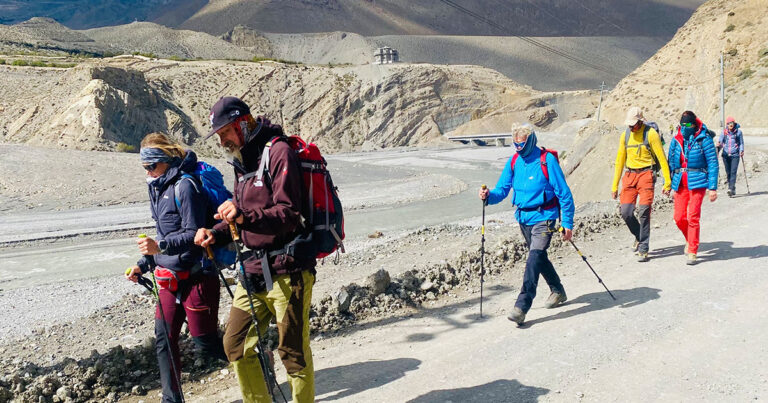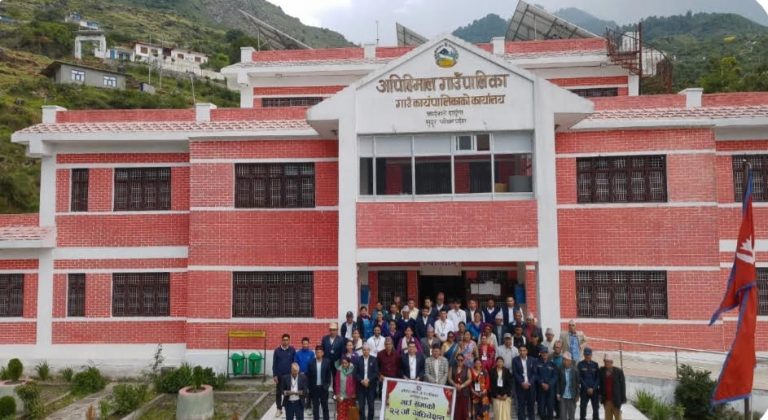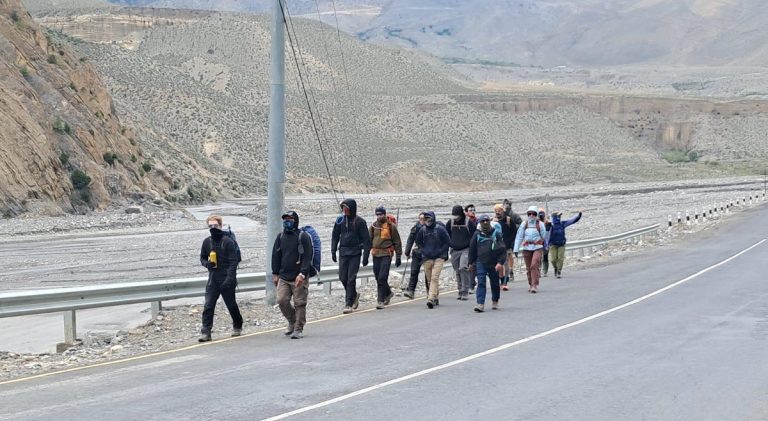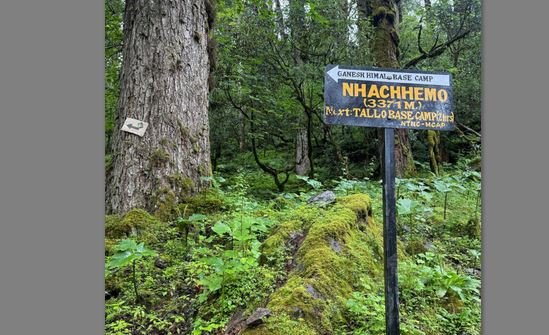
In a bid to ensure safe and convenient trekking for visitors exploring the remote trails of Northern Gorkha, the Manaslu Conservation Area Project (MCAP) has installed additional ‘marking poles’ and ‘signposts’ along various trekking routes within the Manaslu region. The move aims to enhance route visibility, provide directional support, and improve overall trekking experience in the high-altitude conservation zone.
Signage Expansion Across 53 Strategic Locations
According to Santosh Sherchan, Chief of the Manaslu Conservation Area Project Office, a total of 53 new navigation aids, including both signposts and marking poles, were installed during the fiscal year 2081/82 (2024/25). Of these, 35 are informational signposts and 18 are marking poles strategically positioned along the trekking trails.
“These enhancements are critical for improving route visibility and assisting trekkers in understanding their current location, elevation, and estimated travel time to the next destination,” said Sherchan. He added that the signage also provides basic information about local wildlife, contributing to both safety and awareness.
Increased Trail Marking in Nubri Valley
Particular attention was given to the Larke Bazaar to Bimthang trail in the Nubri Valley, where the number of marking poles has now risen to 124 from the previous 108. These poles are especially important in high-altitude areas that are prone to heavy snowfall and low visibility.
“During winter and snow seasons, the trekking trails often get buried under snow. Marking poles serve as vital guides for trekkers, helping them stay on the correct path and avoid getting lost,” explained Sherchan.
The poles, painted in visible colors and designed to withstand harsh weather conditions, act as consistent visual cues in areas where natural trail indicators may disappear under snow or fog.
Diversified Signage Coverage in Chum Valley and Other Areas
In addition to Nubri Valley, MCAP has installed 19 new signposts along the Chum Valley trails, including routes leading to Ganesh Himal. Another 14 signposts were added in Nubri Valley itself, while two were placed at Siridibas, each one strategically positioned to aid orientation and promote trail safety.
The signs provide multilingual information including trail names, altitude levels, estimated time to upcoming destinations, and brief notes on local biodiversity. These are intended not just to help with navigation, but also to enrich the trekking experience by offering insights into the region’s natural and cultural assets.
Ongoing Improvements Planned for Fiscal Year 2082/83
Building on the momentum of the current upgrades, MCAP has announced its plans for the ongoing fiscal year 2082/83 (2025/26). The office aims to install 25 additional marking poles and 35 more signposts across several high-traffic and remote trekking paths within the conservation area.
“These upgrades are part of our long-term goal to make Manaslu one of the safest and most informative trekking destinations in Nepal,” said Sherchan. “We are committed to continuously improving infrastructure so that tourists can explore the region with confidence.”
Supporting Safe and Sustainable Tourism
The Manaslu Conservation Area, established to protect the fragile mountain ecosystem while promoting eco-tourism, spans remote sections of northern Gorkha district and is home to diverse flora, fauna, and ethnic communities. The area attracts thousands of domestic and international trekkers every year, particularly those looking for off-the-beaten-path adventures.
With challenging trails, high-altitude passes like Larke La, and rapidly changing weather conditions, safety and clear navigation are critical for trekkers in the region. The installation of visible, reliable signage not only contributes to the physical safety of visitors but also supports responsible and sustainable tourism in the area.
Local Benefits and Community Engagement
In addition to benefitting trekkers, the new infrastructure is expected to positively impact local communities by attracting more tourists and supporting local businesses such as lodges, guides, and porters. MCAP has collaborated with local stakeholders to ensure that the placement of signposts and poles respects cultural sensitivities and does not disrupt wildlife corridors.
Local involvement in maintaining and monitoring the signs will also be encouraged, ensuring both longevity of the infrastructure and community participation in conservation and tourism management.
The proactive approach taken by the Manaslu Conservation Area Project reflects a growing awareness of the importance of trail infrastructure in enhancing trekking experiences, ensuring safety, and preserving the unique cultural and ecological identity of the region. With continued efforts, Manaslu is well on its way to becoming a model for sustainable high-altitude tourism in Nepal.
As more marking poles and signposts are installed in the coming months, trekkers can look forward to a safer, better-informed, and more enriching journey through one of Nepal’s most stunning Himalayan landscapes.