The Kirat communities across Nepal and beyond celebrated Udhauli Parva, one of their most important cultural festivals, with great enthusiasm and spiritual devotion. Observed annually at the onset of winter, the festival symbolizes the historic migration of people, animals, and birds from the high hills to lower, warmer regions. Udhauli, which literally means “going down,” is deeply rooted in the agrarian and nature-based lifestyle of the Kirati people and remains a powerful reminder of their harmonious relationship with the environment.
A Festival Honoring Migration and the Changing Seasons
Udhauli Parva holds special significance among the Sunuwar, Limbu, Yakkha, and Khambu Rai communities, who celebrate the festival not only in Nepal but also in India and other countries where the Kirati diaspora resides. For centuries, migration has been central to Kirati life. As winter approaches, people traditionally move downward to low-elevation areas, while summer brings an opposite upward movement known as Ubhauli, another major Kirati festival.

Udhauli symbolizes gratitude for the year’s harvest and appreciation for the natural cycles that sustain life. On this day, communities offer prayers to Mother Nature, thanking her for abundance, protection, and prosperity.
Sakela Dance Takes Center Stage in Celebrations
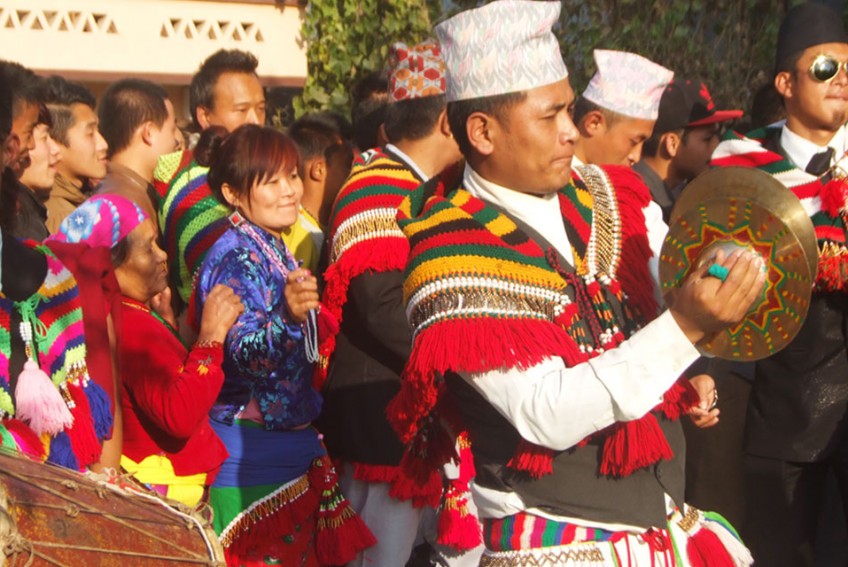
The highlight of Udhauli Parva is the spectacular Sakela (Sakewa) dance, an ancient ritual dance performed in open fields, courtyards, and community gathering sites. Predominantly celebrated in the eastern districts, Khotang, Bhojpur, Dharan, Dhankuta, Pathari, Kanepokhari, and Kerabari, the Sakela dance brings together thousands of participants dressed in traditional attire.
Dancers form large circles and move rhythmically to the powerful beats of Dhol (drum) and Jhyamta (cymbals). The dance steps are not random, they are believed to be inspired by ancestral movements that were modeled after the lifestyle, behavior, and activities of animals and birds. These steps represent farming, hunting, gathering, and early human survival practices, making Sakela a living expression of Kirati history and identity.
Celebrating Identity Through Ancestral Movements
Each subgroup within the broader Kirat community performs its own unique set of dance steps, showcasing the rich diversity embedded within the culture. Despite variations, one belief binds them all: Sakela is a tribute to Mother Earth.
Through every gesture and movement, dancers express gratitude for nature’s gifts, soil, water, forests, crops, and life itself. The dance is also symbolic of how the Kirati people learned to coexist peacefully with wildlife, reflecting their respect for both natural and spiritual realms.
According to Kirati tradition, Sakela is much more than a dance; it is a prayer in motion. The festival connects present generations with centuries-old customs passed down through oral traditions and rituals.
Udhauli in the Sacred Texts of the Kirat People
The importance of Udhauli is emphasized in the Mundhum, the holy scripture of the Kirat people. The text describes the origins of the festival, the sacred relationship between humans and nature, and the ancestral wisdom that guides Kirati life. For the Kirati communities, Mundhum is not just a religious text, it is a way of life. Its teachings about migration, gratitude, and harmony with nature remain deeply relevant today.
A Festival That Strengthens Community and Preserves Heritage
In modern times, Udhauli Parva has become a vital platform for cultural preservation. It unites Kirati people from villages, towns, and global communities, reaffirming their shared identity and heritage.

Young people participate enthusiastically, learning dance steps, rituals, and oral stories from elders. This intergenerational exchange ensures that Kirati traditions continue to thrive even as society changes. Udhauli Parva also attracts cultural enthusiasts, researchers, and tourists who seek to understand the spiritual and ecological wisdom embedded in indigenous Nepali festivals.
A Celebration of Life, Nature, and Harmony
More than just a seasonal festival, Udhauli Parva is a reminder of humanity’s timeless connection with nature. Through prayer, music, dance, and communal gatherings, the Kirat people celebrate survival, gratitude, and belonging. As the winter winds descend from the hills, Udhauli stands as a vibrant celebration of identity, culture, and the divine bond between people and the earth.