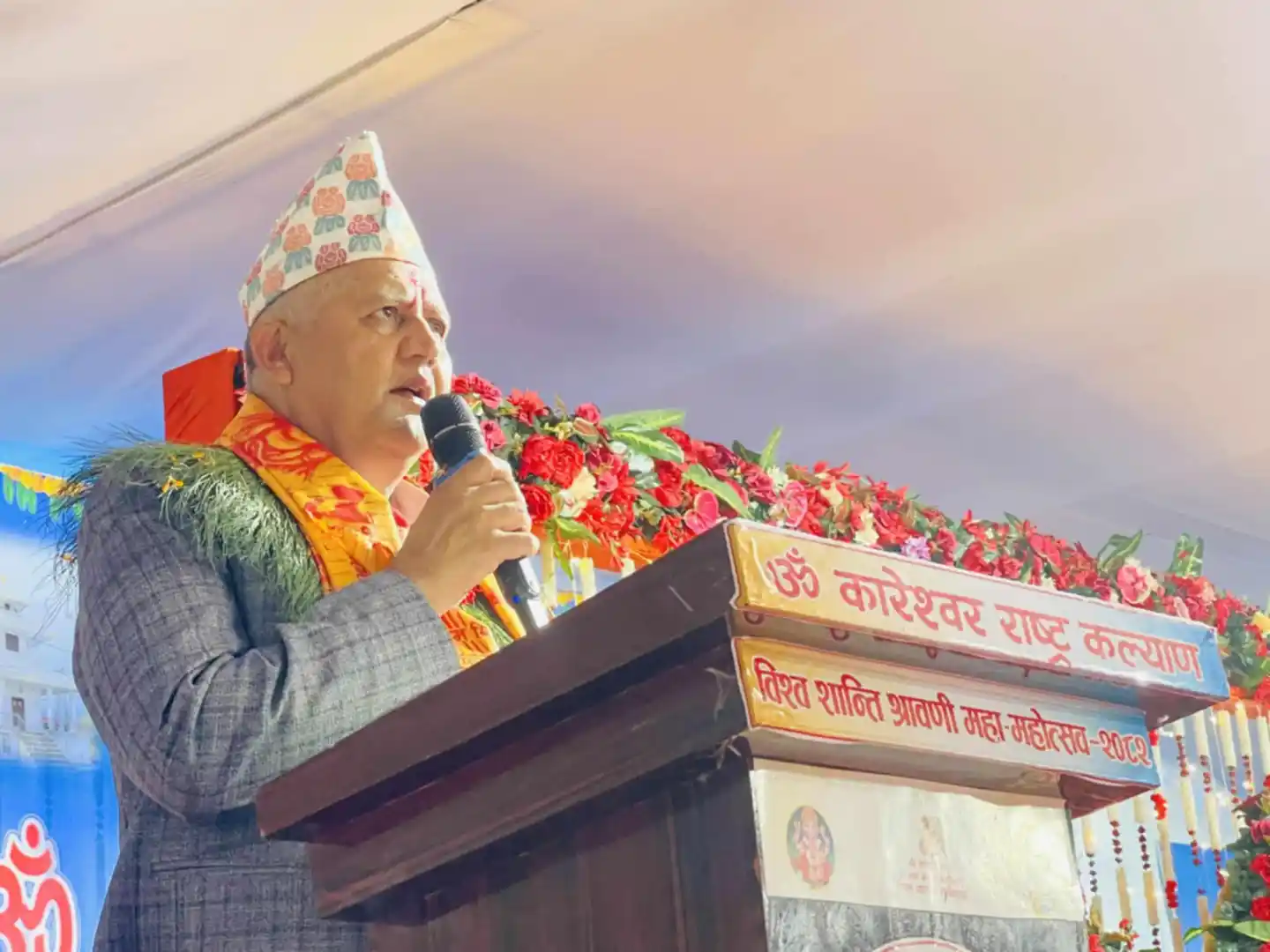
Lumbini Province Chief Minister Chet Narayan Acharya has emphasized the immense religious and natural tourism potential of the province, calling for a strategic and long-term approach to develop and promote such sacred destinations. Addressing the inaugural ceremony of the Shravani Mahamahotsav at the historic Shree Harihar Om Kareshwar Mahadev Temple in Khakhribari, located in Sunwal Municipality-10 of Bardaghat-Susta West, Nawalparasi, Chief Minister Acharya articulated the provincial government’s commitment to turning these spiritually significant sites into major tourist attractions.
“Lumbini is a Land of Tapasya and Divine Heritage”
Speaking passionately about the province’s spiritual richness, CM Acharya remarked, “This land is inherently sacred, it is a tapobhumi (land of meditation). Nowhere else in the world will you find something as rare as the Shaligram, which is found only in the Kaligandaki River flowing through this region.” Highlighting the uniqueness of these naturally occurring sacred stones, considered incarnations of Lord Vishnu in Hindu belief, he said that such distinctive religious and ecological elements position Lumbini as a global destination for spiritual tourism.
Commitment to Cultural and Religious Legacy
Chief Minister Acharya further stated that Lumbini Province should not only be recognized as the birthplace of Lord Gautam Buddha, a beacon of peace and enlightenment worldwide, but also as the homeland of Rishi Panini, the ancient sage who authored the Sanskrit grammar (Ashtadhyayi). This dual legacy, spiritual and intellectual, must be celebrated and promoted as a matter of cultural pride and identity, he emphasized.
Reiterating the government’s dedication to preserving these historical and spiritual landmarks, CM Acharya noted that the province has already formulated a clear vision for their promotion and protection. He said, “The government is working seriously on protecting and promoting places tied to religious faith. We are operating structured programs for the development of religious and natural tourism destinations, and we are preparing new plans to further that development.”
Advocacy for Social Investment in Religious and Charitable Causes
In a heartfelt appeal to the community, CM Acharya urged every citizen to contribute at least 10 percent of their income to noble causes such as religious donations, spiritual service, and social upliftment. “I am not encouraging people to go into debt for donations,” he clarified, “but I strongly believe that a portion of one’s earnings should be dedicated to serving society and supporting our spiritual heritage.” His statement underlines the idea that sustainable spiritual development is not only a matter of government policy but also of personal responsibility and community-driven action.
Long-Term Vision for Khakhribari and Kaligandaki Region
The Chief Minister shared the government’s long-term plans for the Khakhribari area, identifying it as a potential key religious destination in Lumbini Province. He stressed the importance of preservation, infrastructure development, and promotion of the region, particularly around the revered Mahadev temple and nearby sacred sites. These initiatives, he noted, will help turn Khakhribari into a well-recognized spiritual hub for pilgrims and tourists from Nepal and abroad.
CM Acharya also pointed out the significant role of the Uttarbahini Ganga Program, which is aimed at the preservation and management of sacred rivers and fostering spiritual tourism in the region. He expressed confidence that such initiatives will yield long-lasting impacts by reinforcing Nepal’s identity as a deeply spiritual and naturally beautiful nation.
Integrating Spiritual Tourism with Regional Development
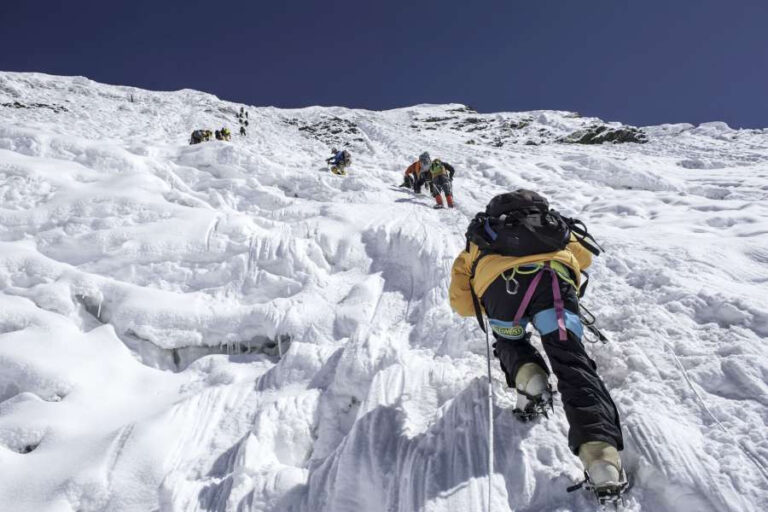
Chief Minister Acharya’s remarks come at a time when Nepal is actively exploring ways to diversify its tourism industry, moving beyond the traditional trekking and mountain-climbing sectors. With Lumbini Province encompassing globally significant spiritual landmarks, from Lumbini itself to ancient temples and hermitages scattered across the plains and hills, the emphasis is increasingly shifting towards pilgrimage tourism, cultural heritage routes, and ecological sanctuaries.
The CM’s focus on Khakhribari and Kaligandaki as spiritual sites of unparalleled value reflects a larger provincial strategy: to make religious tourism a pillar of local economic development. Not only does this approach respect and revive ancient traditions, but it also creates opportunities for job creation, infrastructure development, and community empowerment through tourism revenue.
As the Shravani Mahamahotsav unfolds in the sacred ambiance of Khakhribari, Chief Minister Acharya’s commitment to transforming Lumbini Province into a holistic religious and eco-tourism destination sets the tone for future policy and grassroots engagement. With community participation, strategic government initiatives, and reverence for Nepal’s rich spiritual landscape, Lumbini appears ready to redefine itself on the global tourism map, not just as the cradle of Buddhism, but as a sanctuary for seekers of diverse spiritual paths.