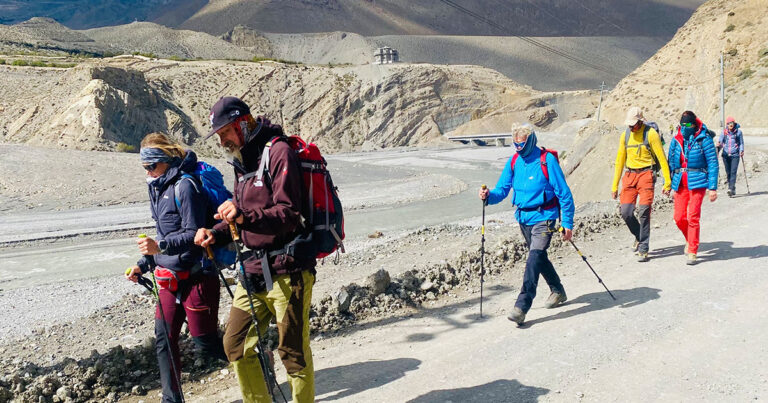
Despite the ongoing monsoon season, the Annapurna Base Camp (ABC) trekking route continues to see a steady flow of tourists. On average, more than 50 visitors per day are reaching the base camp, highlighting the enduring appeal of this iconic trekking destination even during Nepal’s rainy months.
According to Dilip Gurung, Secretary of the Chhomrong Tourism Management Committee, the vibrant natural environment, adorned with rapidly blooming and fading wildflowers like Buki, along with the lush greenery and cascading streams, has been a major draw for visitors. The scenic charm, combined with cultural richness, continues to captivate both domestic and international trekkers.
World-Class Trekking Route Maintains Global Attention
The trekking trail to Annapurna Base Camp is recognized as one of the world’s premier trekking routes. With rising global awareness of its beauty, the trail remains a point of interest and discussion among adventure seekers and travel enthusiasts around the world. Encouraged by the continuing tourist arrivals during the off-season, local tourism stakeholders are feeling optimistic about the future.
Just four and a half decades ago, trekkers arriving in the region had to rely on makeshift shelters made from cattle sheds or local huts constructed with stones and mud, Gurung recalls. Today, the scenario has drastically improved, with the presence of modern, well-equipped hotels providing comfort and convenience to visitors.
Infrastructure Expansion Meets Growing Tourist Demand
Previously, the Annapurna trail from Sinuwa to Annapurna Base Camp hosted 26 hotels spread across key stops such as Sinuwa, Bamboo, Himalaya, Dobhan, Deurali, Machhapuchhre Base Camp (MBC), and Annapurna Base Camp (ABC) itself. As per guidelines from the Annapurna Conservation Area Project (ACAP), each hotel initially offered six rooms, totaling 156 rooms.
However, due to growing tourist interest, several hotels have been upgraded and expanded in recent years. Now, 34 hotels operate above Sinuwa, offering improved amenities and increased lodging capacity. Hotels have also been expanded in nearly every stop along the trail.
Currently, there are 4 hotels in Sinuwa, 6 in Bamboo, 3 in Himalaya, 5 in Dobhan, 5 in Deurali, 5 in MBC, and 6 in ABC. “With this capacity expansion, we can now accommodate between 500 to 600 tourists daily in the region,” Gurung said, adding that local hoteliers are committed to providing excellent hospitality to visitors.
Cleanliness Campaigns Reflect Sustainable Tourism Approach
Recognizing the importance of maintaining environmental hygiene, local tourism operators conduct regular cleaning drives along the trekking route. Traditionally, the trail is cleaned during the first week of Ashadh (mid-June) and last week of Shrawan (mid-August) to remove waste left behind during the peak trekking season (March–May).
This year alone, the trail cleanup campaign collected 290 sacks of glass and plastic waste, which were later transported to the Green Waste Management Zone in Pokhara for proper disposal. The cleanup initiative reflects the community’s commitment to preserving the pristine beauty of the Annapurna region and promoting eco-friendly tourism.
Tourist Traffic Expected to Rise from Early Bhadra
According to tourism entrepreneurs, the first week of Bhadra (mid-August) marks the beginning of increased tourist activity. Preparations are already underway to welcome the influx of trekkers during the post-monsoon peak season. The Annapurna Century Tourism Committee organizes the Annual International Annapurna Marathon from ABC to Ghandruk, helping to promote the trekking trail both domestically and internationally.
Committee Chair Lalit Gurung informed that the marathon was first launched in 2018 (2075 B.S.) to commemorate the historic Annapurna Summit Day. Since then, five editions of the marathon have been successfully completed, significantly contributing to the visibility and promotion of the Annapurna trail worldwide.
Celebrating a Legacy of Mountaineering and Trekking
The Annapurna region holds a special place in the annals of mountaineering history. On June 3, 1950, Maurice Herzog and his French expedition team became the first to summit Annapurna I (8,091 meters), setting a world record. This event placed the region in the global spotlight and sparked growing interest in Himalayan exploration.
Subsequently, on May 29, 1953, Tenzing Norgay Sherpa and Sir Edmund Hillary summited Mount Everest, the world’s highest peak, further cementing Nepal’s reputation as a mountaineering hub.
In 1966, sixteen years after Herzog’s ascent, the renowned trekker Eric Shipton hiked to the Annapurna Base Camp at 4,130 meters, further promoting the trail as a premier trekking destination. Since then, the region has evolved into a globally recognized hotspot for trekking and adventure tourism.
A Year-Round Destination for Adventure and Nature
The Annapurna Base Camp trek continues to be a beacon of Nepal’s adventure tourism, attracting thousands of trekkers annually, even in the monsoon season. Thanks to improved infrastructure, consistent local efforts, and global historical significance, ABC remains a safe, sustainable, and scenic destination for trekkers worldwide.
The consistent arrival of tourists, regardless of weather conditions, demonstrates the resilience and attractiveness of the region. As the government and local stakeholders work together to further promote and manage this iconic trail, the Annapurna region stands as a shining example of how natural beauty, cultural heritage, and responsible tourism can coexist in harmony.