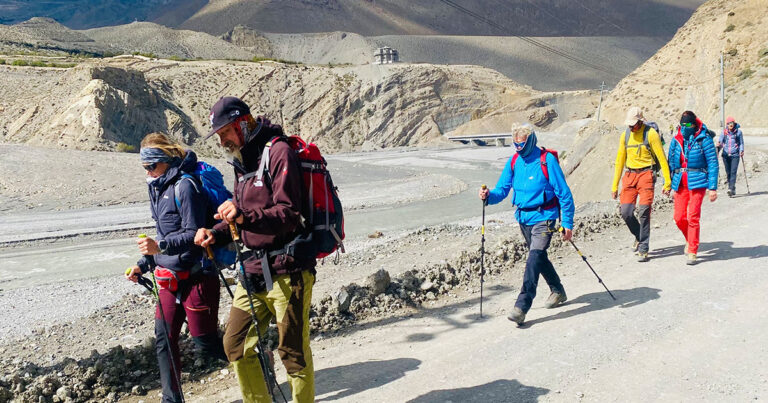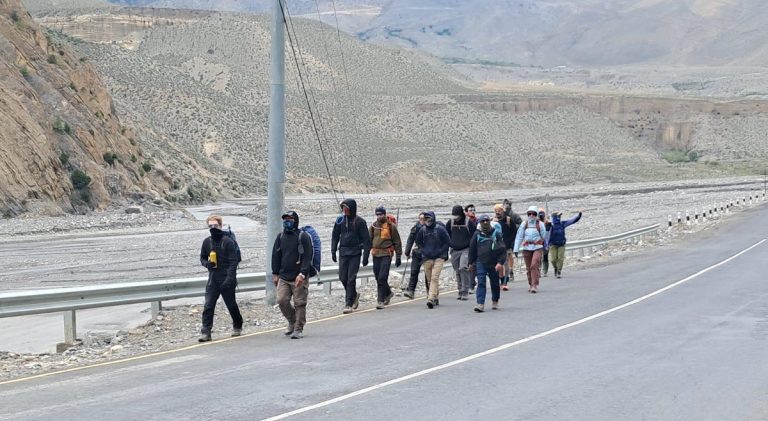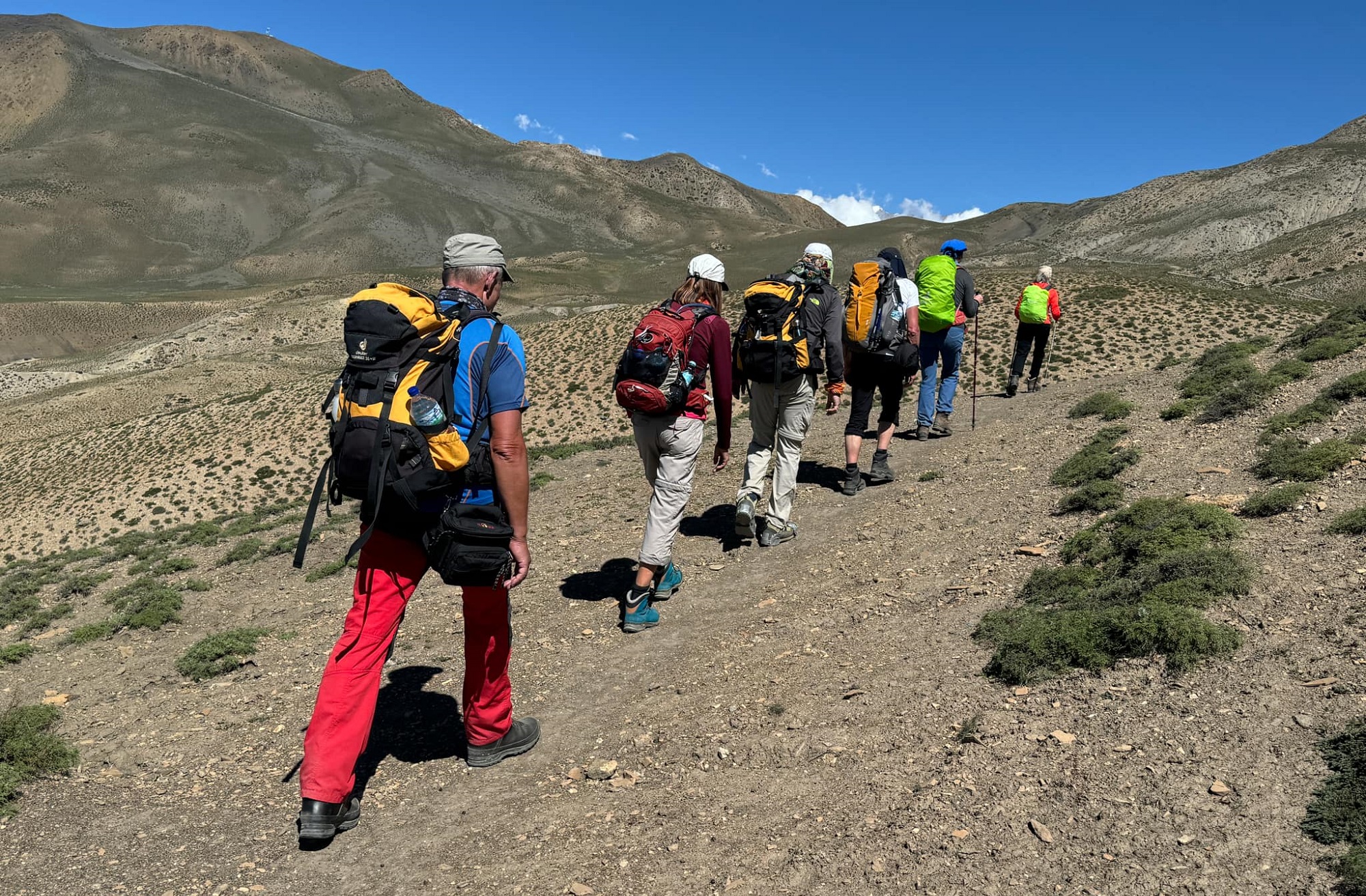
The Government of Nepal has collected a total revenue of Rs 291.1 million from foreign tourists visiting Upper Mustang in the fiscal year 2081/82, according to the Department of Immigration. This substantial amount was generated from 4,219 foreign visitors who obtained special permits to enter the restricted region of Upper Mustang, a uniquely preserved Himalayan landscape that has long fascinated global adventurers and spiritual seekers alike.
High Permit Fees for Controlled Area Access
Upper Mustang has been designated by the government as a restricted and controlled area, requiring foreign tourists to obtain a special entry permit prior to their visit. The Immigration Department charges USD 500 per person for a 10-day permit, making it one of the most expensive trekking zones in Nepal. For every additional day beyond the 10-day period, visitors are required to pay an extra USD 50 per day. These high fees are intended to preserve the fragile environment and cultural heritage of the region while limiting the tourist flow.
During the last fiscal year, the total amount of revenue collected from these permits reached USD 2,109,500, equivalent to Rs 291.1 million, showcasing the economic potential of carefully managed high-value tourism in the area. However, the requirement for special permits and the high cost have also contributed to a relatively low number of visitors compared to other trekking regions in Nepal.
73 Countries Represented in Visitor Data
According to Umesh Paudel, chief of the Annapurna Conservation Area Project (ACAP) office in Lo Manthang, tourists from 73 different countries visited Upper Mustang during the fiscal year. Among them, France accounted for the highest number of visitors, with 436 French nationals, making up 10.33% of the total tourist population in the region.
In contrast, only one tourist each from 12 different countries, including lesser-traveled nations such as Luxembourg, made it to Upper Mustang, indicating a broad but uneven international interest in this exclusive Himalayan destination.
Year-on-Year Growth in Tourist Numbers
The visitor numbers for FY 2081/82 showed a notable increase compared to the previous year (FY 2080/81), when 3,443 tourists from 71 countries had visited Upper Mustang. That year, France again led the visitor chart with 399 tourists, representing 11.58% of the total. Likewise, only one tourist from seven countries had ventured into the restricted region.
This represents a year-on-year increase of 18.39% in foreign visitors to Upper Mustang, signaling growing interest in the area despite the barriers to entry. The growth may be attributed to increased international awareness, marketing by travel agencies, and the allure of Mustang’s unique blend of Tibetan Buddhist culture, desert landscapes, and ancient walled cities.
Low Tourist Penetration Despite Overall Mustang Influx
From Shrawan 1 to 11 of the current fiscal year, 66 foreign tourists from 15 countries have already visited Upper Mustang. Among them, Belgium leads with 13 tourists, while only one tourist from Luxembourg has been recorded. Throughout FY 2081/82, a total of 150,456 foreign tourists entered Mustang district as a whole.
However, only 2.80% (4,219 tourists) of these made it to Upper Mustang, reflecting the impact of the restricted area status on the movement of foreign travelers. This stark contrast has raised concerns among local stakeholders, especially those in the Upper Mustang region, who feel that the restrictions are limiting the area’s tourism potential and undermining economic opportunities for local communities.
Locals Demand Lifting of Restrictions
The controlled area policy, originally implemented for cultural preservation and border security concerns, is increasingly being challenged by local representatives and tourism entrepreneurs. They argue that while the high permit fees have generated significant government revenue, the limited accessibility is “crippling the tourism industry” in Upper Mustang, which heavily depends on the seasonal flow of foreign trekkers.
Repeated appeals have been made to the central government to open up Upper Mustang by removing or revising its restricted area status. Locals believe that easing permit requirements would not only attract more visitors but also allow equitable economic growth for the communities that rely on tourism for their livelihood.
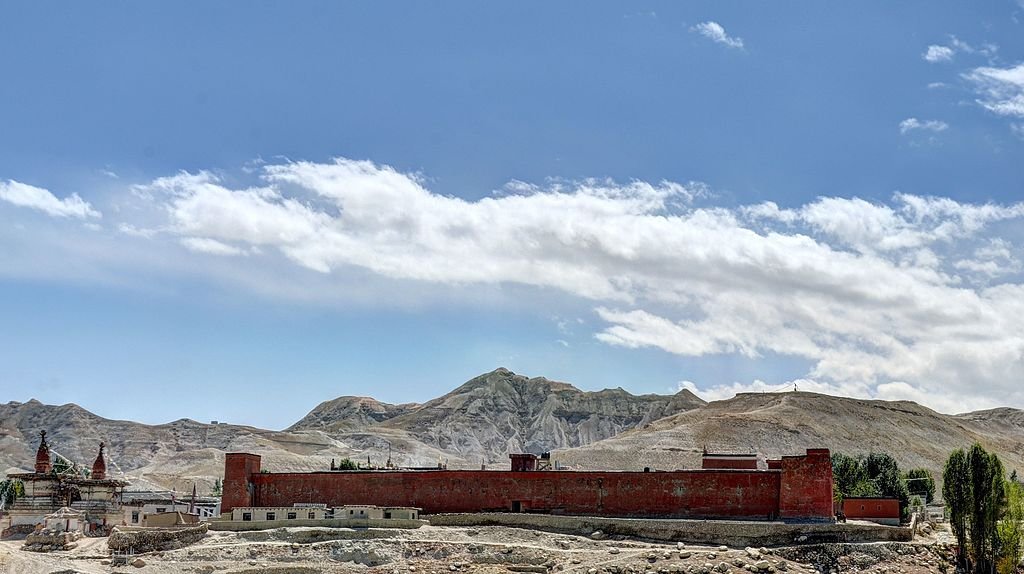
Despite the scenic grandeur, historical monasteries, and deep-rooted Tibetan-influenced traditions, the region remains under-visited due to bureaucratic barriers and high costs. Tourism professionals claim that if the area were opened like other parts of the Annapurna region, the number of visitors could increase significantly, without compromising cultural integrity, given proper management.
Way Forward: Balancing Conservation and Access
The growing revenue from tourism in Upper Mustang demonstrates its economic value, but it also highlights a complex debate between conservation, security, and development. While the government has succeeded in managing tourism under a high-value, low-volume model, the question remains whether a more inclusive and liberal tourism policy could yield greater long-term benefits for both the state and local people.
As Nepal seeks to diversify its tourism offerings under the newly launched Tourism Policy 2082, the case of Upper Mustang serves as a critical example of how access, pricing, and policy decisions shape tourist flows and local livelihoods. For now, Upper Mustang remains a premium and mystical destination for the few, but growing demand and local dissatisfaction could push policymakers toward a review of the current restrictions in the near future.