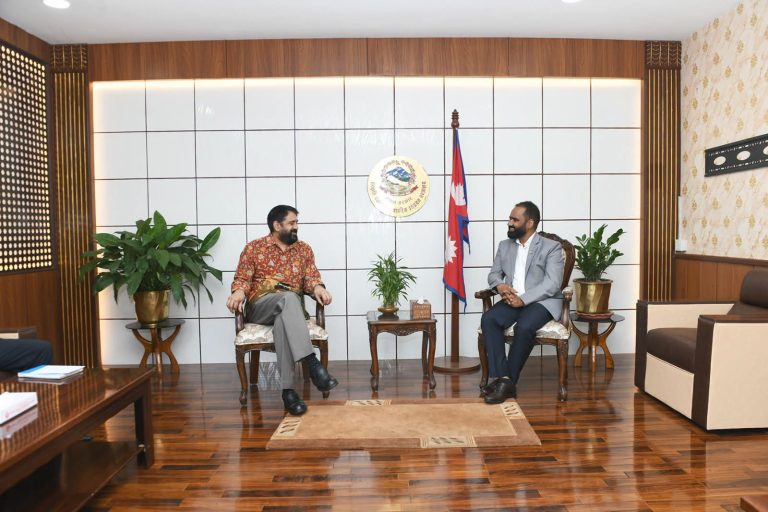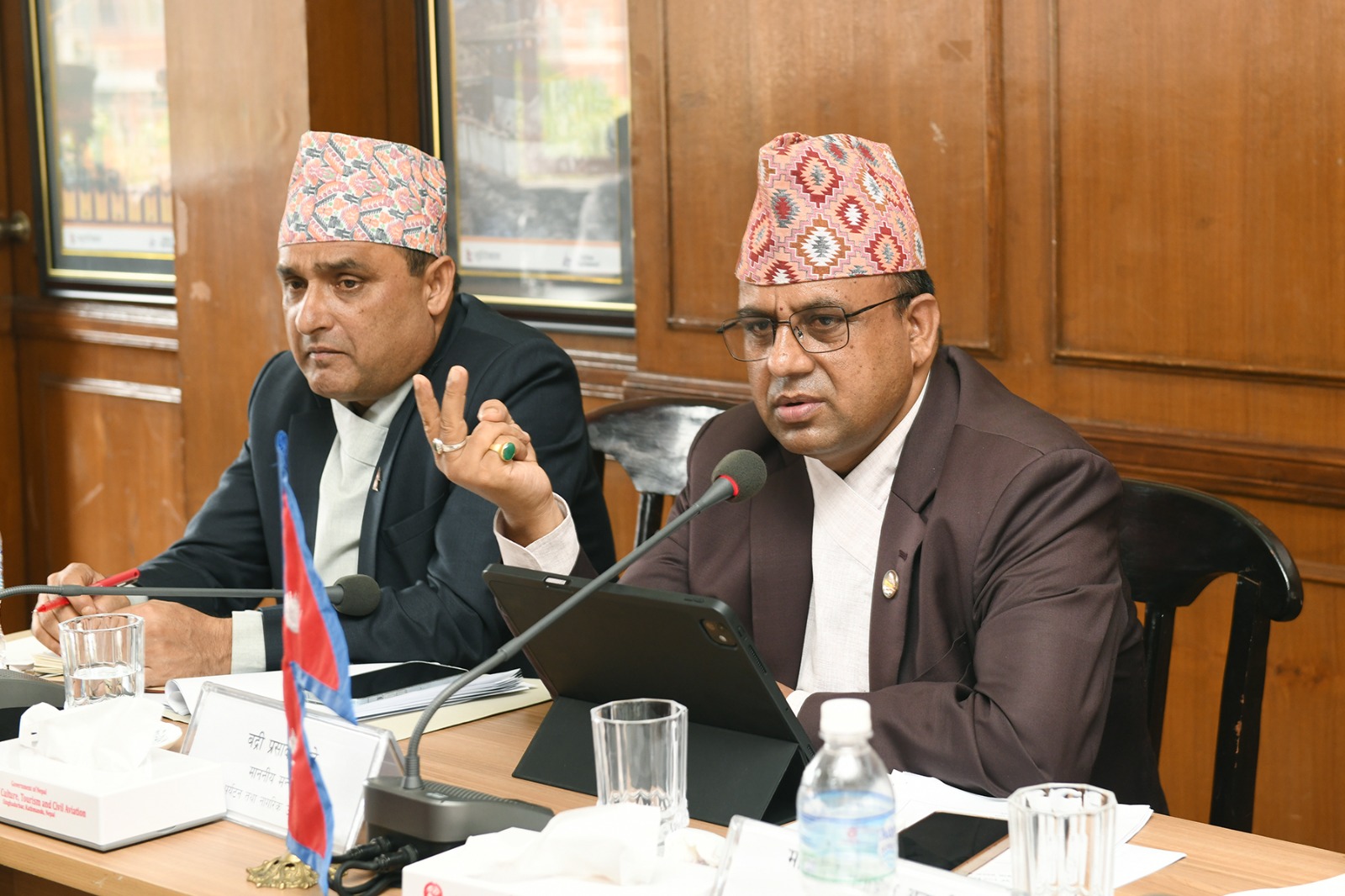
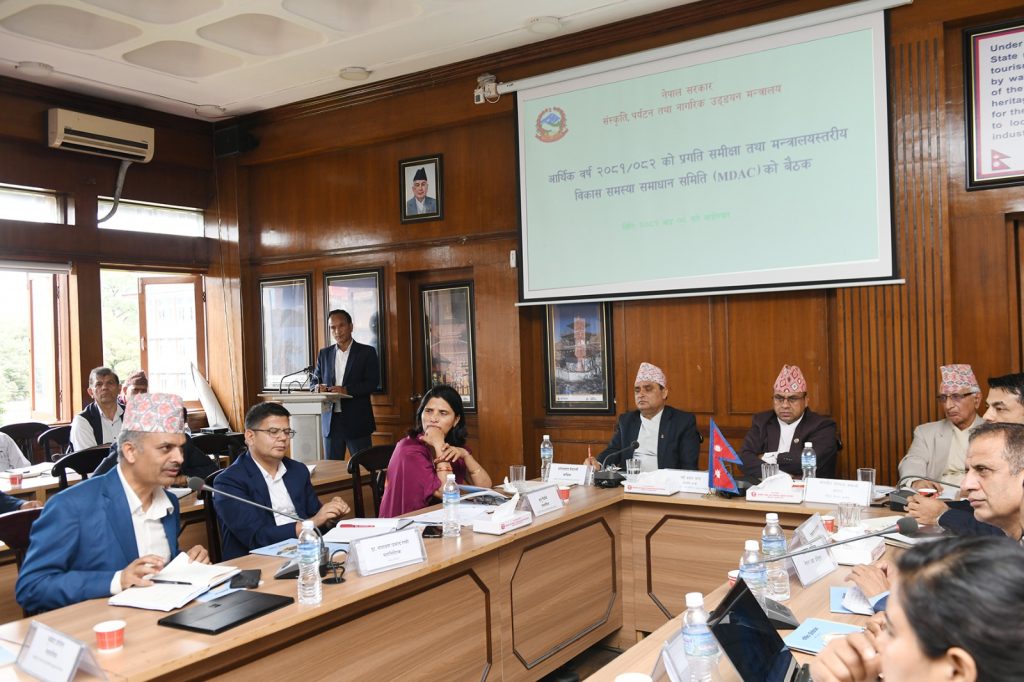
Minister for Culture, Tourism, and Civil Aviation, Badri Pandey, has issued firm directives to his ministry and subordinate agencies to focus entirely on implementing the current fiscal year’s budget, even if it requires hiring additional technical manpower. Speaking at the Ministry-Level Development Problem-Solving Committee meeting and the progress review session for Fiscal Year 2081/82 on Sunday, Minister Pandey emphasized that incomplete plans should not be left unfinished.
“We must ensure that budget implementation remains a priority, even if we have to add more technical staff,” Minister Pandey stated. “When there is an imbalance between physical and financial progress, the true picture of the projects is unclear. Therefore, plans that cannot be implemented should be halted right from the start.”
Need for Strong Coordination Among All Levels
Highlighting the importance of cooperation, Minister Pandey stressed that strong coordination among all three tiers, federal, provincial, and local, is essential to successfully execute the carefully prepared plans of the ministry. He urged departmental heads and divisions to ensure that service-related files are not left pending and that officials work actively to resolve issues without delays.
The Minister also made it clear that employees who fail to perform effectively should consider being transferred to other positions. This, he said, would ensure that only committed personnel remain engaged in driving progress within the ministry’s projects.
No Merger for NATHM and Nepal Mountain Academy
Addressing institutional matters, Minister Pandey clarified that the Nepal Academy of Tourism and Hotel Management (NATHM) and the Nepal Mountain Academy (NMA) will not be merged. He explained that the nature of work carried out by the two institutions is fundamentally different, making a merger impractical. This statement comes amid earlier discussions on optimizing resources within tourism education and training sectors.
Review of Budget, Projects, and National Pride Programs
During the meeting, a comprehensive review of the ministry’s budget and expenditure status was conducted. Officials discussed progress on the Sixteenth Plan, annual performance indicators, national pride projects, and other ongoing programs.
The review also included updates on grievances, financial irregularities, the status of policy and budget implementation, and reports on key achievements and challenges faced in the current fiscal year. Minister Pandey urged all relevant agencies to prioritize projects that have a direct impact on public services and national development.
Strengthening Accountability in Project Execution
Minister Pandey reiterated the need for accountability in all government projects under his ministry’s purview. He stated that budget allocations should be linked to realistic implementation capacity and measurable results. Projects that remain stagnant due to poor planning, lack of resources, or technical constraints should be discontinued to prevent resource wastage.
He further highlighted that timely completion of projects not only boosts public trust but also ensures that allocated resources contribute meaningfully to national economic growth, particularly in the tourism and civil aviation sectors, which have significant potential for job creation and foreign exchange earnings.
Ministry’s Role in Tourism, Culture, and Civil Aviation Development
The Ministry of Culture, Tourism, and Civil Aviation plays a vital role in promoting Nepal’s tourism industry, preserving cultural heritage, and ensuring safe and efficient air transport services. Minister Pandey emphasized that the ministry’s strategic plans, ranging from tourism promotion campaigns to infrastructure development, must be implemented without delay to position Nepal as a globally competitive destination.
He also called on agencies to align their efforts with Nepal’s broader economic recovery goals, especially after the challenges posed by the COVID-19 pandemic and the ongoing need for infrastructure modernization.
Performance Contracts to Enhance Efficiency
In a move to ensure accountability, Secretary of the Ministry, Hari Mainali, has signed performance contracts with the heads of subordinate agencies. These contracts outline clear performance expectations, targets, and timelines, making it easier to track progress and address bottlenecks promptly.
Mainali stated that the performance contracts would help create a results-oriented work culture within the ministry and encourage officials to take ownership of their assigned responsibilities.
Presence of Senior Government Officials
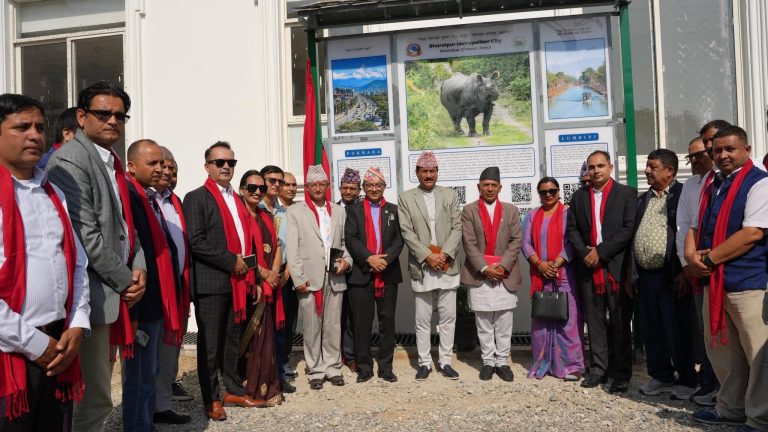
The meeting was attended by senior officials from the Office of the Prime Minister, the Ministry of Finance, and the National Planning Commission, including secretaries and commission members. Their participation reflected the government’s commitment to addressing development challenges through coordinated efforts among key policy-making and implementation bodies.
The presence of high-level representatives also provided an opportunity for direct dialogue on budget utilization, policy execution, and project implementation issues, ensuring that decisions made at the meeting are backed by inter-agency cooperation.
Driving Tourism-Led Economic Growth
Minister Pandey concluded his remarks by underlining that tourism-led economic growth is achievable only if plans are executed effectively. He said that timely completion of projects related to tourism infrastructure, cultural preservation, and aviation services would significantly enhance Nepal’s image internationally.
He added that the ministry must work towards creating sustainable tourism models, integrating cultural promotion with economic development, and leveraging Nepal’s unique natural and cultural resources to attract high-value tourists.
By prioritizing results-oriented planning, effective budget utilization, and strong institutional coordination, Minister Pandey expressed confidence that the Ministry of Culture, Tourism, and Civil Aviation will make notable progress in the current fiscal year, paving the way for stronger economic performance in the years ahead.