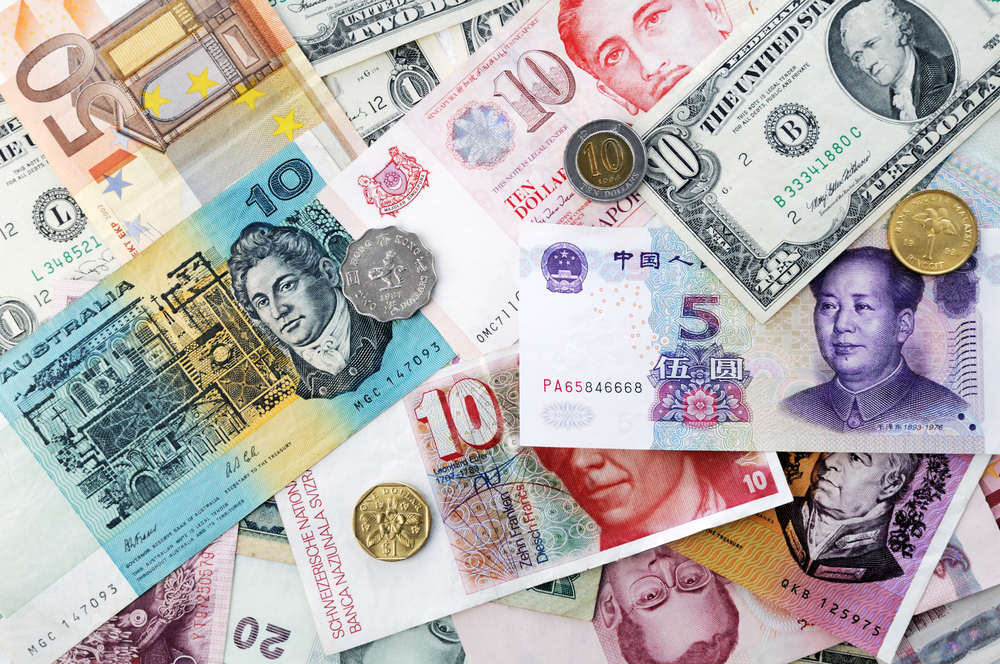
The Nepal Rastra Bank (NRB) has announced the official foreign currency exchange rates for today, providing a benchmark for banks and financial institutions across the country. According to the central bank, the U.S. Dollar (USD) has been fixed at a buying rate of NPR 139.84 and a selling rate of NPR 140.44. These rates will guide commercial banks and currency exchange operators in conducting foreign exchange transactions, ensuring stability and transparency in the currency market.
Euro, Pound, and Swiss Franc Rates
In addition to the U.S. Dollar, the European Euro (EUR) is being exchanged at a buying rate of NPR 163.54 and a selling rate of NPR 164.24. The British Pound Sterling (GBP) has been fixed at NPR 188.90 for buying and NPR 189.71 for selling. Meanwhile, the Swiss Franc (CHF) stands at NPR 174.29 for buying and NPR 175.04 for selling. These rates reflect fluctuations in the international foreign exchange market and the central bank’s effort to maintain equilibrium in currency conversion.
Rates for Asian and Pacific Currencies
The Nepal Rastra Bank has also set rates for several major Asian and Pacific currencies. The Australian Dollar (AUD) is priced at NPR 90.83 for buying and NPR 91.22 for selling, while the Canadian Dollar (CAD) stands at NPR 101.14 and NPR 101.57 respectively. The Singapore Dollar (SGD) has a buying rate of NPR 108.98 and a selling rate of NPR 109.45. For the Japanese Yen (JPY), the rate for 10 yen is fixed at NPR 9.49 for buying and NPR 9.53 for selling, highlighting minor fluctuations in regional currencies.
Additionally, the Chinese Yuan (CNY) is set at NPR 19.54 for buying and NPR 19.62 for selling, and the Saudi Arabian Riyal (SAR) at NPR 37.27 for buying and NPR 37.43 for selling. The Qatari Riyal (QAR) is priced at NPR 38.36 for buying and NPR 38.53 for selling. These adjustments are intended to facilitate international trade and remittance flows while stabilizing the domestic market.
Southeast Asian Currency Rates
The NRB has fixed the Thai Baht (THB) at NPR 4.31 for buying and NPR 4.33 for selling, while the UAE Dirham (AED) stands at NPR 38.07 and NPR 38.24. The Malaysian Ringgit (MYR) is exchanged at NPR 33.24 for buying and NPR 33.38 for selling. For South Korea’s Won (KRW), the rate for 100 units is NPR 10.08 for buying and NPR 10.12 for selling. The Swedish Krona (SEK) is set at NPR 14.69 for buying and NPR 14.75 for selling, and the Danish Krone (DKK) is at NPR 21.91 and NPR 22.00 respectively.
These rates ensure that businesses and individuals dealing in foreign currencies, particularly in trade, remittances, and tourism-related transactions, can rely on a transparent and stable exchange framework.
Middle Eastern Currency Rates
In the Middle Eastern segment, the Hong Kong Dollar (HKD) is priced at NPR 17.90 for buying and NPR 17.98 for selling. The Kuwaiti Dinar (KWD) stands at NPR 457.86 for buying and NPR 459.83 for selling, while the Bahraini Dinar (BHD) has been fixed at NPR 370.89 and NPR 372.49 respectively. The Omani Riyal (OMR) is priced at NPR 363.22 for buying and NPR 364.78 for selling.
Additionally, the Indian Rupee (INR) remains an essential reference for cross-border trade and remittances, with 100 INR set at NPR 160.00 for buying and NPR 160.15 for selling. These rates play a significant role in regulating cross-border transactions and ensuring fair exchange for individuals and businesses engaged in trade with Middle Eastern nations.
Central Bank’s Flexibility and Commercial Bank Variations
The Nepal Rastra Bank has emphasized that these exchange rates may be revised at any time based on market conditions and international currency fluctuations. The central bank retains the authority to adjust rates to stabilize the domestic foreign exchange market, especially in the face of sudden economic or global financial changes.
While the NRB provides official benchmark rates, commercial banks and authorized currency exchange operators may set slightly different rates based on their operational costs and customer demand. Updated rates for all currencies are made available on the Nepal Rastra Bank’s official website, allowing citizens, businesses, and financial institutions to access accurate and timely information.
Implications for Businesses and Travelers
These exchange rates are crucial for exporters, importers, and travelers who rely on foreign currency transactions. By providing a clear and transparent reference, the central bank helps reduce uncertainty in the market and supports economic stability. Tourists visiting Nepal, businesses importing goods, and Nepali workers receiving remittances from abroad will benefit from accurate and consistent rates.
The Nepal Rastra Bank’s latest announcement of foreign exchange rates reflects its ongoing commitment to ensuring market stability, transparency, and fair pricing for all foreign currency transactions. Citizens and businesses are advised to regularly check official updates, as rates are subject to change depending on economic conditions and global currency movements.