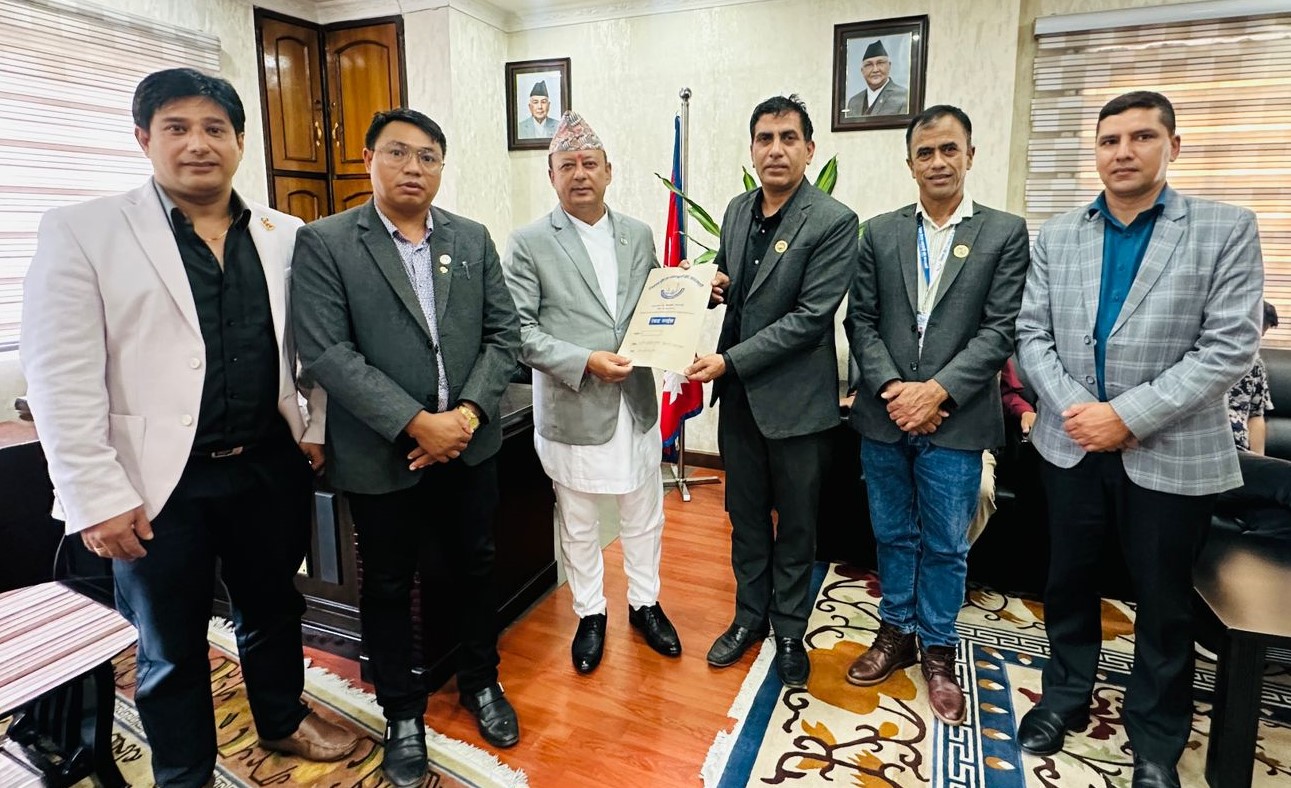
Energy, Water Resources, and Irrigation Minister Dipak Khadka has assured hotel entrepreneurs that the government is committed to providing facilities to the hotel sector similar to those granted to production-oriented industries. Speaking after receiving a memorandum submitted by the District Hotel Entrepreneurs Association, Kathmandu, Minister Khadka emphasized that hotels are a sensitive sector directly linked to tourism and therefore deserve special recognition and support.
He stated that by categorizing tourism-related businesses as production-oriented industries, the government aims to enhance their competitiveness and strengthen their contribution to the national economy. “Tourism and hotel businesses play a vital role in Nepal’s economic development. Supporting them with production-industry-level benefits is essential for improving their operational sustainability and global competitiveness,” Minister Khadka noted.
Hotels Face Financial Challenges
The memorandum presented by the association highlighted the growing challenges faced by hotel operators. Many hotels have been operating at a loss, struggling to meet daily operational expenses amid rising costs and economic slowdown. The association requested that electricity tariffs be treated as production-industry costs, allowing for concessions to ease financial burdens.
Association president Suresh Baral explained that the tourism sector is not only a significant source of domestic revenue but also a key driver for foreign exchange earnings, employment generation, and international promotion of Nepal. He urged the government to provide special facilities to hotels to support these crucial contributions.
Government Commitment to Support Tourism
Although the government had announced in the current fiscal year’s budget that hotels and restaurants would receive recognition as production-oriented industries with associated electricity tariff concessions, the association complained that implementation has been delayed. Many hotel owners report that despite the policy announcement, actual relief has yet to reach them, creating frustration among business operators.
Minister Khadka reassured the association that the government is aware of these issues and is committed to ensuring practical implementation of the benefits. He stressed that the hotel and tourism sector is strategically important for Nepal’s economy and requires proactive support measures to boost competitiveness and sustainability.
Tourism as an Economic Driver
President Baral elaborated on the broader economic significance of the hotel and tourism sector. He noted that beyond generating domestic revenue, tourism brings valuable foreign currency into the country, creates thousands of jobs, and promotes Nepal’s image on the global stage. “Recognizing hotels as production-oriented industries will not only alleviate immediate financial pressures but also strengthen the long-term contribution of tourism to the nation,” he said.
Baral expressed optimism that with proper policy implementation, benefits such as electricity tariff concessions will provide immediate financial relief to struggling hotel operators, enabling them to focus on improving services and expanding their businesses.
Challenges in Implementation
Despite government announcements, many hotels have yet to receive the promised incentives, highlighting a gap between policy and execution. This delay has placed additional strain on operators, especially during the ongoing economic slowdown, which has reduced tourist inflows and affected revenue streams.
The association stressed that timely implementation of production-industry-level benefits is crucial to prevent further financial strain and to maintain the viability of Nepal’s hotel sector. They urged the government to expedite procedural measures so that hotel operators can benefit without bureaucratic delays.
Looking Ahead
Minister Khadka confirmed that the government is actively working on measures to implement production-oriented industry facilities for hotels and restaurants. These measures include electricity tariff reductions, tax incentives, and other operational support aimed at improving the financial health of the sector.
He highlighted that sustained government support will not only safeguard hotel businesses during challenging economic periods but will also strengthen Nepal’s overall tourism industry, which remains a key contributor to the country’s GDP, employment, and international image.
President Baral concluded by stating that the hotel industry remains hopeful that with government backing, it can overcome current challenges, enhance operational efficiency, and continue to attract both domestic and international tourists. “Electricity tariff concessions and industry-focused support are essential lifelines for our businesses in today’s economic climate,” he said.