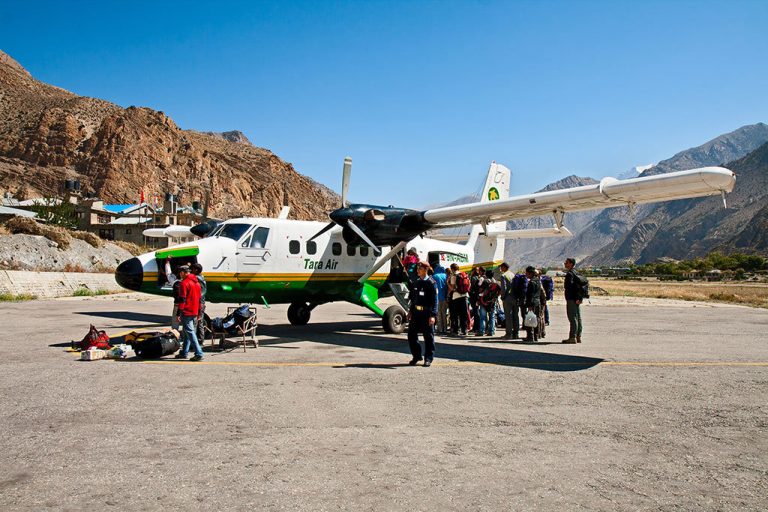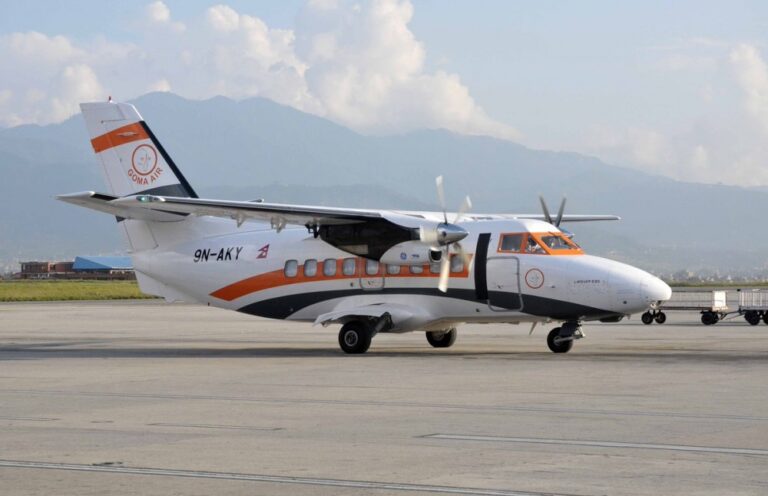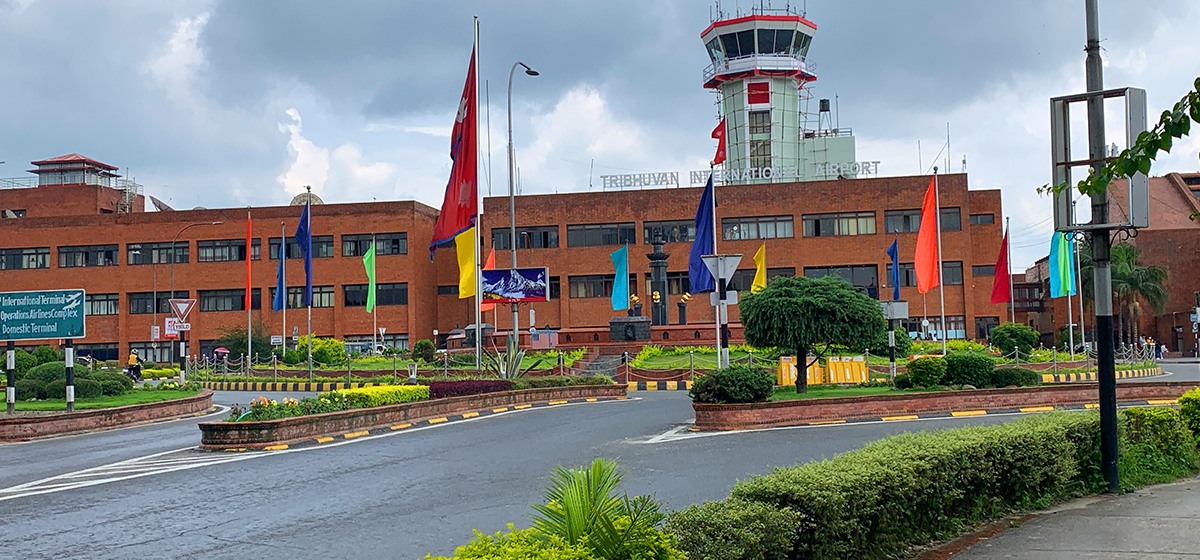
Flight operations at Tribhuvan International Airport (TIA) have been severely impacted due to adverse circumstances in Kathmandu and its surrounding areas. According to TIA spokesperson Rinji Sherpa, all domestic flights have been completely suspended for the day, while several international flights are currently on hold in mid-air, awaiting clearance to land.
Data from live flight trackers indicate that at least half a dozen aircraft are circling above Simara airspace, unable to approach Kathmandu due to safety concerns. Among the flights holding in the sky are an Air India aircraft from Mumbai, an IndiGo flight from New Delhi, another IndiGo service also from New Delhi, and a Vistara Airlines flight from New Delhi. Additionally, an AirAsia aircraft from Bangkok, a Thai Lion Air service from Bangkok, and a Biman Bangladesh Airlines flight from Dhaka are all reported to be in a holding pattern.
One Himalayan Airlines flight has already been diverted to another airport due to the situation. Airport authorities have not disclosed the exact diversion locations but confirmed that multiple arriving flights have been instructed to reroute until further notice.
Smoke and Fire Pose Aviation Safety Risks
The primary reason for the disruption, according to airport officials, is large-scale fire incidents and thick smoke plumes visible south of the airport premises. The presence of dense smoke poses significant risks to aviation safety, including reduced visibility and potential engine hazards.
In light of these risks, the airport authority has temporarily grounded all domestic flights and restricted international arrivals and departures until the situation improves. “The decision on whether to resume international flights will be made shortly, depending on the security and weather conditions around the airspace,” spokesperson Sherpa stated.
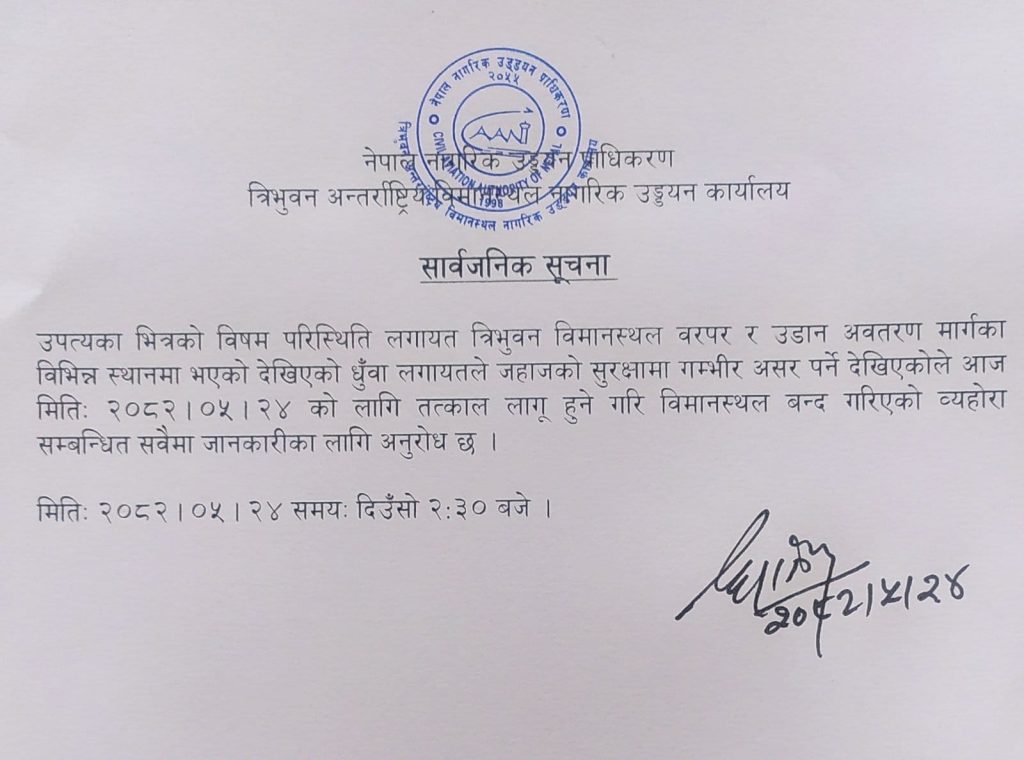
Airport Closure Until 1 AM Tonight
The rapidly escalating situation has forced TIA to declare a complete shutdown of operations until 1:00 AM local time tonight. This temporary closure affects all flight activities, both arrivals and departures, covering domestic and international routes.
According to Sherpa, the closure is an extraordinary measure taken to safeguard passenger safety and prevent potential accidents. “Tribhuvan International Airport operates daily from 6 AM to 1 AM, but today we are halting operations much earlier than scheduled due to safety hazards,” Sherpa explained.
International flights currently en route to Kathmandu have been advised to either hold in nearby airspace or divert to alternative airports in neighboring countries or cities within Nepal.
Impact on Airlines and Passengers
On the domestic front, Nepal’s 21 airlines, including 12 helicopter service companies, have been grounded, disrupting travel plans for hundreds of passengers. TIA usually sees a high frequency of domestic flights connecting Kathmandu with cities such as Pokhara, Bharatpur, Biratnagar, and Lukla, as well as popular trekking and mountain flight destinations.
Internationally, three Nepal-based carriers and around 30 foreign airlines operate from TIA, connecting Kathmandu with major cities in Asia, the Middle East, and beyond. The suspension is expected to affect thousands of travelers, including tourists, migrant workers, and business travelers.
Many passengers have been left stranded at the airport, awaiting updates from airlines on possible rescheduling or alternative travel arrangements. Hotels near the airport have reported an influx of last-minute bookings from passengers whose flights have been canceled or delayed.
Protests Escalate in Kathmandu Valley
The shutdown coincides with widespread protests by the so-called “Gen-Z” movement, which has led to multiple incidents of arson and road blockages in the Kathmandu Valley and other parts of the country. Demonstrators have reportedly set fires in several areas, with some incidents occurring dangerously close to airport boundaries.
Security personnel have been deployed to control the situation and prevent further escalation. However, the large-scale fires and heavy smoke have already had a direct impact on aviation safety, prompting the Civil Aviation Authority of Nepal (CAAN) to implement emergency measures.
Government and Airline Responses
The Ministry of Culture, Tourism, and Civil Aviation has issued an appeal for calm, urging demonstrators to avoid actions that could compromise public safety and critical infrastructure. Airlines operating at TIA have been instructed to keep passengers informed about the evolving situation and to arrange alternative flights as soon as conditions allow.
Himalaya Airlines confirmed that one of its flights had to be diverted due to the hazardous conditions. “Our primary concern is the safety of our passengers and crew,” a spokesperson for the airline said. “We are working closely with CAAN to determine the safest course of action for upcoming flights.”
International carriers affected by the disruptions have also been in constant communication with their passengers through social media and airport information systems, advising them to check for real-time updates before traveling to the airport.
Outlook for Flight Resumption
While airport authorities aim to resume normal operations as soon as conditions improve, the timing remains uncertain. Firefighters are working to extinguish the blazes near the airport perimeter, and air traffic controllers are closely monitoring visibility and airspace conditions.
“If the situation is brought under control sooner than expected, we may consider resuming partial operations before 1 AM,” Sherpa noted. “However, safety will remain our top priority, and no risks will be taken.”
Passengers are advised to remain in contact with their airlines and monitor official announcements from TIA and CAAN. Authorities have also urged the public to refrain from spreading unverified information on social media to avoid confusion.
The current disruption marks one of the most significant operational halts at Nepal’s only international gateway in recent years, highlighting the vulnerability of critical infrastructure to external events such as civil unrest and environmental hazards.