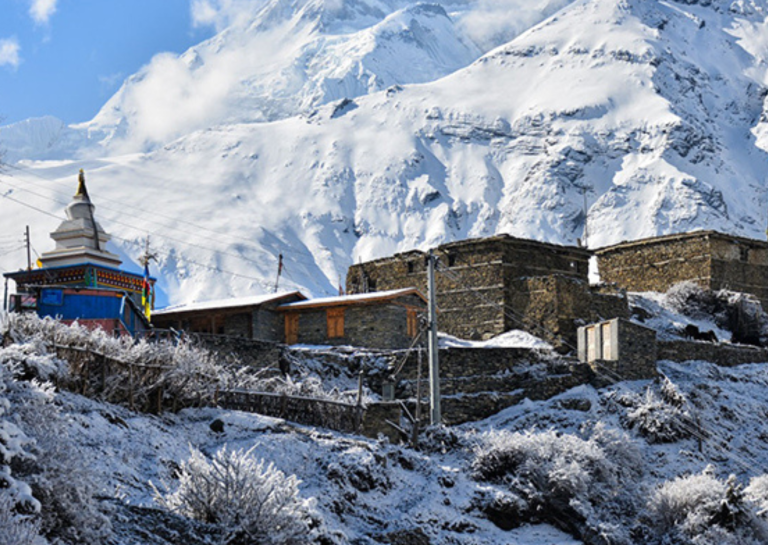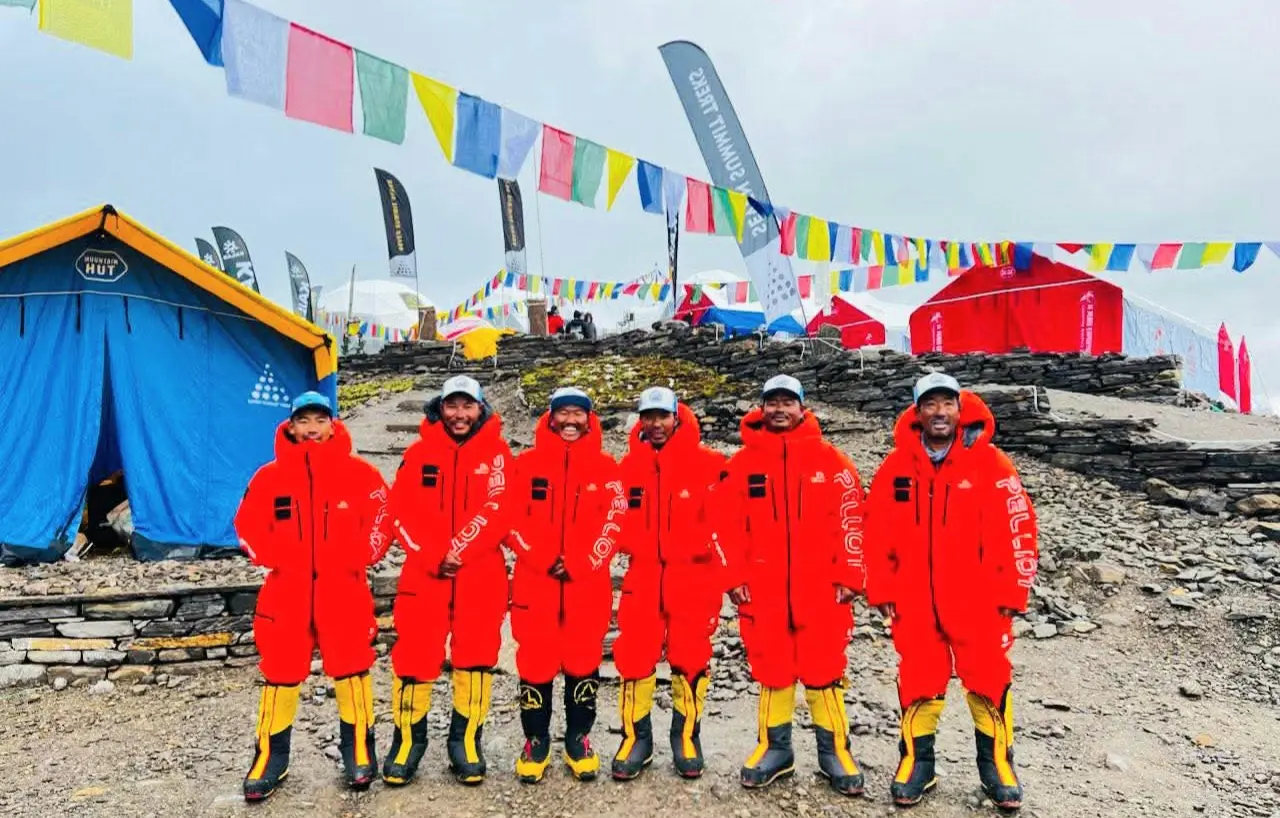
The rope-fixing team on Mount Manaslu successfully reached the summit this evening at 7:40 p.m. (Nepal Time), officially opening the route for climbers in the autumn 2025 season. Standing at 8,163 meters, Manaslu is the world’s eighth-highest peak and has become the first 8,000-meter mountain to be climbed this autumn. The achievement signals the beginning of another busy season in Nepal’s Himalayan climbing calendar.
Six Sherpas Lead the Summit Push
A team of six Sherpa guides successfully reached the summit together, leading the way for hundreds of climbers who will attempt the mountain in the coming weeks. The summit team included co-leader Chhiring Bhote, along with Pasang Sherpa, Hira Bhote, Tashi Gyalzen Sherpa, Karma Sharki Sherpa, and Lakpa Sherpa. Their coordinated effort ensured that ropes were securely fixed along the challenging route, enabling other climbers to safely follow in their footsteps.
The Sherpas’ achievement underscores their indispensable role in Himalayan expeditions, where their expertise and resilience make it possible for international climbers to achieve their summit dreams.

Official Opening of the Route
According to Rishi Bhandari, General Secretary of the Expedition Operators Association (EOA), the successful rope fixing marks the official opening of Manaslu’s climbing route for the season. The operation was coordinated under the banner of the EOA by renowned mountaineer and Nepal Mountaineering Association (NMA) First Vice President Mingma David Sherpa, with logistical support from Seven Summit Treks.
“This year, a new system has been introduced for rope fixing on Manaslu,” Bhandari explained. “In the past, expedition agencies competed through bids and applications. From 2025 onwards, the EOA has taken full responsibility, selecting the rope-fixing team, supplying equipment, and arranging their payment.”
The shift represents a significant change in how rope-fixing operations are managed, moving from competitive bids to a more organized and centralized system led by the EOA.
Logistical Support by Seven Summit Treks
Seven Summit Treks, Nepal’s largest expedition company, is providing crucial logistical support for the rope-fixing mission. The company has supplied food, tents, and other equipment at Manaslu Base Camp and higher camps to ensure that the team could complete its task efficiently and safely.
The collaboration between the EOA, NMA leadership, and Seven Summit Treks reflects the collective effort of Nepal’s mountaineering community to improve safety standards and operational efficiency on the country’s iconic peaks.
Plans for Other Peaks in Autumn
Following the successful rope fixing on Manaslu, the EOA plans to oversee rope fixing and route openings on Ama Dablam and Himlung Himal later this autumn. These mountains, though lower than the 8,000-meter giants, are popular among climbers seeking technical challenges and spectacular Himalayan views.
Looking ahead, the EOA also intends to manage rope fixing on Mount Everest (Sagarmatha) and Lhotse starting in 2026. This will mark a historic shift in the management of the world’s highest mountain, as rope fixing responsibilities move from fragmented arrangements to a centralized system overseen by Nepal’s leading expedition association.
High Interest in Manaslu This Season
According to the Department of Tourism, as of September 14, permits had been issued to 371 climbers for Manaslu this autumn season. This number highlights the mountain’s growing popularity as one of the most climbed 8,000-meter peaks after Everest.
Manaslu, often referred to as the “Mountain of the Spirit,” is considered both challenging and rewarding. While its summit ridge has been the subject of debates regarding the true highest point, recent years have seen improved coordination to ensure climbers reach the proper summit. The high number of permits indicates continued international interest in the mountain, despite logistical and environmental challenges.
Changing Systems in Himalayan Expeditions
The new rope-fixing system introduced by the EOA reflects a broader transformation in Nepal’s mountaineering industry. Previously, competition between agencies for rope-fixing contracts sometimes caused delays and confusion. By centralizing the process, the EOA hopes to improve efficiency, transparency, and safety.
Climbers and expedition organizers are expected to benefit from this system, which reduces uncertainty and ensures that rope fixing is carried out in a professional and timely manner. Moreover, the system guarantees fair compensation for Sherpa guides undertaking one of the most dangerous and essential tasks in Himalayan climbing.

Strengthening Nepal’s Mountaineering Reputation
The successful opening of Manaslu’s climbing route is not just a technical achievement but also a symbolic milestone for Nepal’s mountaineering industry. The country continues to position itself as the world’s premier destination for high-altitude expeditions, offering a combination of natural beauty, climbing challenges, and professional support infrastructure. By professionalizing rope-fixing operations and strengthening collaboration among associations and companies, Nepal aims to enhance its global reputation as a safe, reliable, and well-managed hub for adventure tourism.
The rope-fixing team’s successful summit of Mount Manaslu on September 20 at 7:40 p.m. officially signals the start of the autumn 2025 climbing season. With six experienced Sherpas leading the mission, logistical backing from Seven Summit Treks, and coordinated management by the Expedition Operators Association, the climb represents a new era of organization and cooperation in Nepal’s mountaineering sector.
As 371 climbers prepare to attempt Manaslu this season, and with plans to expand the rope-fixing system to Ama Dablam, Himlung Himal, Everest, and Lhotse in the coming years, the achievement marks a decisive step toward improving safety, efficiency, and professionalism in Himalayan expeditions.