A tragic accident struck Sri Lanka’s northwestern Kurunegala District on Wednesday night, when a cable-pulled rail car carrying Buddhist monks crashed down a steep mountainside. Police confirmed on Thursday that seven monks lost their lives, including three foreign nationals from India, Russia, and Romania.
The incident occurred at the Na Uyana Aranya Senasanaya, one of Sri Lanka’s largest forest monasteries, located nearly 130 kilometers northeast of Colombo. Known as a prominent meditation center, the monastery attracts monks and practitioners from around the world who seek a life of solitude and spiritual practice in the dense forests of Sri Lanka.

Monks Headed for Meditation Retreat
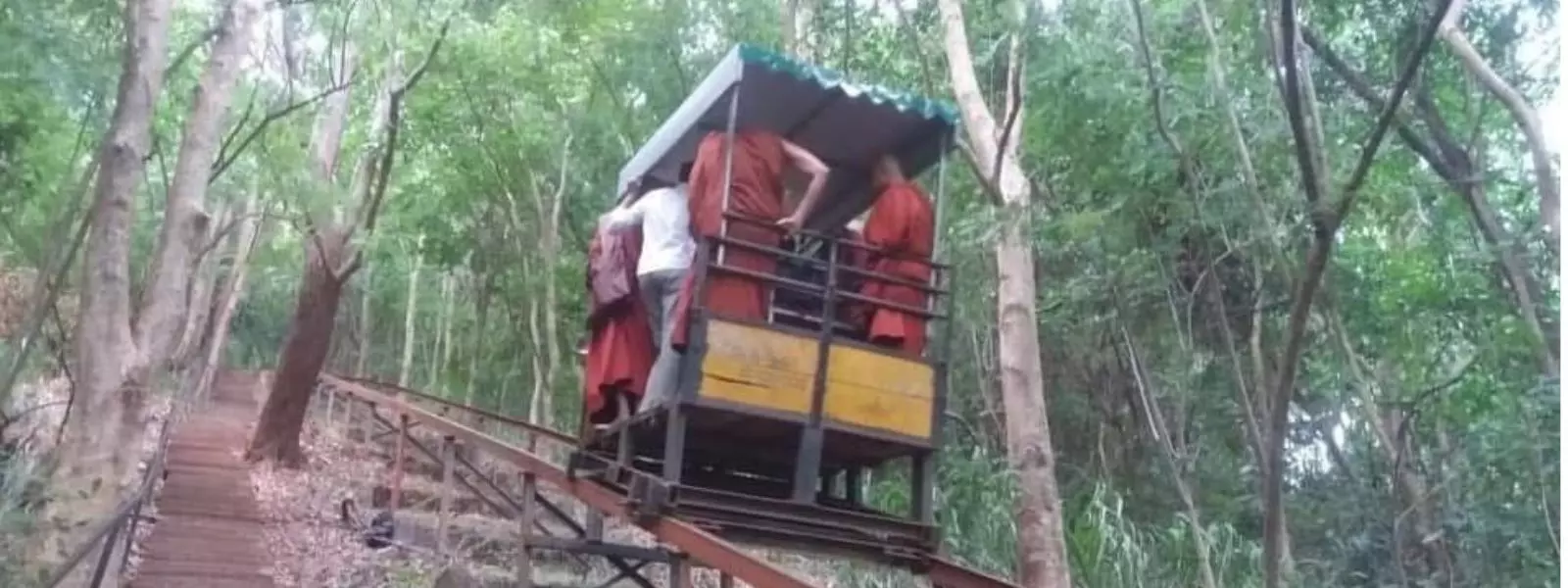
According to police reports, the monks were traveling in a makeshift cable-pulled rail car, designed to transport people and supplies to meditation units situated atop a mountain. The system is widely used in remote monasteries and tea estates in Sri Lanka’s hilly terrain. On Wednesday night, 13 monks boarded the car, which is normally meant for fewer passengers. The group was heading up to their meditation units when tragedy struck.
Cable Snap Leads to Fatal Crash
Police stated that the cable supporting the rail car suddenly snapped, causing the cabin to slide uncontrollably down the mountainside at high speed. The car eventually jumped the track and slammed into a tree, bringing it to a catastrophic halt.
Out of the 13 monks inside, two managed to leap out and sustained only minor injuries, while four others remain in critical condition in a nearby hospital. Rescue teams rushed to the scene and retrieved the victims from the wreckage.
Foreign Monks Among the Victims
Sri Lankan police confirmed that among the seven dead were three foreign monks. Preliminary reports identified them as nationals from India, Russia, and Romania. Their identities have not been officially released, pending notification of their families and embassies.
The monastery regularly hosts international monks who come for intensive meditation training. The tragedy has therefore shaken not only Sri Lanka’s Buddhist community but also the wider global Buddhist network.
Investigations Underway
Authorities have launched an investigation into the accident. Early findings suggest that the overloaded rail car combined with poor maintenance of the cable system may have led to the disaster. Police are examining whether safety protocols were ignored.
The Sri Lankan government is also expected to review safety standards at remote monasteries and other sites where similar cable-pulled rail systems are in use. These systems, often constructed in rudimentary ways, lack modern safety checks and can become hazardous when overused.
Mourning in the Monastic Community
The Na Uyana monastery is home to hundreds of monks, many of whom practice in forest kutis (meditation huts) scattered across vast hilly terrain. The tragedy has left the community devastated.
Local residents and devotees gathered at the monastery on Thursday morning to pay respects to the victims and assist with rescue efforts. Senior monks have described the event as a great loss for the spiritual community, noting that the deceased had devoted their lives to the path of meditation and service.

Broader Implications for Monastery Safety
This accident highlights the risks faced by monks and practitioners in remote monasteries, where difficult terrain and lack of infrastructure often require improvised transport systems. Safety experts have long warned that makeshift cable cars and pulley systems used in rural Sri Lanka pose risks, especially when overloaded. Calls are now being made for stricter government oversight, regular inspections, and safer alternatives to prevent such tragedies in the future.
A Sobering Reminder
The cable car crash at Na Uyana forest monastery stands as a sobering reminder of the fragile balance between spiritual pursuit and physical safety in isolated meditation centers. While investigations continue, the tragedy has cast a shadow over Sri Lanka’s Buddhist community and underscored the need for urgent improvements in safety measures to protect monks and practitioners who dedicate their lives to meditation in remote areas.