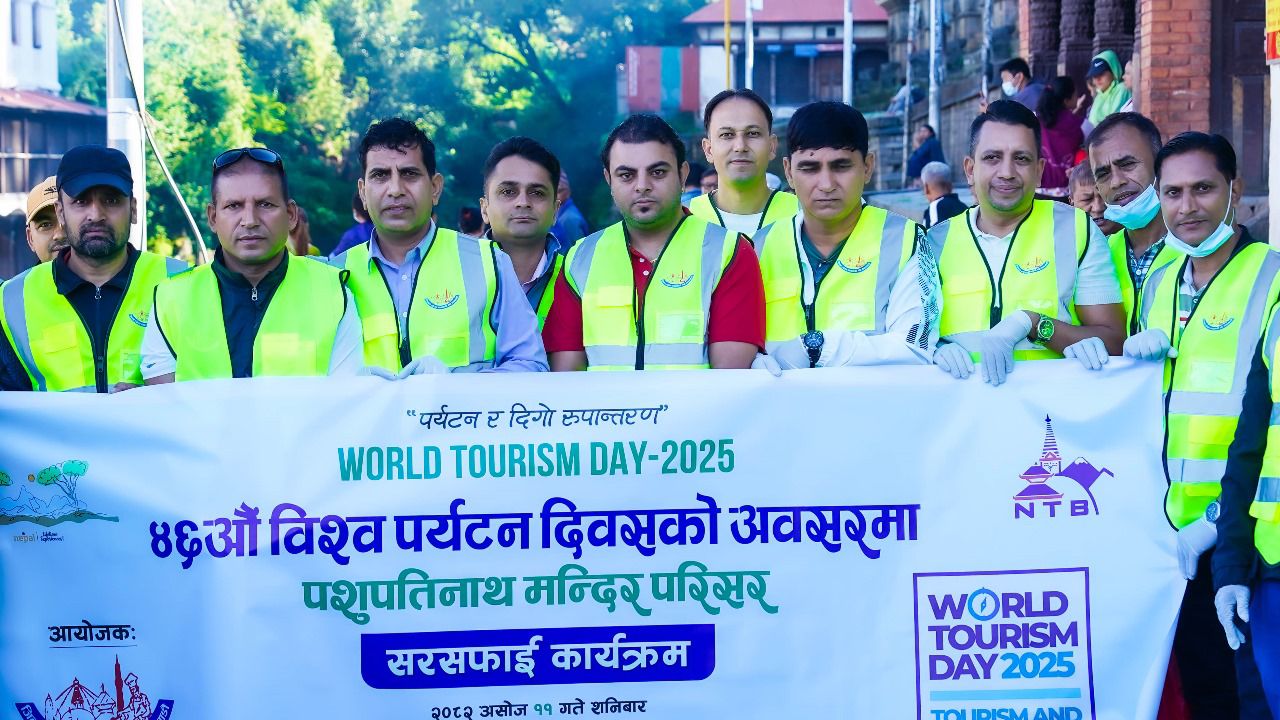
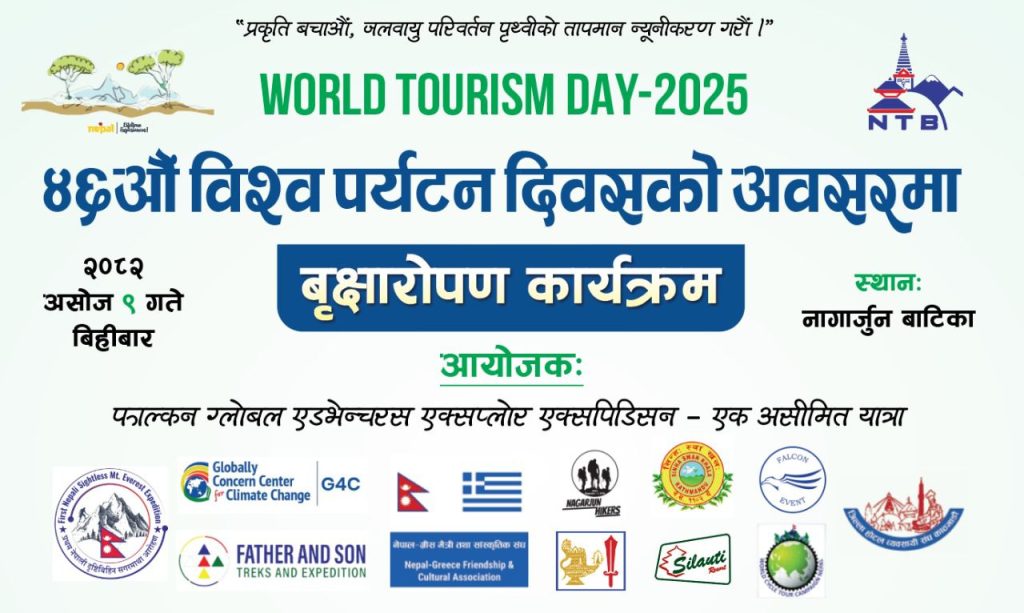
On the occasion of the 46th World Tourism Day 2025, the District Hotel Entrepreneurs Association, Kathmandu, organized a major cleanliness campaign at the sacred premises of the Pashupatinath Temple and the surrounding Banakali area. The initiative brought together hoteliers, tourism stakeholders, and members of the World Cycle Tour Champion Nepal Club, reinforcing the collective commitment of Nepal’s hospitality sector towards sustainable tourism and heritage conservation.
The program was conducted in collaboration with the Hotel Entrepreneurs Federation of Nepal, Hotel and Tourism Entrepreneurs Association Bagmati Province, and affiliated units of the District Hotel Entrepreneurs Association, Kathmandu. Together, these organizations symbolically highlighted the importance of safeguarding cultural and religious sites as an integral part of promoting Nepal’s tourism industry.

Cleaning Pashupatinath and Banakali Area
The cleanup campaign focused on removing waste, plastics, and unmanaged garbage from the vicinity of the revered Pashupatinath Temple, one of UNESCO’s World Heritage Sites and a key pilgrimage destination for Hindus worldwide. The adjoining Banakali area, known for its religious and cultural significance, was also cleaned as part of the program.
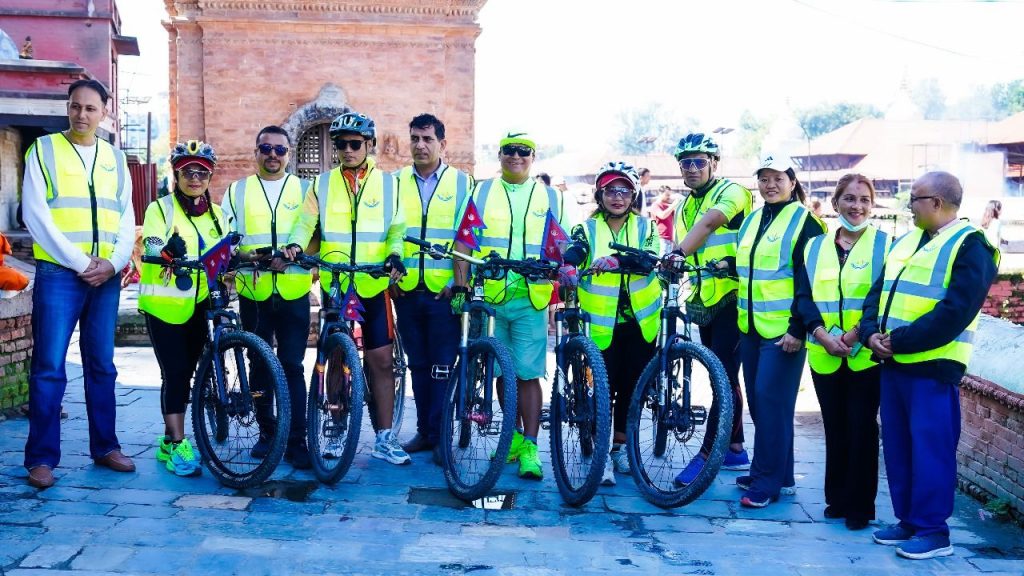
Volunteers, including hoteliers and cyclists, worked side by side, sweeping, collecting, and disposing of waste materials. Their participation demonstrated that sustainable tourism begins with small yet meaningful actions such as keeping destinations clean and preserving their sanctity.
Speaking at the event, Shankar Bhandari, General Secretary of the Hotel Entrepreneurs Federation of Nepal, stressed that the essence of tourism lies in maintaining and reviving cultural and religious heritage. He said, “As long as we keep our temples, monasteries, and heritage sites clean and alive, only then can we expect to attract more tourists. Tourists do not only visit our country for natural beauty but also for cultural richness, which must be preserved.”
The Call for Collective Responsibility
Suresh Baral, President of the District Hotel Entrepreneurs Association, Kathmandu, underlined the importance of collective responsibility in advancing tourism. He argued that the time had passed when people should wait for the state to act on their behalf. Instead, he encouraged stakeholders to focus on creating an enabling environment for tourism by working actively from their own sectors.
Baral said, “This is not the time to sit back and question what the state has given or what it will provide in the future. Rather, everyone must concentrate on preparing conditions that make tourism more accessible and sustainable. The temples, monasteries, and religious sites left to us by our forefathers must be preserved, cleaned, and promoted as treasures for the generations to come.”
He further emphasized that without the commitment of local communities, business sectors, and entrepreneurs, Nepal cannot compete in the global tourism market. For him, the cleanliness campaign was not just symbolic but a practical example of how stakeholders could take responsibility in their own hands.
Linking Tourism with Sustainability
This year’s World Tourism Day is being celebrated globally under the theme “Tourism and Sustainable Transformation.” The theme resonates deeply with Nepal, a country that relies significantly on tourism for economic growth, employment creation, and social transformation. However, with opportunities also come challenges, from environmental degradation to the pressures of over-tourism in heritage sites.
Through the campaign, the hotel entrepreneurs sought to align with the global call for sustainable tourism. By focusing on cleanliness, preservation, and awareness, they showcased how small community-led actions can contribute to larger goals of sustainable transformation. Clean surroundings not only enhance the visitor experience but also reflect respect towards heritage and local culture, which are vital for long-term tourism growth.
Symbolism of Pashupatinath
Choosing Pashupatinath Temple as the site for the campaign carried strong symbolism. As a spiritual hub that attracts thousands of domestic and international pilgrims daily, the temple represents Nepal’s identity as a sacred and cultural destination. Maintaining its sanctity is crucial not only for religious reasons but also for sustaining Nepal’s tourism economy.
The campaign also acknowledged the growing concerns of unmanaged waste, especially in high-traffic tourist sites. By engaging in hands-on cleaning, hoteliers sent a message to the larger public that tourism development cannot be detached from social and environmental responsibility.
Participation of World Cycle Tour Champion Nepal Club
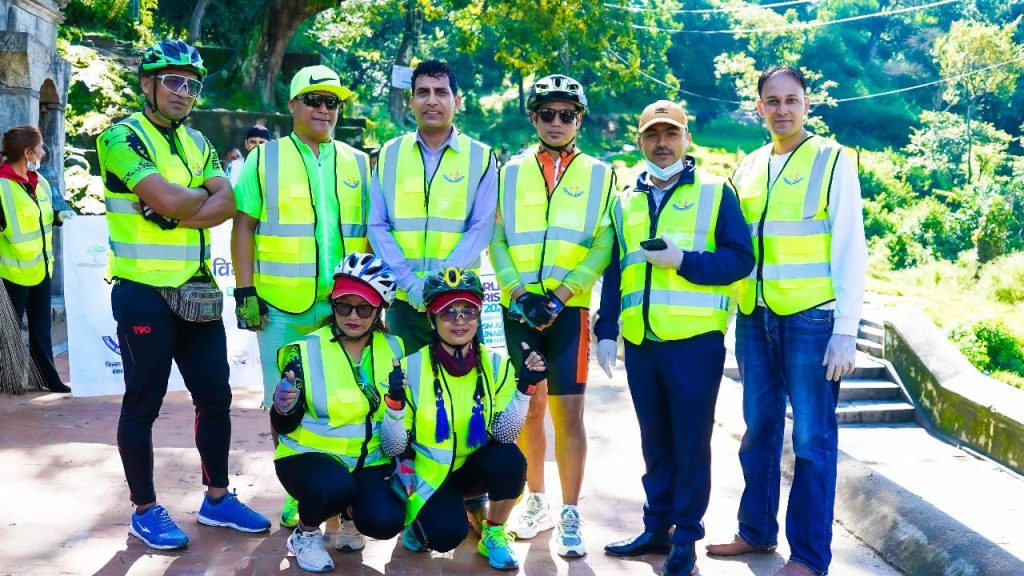
Adding vibrancy to the event was the presence of the World Cycle Tour Champion Nepal Club. The cyclists joined the hoteliers in promoting sustainable practices, symbolizing the fusion of adventure tourism with environmental responsibility. Their participation underscored the importance of active community engagement in driving sustainable initiatives.
A Vision for the Future
Speakers at the program repeatedly emphasized that preserving cultural heritage and promoting tourism are interconnected goals. By protecting religious monuments, promoting cleanliness, and raising awareness, Nepal can strengthen its global tourism image. The hotel entrepreneurs expressed their commitment to continue similar initiatives in the future, not just on World Tourism Day but as a regular practice. They called upon government agencies, local communities, and private sectors to unite in transforming tourism into a clean, sustainable, and prosperous industry.

The District Hotel Entrepreneurs Association, Kathmandu’s initiative on World Tourism Day 2025 was more than just a symbolic cleanup drive, it was a reminder of the role of every stakeholder in shaping the future of tourism. By taking ownership of Nepal’s heritage, hoteliers and entrepreneurs demonstrated that sustainable tourism starts with respect, cleanliness, and collective action.
As General Secretary Bhandari aptly put it, keeping heritage sites alive and clean is the first step in attracting tourists. And as President Baral highlighted, waiting for the state alone is no longer an option, it is everyone’s duty to safeguard Nepal’s treasures. World Tourism Day 2025 thus became a moment of reflection and action, as Nepal’s tourism sector reaffirmed its pledge to sustainable transformation, one clean temple at a time.