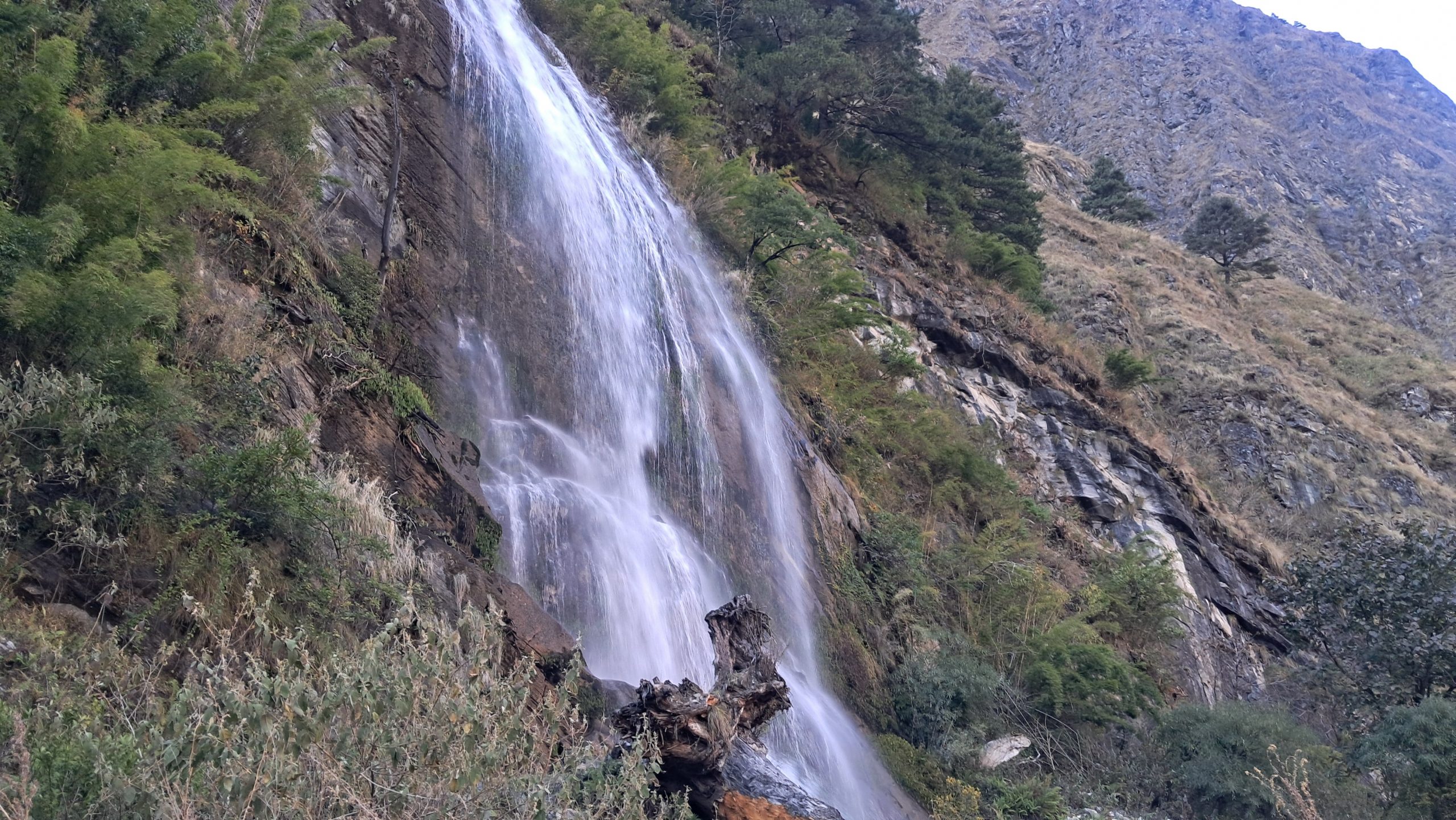
Nestled along the Beni–Jomsom Highway at the border of Myagdi and Mustang, the stunning Siddha Jharna waterfall remains largely unnoticed due to the lack of infrastructure and promotional efforts. Located in the heart of Ghasa village, Thasang–4, this natural wonder holds immense potential to attract domestic and international tourists.
Situated at an altitude of approximately 2,000 meters above sea level, Siddha Jharna originates naturally from the dense forested hills along the national highway. The waterfall’s scenic flow, cascading down the mountainside, offers a mesmerizing view for those who reach it. Despite being easily accessible, a mere five-minute walk from the main road at Ghasa Bazaar, tourists often remain unaware of its existence.

Cultural Significance and Local Traditions
Locals celebrate Siddha Barah, a traditional festival, annually at the base of the waterfall. According to local resident Punit Gauchan, the waterfall is locally known as “Chechere” and serves as a venue for ritual worship and animal sacrifices. On Jestha Purnima, villagers perform collective rituals offering goats and rams as part of the ceremony. Tradition mandates that one member from each household participate, reflecting the waterfall’s cultural and spiritual significance in the community.
Tourism Potential and Infrastructure Challenges
While Siddha Jharna holds great tourism potential, the absence of basic infrastructure and promotional activities has left it largely overlooked. Local stakeholders emphasize that with proper development, the waterfall could significantly boost tourist activity in the region, while also generating income and employment opportunities for residents.
Efforts are underway to develop the area as a tourist destination, including plans for a Siddha Barah Park and installation of informational signage to highlight the waterfall’s importance. Local leaders have approached both the local and provincial governments to secure funding for infrastructure and promotional campaigns.
“Plans have been prepared to organize the site properly. Our first step is to secure necessary funding,” said Gauchan. “We aim to build a nearby park and install informative boards to educate visitors about the waterfall, which will increase tourism and create local employment opportunities.”
Natural Beauty and Seasonal Flow
The waterfall originates naturally from the forested hills and is fed by four small upstream springs. According to former ward chairman Vishal Sherchan, water levels vary seasonally: while flow decreases during Chaitra and Baishakh (spring months), it is at its peak during Sawan and Bhadra (monsoon months). He emphasizes that unlike glacial streams, Siddha Jharna is a naturally occurring waterfall.
The surrounding area of Ghasa village, encircled by mountains, also offers opportunities for wildlife and birdwatching, adding to the site’s ecotourism appeal. Despite Mustang receiving over 700,000 tourists annually, this village and its waterfall remain underdeveloped and largely off the tourist map.

Past Initiatives and Future Prospects
A few years ago, a pond was constructed using the waterfall’s water through a grant from the Himalayan Sub-Project, and fish farming was initiated. However, due to a lack of conservation efforts, infrastructure, and marketing, the venture has been discontinued. Locals continue to use the waterfall’s water for drinking purposes.
Previous efforts to develop the area, such as plans for a Kalij Farm, also failed to materialize due to insufficient support and coordination. Nevertheless, local authorities and residents remain committed to promoting Siddha Jharna as a key tourism destination, hoping to enhance the area’s appeal while preserving its natural and cultural heritage.