Kathmandu’s Tiny Secret
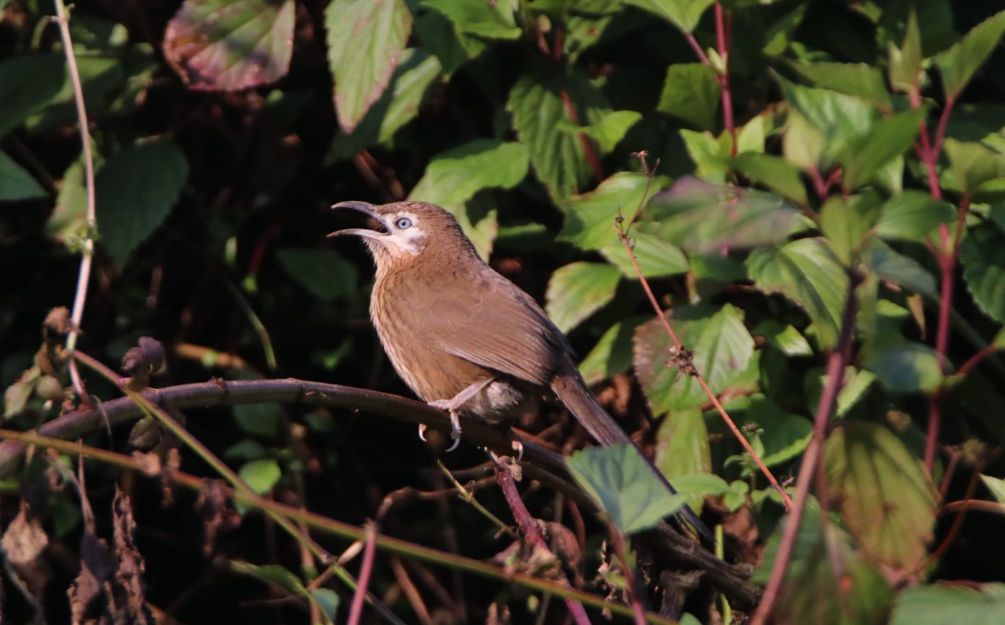
Most people in Kathmandu have no idea that the Spiny Babbler – Nepal’s only endemic bird lives in the very hills and scrublands around their homes. Even those who have heard of it are often unsure whether the brown bird they saw was truly a Spiny Babbler or just one of the many other Babbler species found in the Valley. I used to be just as uncertain, until I began my research and found myself walking through the Valley’s quiet scrublands at dawn, waiting for a soft but confident call that rises above the morning air “chweechu-chweechu”. That is the voice of the Spiny Babbler, a species found nowhere else on Earth.
Rediscovering the Valley: Where the Spiny Babbler Lives
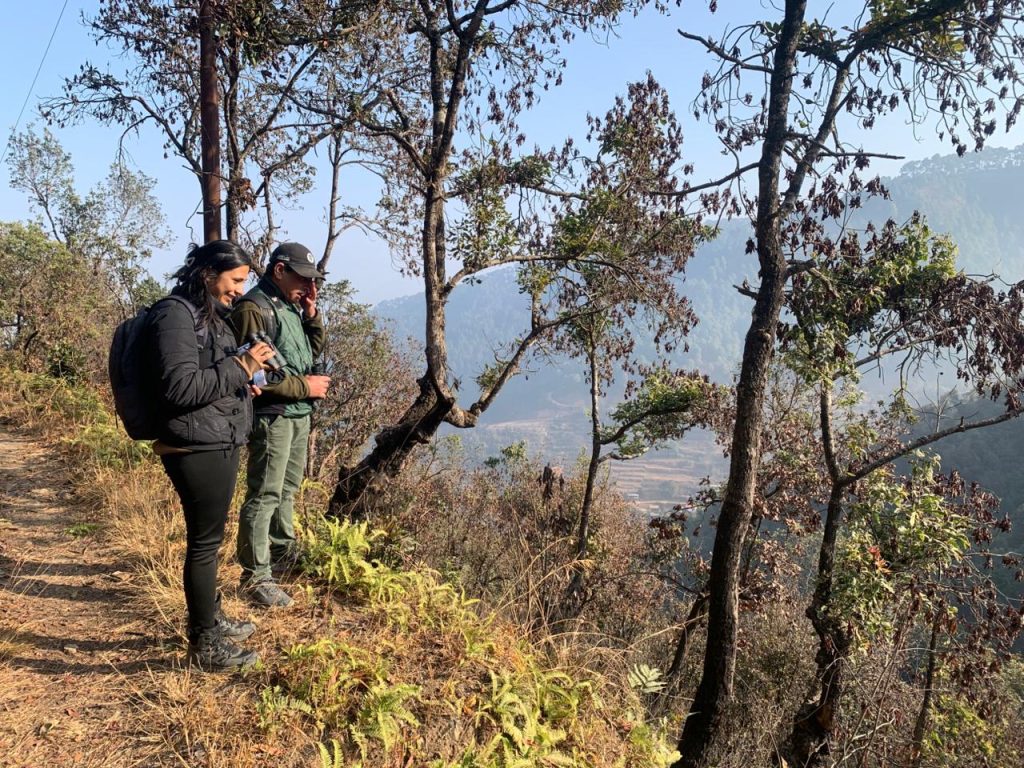
While the Spiny Babbler is often thought to live only on remote hillsides, I discovered a surprise: it quietly survives inside Kathmandu District, often just a few steps from houses, roads, and terraced fields. Early in the morning, I wandered through Tokha, Ichhangunarayan, Kageshwori, Bosan, Bhimdhunga, Sundarijal, Sankhu, Gundu, Lakuri Bhanjyang, and other hidden patches around the Valley, binoculars in hand, ears tuned to the soft, confident calls of a bird many Nepali have never heard.
Life Among the Scrublands
To my surprise, many of the Spiny Babblers I spotted were living less than 100 meters from local houses and village roads, right in the scrub- the thorny, “messy” bushes that people often overlook. They were not deep inside forests. The neglected habitats that shelter this national treasure in Kathmandu are losing the Spiny Babbler’s natural homes every year.
Farmlands are turning into concrete, and hillsides are being carved up for new roads and other development. In this changing landscape, scrubland is usually the first to go. They are treated as wastelands, not ecosystems. But to the Spiny Babbler, scrubland is everything. And those messy bushes are disappearing faster than we realize.
Shrinking Homes, Growing Threats
One evening in Ichhangunarayan, after hours of searching, a Spiny Babbler suddenly hopped out of a bush and began calling loudly, as if announcing, “I am still here.” It stayed only for a moment, enough to remind me how resilient this species is and how fragile its world has become. The bird can tolerate some disturbance; it can live near roads, farmlands, and even settlements. But it cannot survive without shrubs. When shrublands are cleared, the species have nowhere to go. A few days later, I returned to the same spot, hoping to catch another glimpse or hear its soft call. To my dismay, the bushes where it had been found were destroyed, and the valley was silent-no call, no sign.
Why Losing Scrublands Means Losing the Spiny Babbler
It was a stark reminder that this habitat loss is a real threat, and not a good sign for the Spiny Babbler’s future. If we lose the scrublands, we lose the Spiny Babbler. It may not be as famous as the Danphe or as noticeable as the crows in our backyards, but it is uniquely ours, a bird no other country can claim. When a species exists only within one nation’s borders, its survival rests entirely on that nation’s choices. If Nepal loses its scrublands, it will lose its only endemic bird, and most of us will never even know what disappeared.
Small Steps, Big Impact: Protecting Nepal’s Endemic Bird
Protecting the Spiny Babbler doesn’t require huge budgets or large reserves. Even small, practical steps can make a real difference. We can leave some scrub patches untouched when expanding roads or settlements, treat scrubland as real habitats rather than wastelands, plan construction carefully to avoid destroying dense shrubs, control overgrazing and fires, and allow abandoned lands to naturally regenerate with native shrubs. Simple actions like these can help ensure that Kathmandu’s endemic bird continues to survive in the very scrublands that many often overlook. This species showed me that conservation isn’t only about protected forests. It often begins in the small, overlooked bushes behind homes or on abandoned slopes at risk of being cleared.
With its hidden scrublands and quiet corners, Kathmandu offers nature lovers a rare chance to spot Nepal’s only endemic bird, making the city not just a cultural hub, but a unique destination for birdwatching tourism.
Article By: Pramila Aryal (Researcher & Bird Expert)
Photo of Spiny Babbler By: Kamal Raj Gosai