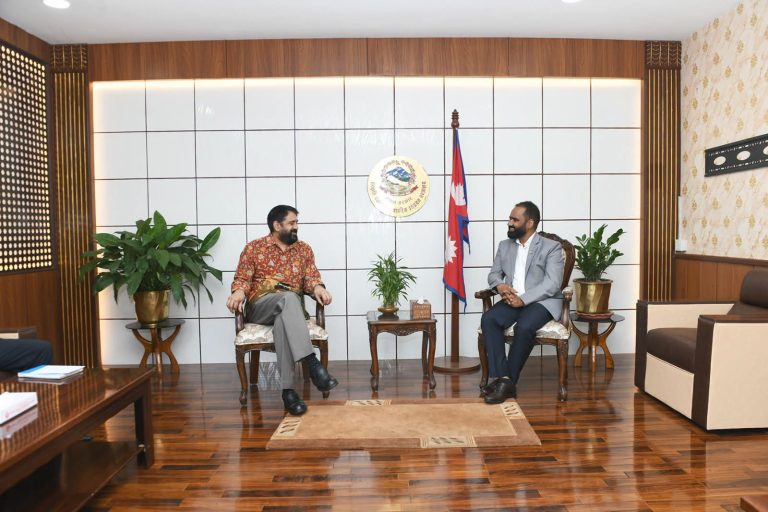
Tourism Minister Khadgaraj Paudel has moved quickly to engage with key stakeholders across Nepal’s tourism industry, signaling an intent to address long-standing challenges and accelerate reforms within days of assuming office. Barely days after assuming office, Nepal’s newly appointed Minister for Culture, Tourism and Civil Aviation, Khadgaraj Paudel, has initiated a broad-based dialogue with key stakeholders from across the country’s tourism industry, indicating an early push toward reform and sector revitalization.
Paudel, widely known as Ganesh Paudel, formally took office at Singha Durbar on March 27, shortly after being sworn in by President Ramchandra Paudel at Sheetal Niwas. From the outset, the minister has made it clear that tourism will be a central pillar of his agenda, describing the ministry as “close to his heart” and positioning it as a foundation for Nepal’s broader economic growth.

“I am myself a writer and a trekker, so I understand the challenges this sector faces,” minister Paudel remarked during his first address to ministry officials, underlining his personal connection to tourism and his intent to deliver tangible improvements.
Stakeholder Consultation Focuses on Structural Bottlenecks
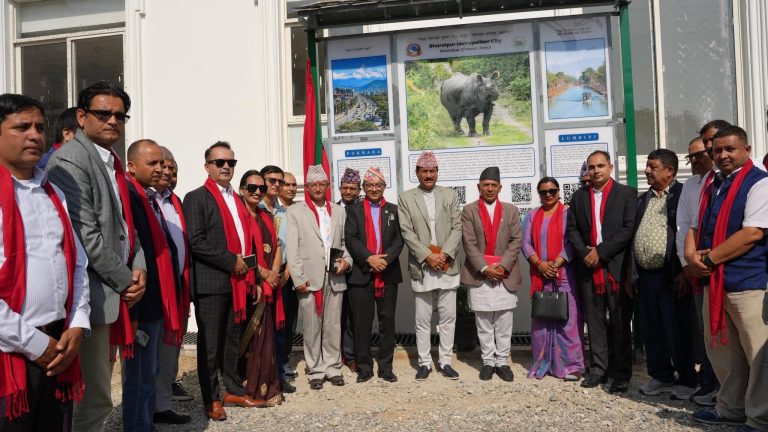
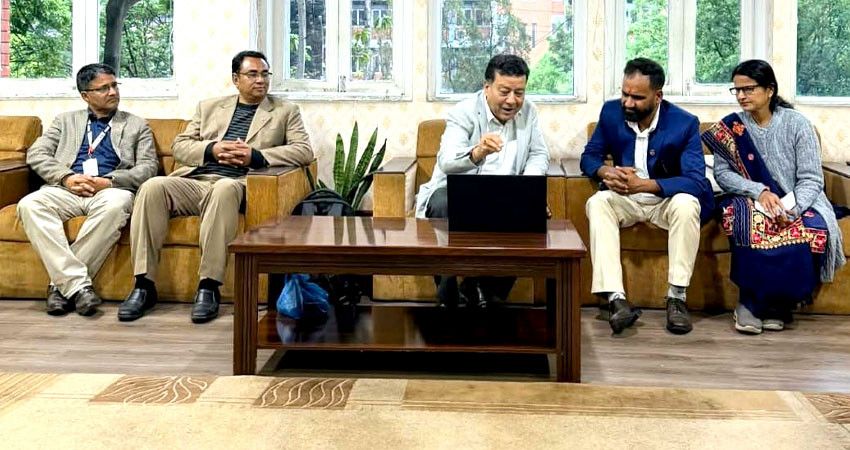
In a move seen as both symbolic and strategic, the minister convened an extensive consultation with tourism stakeholders within days of taking charge. The interaction, coordinated by the Tourism Department of the Rastriya Swatantra Party (RSP), brought together industry leaders, policymakers, and party representatives to discuss long-standing issues affecting Nepal’s tourism landscape.
Among those present were RSP Tourism Department Chief Suman Pandey and Bagmati Province Head Laxman Sitaula, along with other prominent voices from the sector. Discussions were largely centered on addressing structural bottlenecks that have hindered the industry’s growth, with particular emphasis on improving infrastructure, air connectivity, and international outreach.
Airports Take Centre Stage in Reform Agenda
A dominant theme of the consultation was the underutilization of Nepal’s two international airports outside Kathmandu, Pokhara International Airport and Gautam Buddha International Airport in Bhairahawa.
Despite their strategic importance and significant investment, both airports have struggled to attract consistent international flights since their inauguration, leaving their full potential largely untapped. Stakeholders expressed a unified view that operationalizing these airports effectively could transform Nepal’s tourism dynamics by decentralizing arrivals and easing pressure on Tribhuvan International Airport. Participants stressed that improving international connectivity to these regional hubs would not only enhance tourist inflow but also stimulate local economies in Gandaki and Lumbini provinces.
Strengthening National Carrier Remains Priority
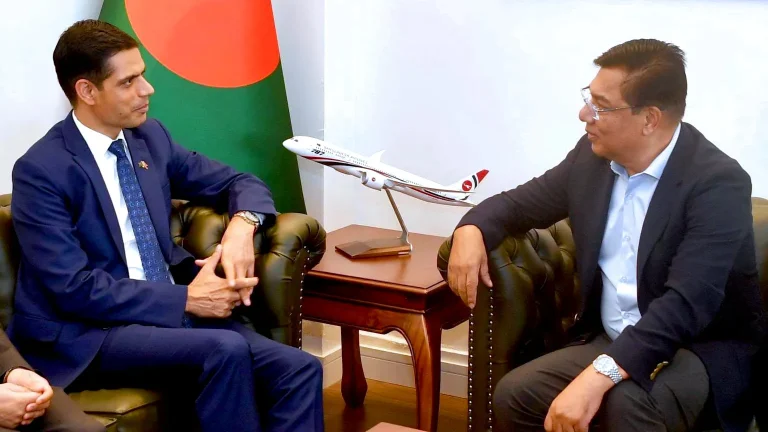
Another key issue raised during the consultation was the long-delayed expansion of the Nepal Airlines Corporation. Industry stakeholders reiterated the need for a stronger national carrier capable of supporting Nepal’s tourism ambitions through expanded routes and improved service reliability.
Fleet expansion, which has faced repeated delays over the years, was identified as a critical step toward boosting Nepal’s global air connectivity. Suggestions included accelerating aircraft acquisition processes and exploring strategic partnerships to enhance operational efficiency.
Minister Paudel acknowledged these concerns and has already signaled his intention to prioritize aviation reforms. He committed to fast-tracking efforts to expand Nepal’s air links and to facilitate the addition of new aircraft to the national fleet.
Digital Promotion and Global Outreach in Focus
Beyond physical infrastructure, the consultation also highlighted the growing importance of digital platforms in shaping global tourism trends. Stakeholders called for a more aggressive and coordinated approach to promoting Nepal in international markets through social media, official tourism websites, and online marketing campaigns.
With changing traveler behavior increasingly influenced by digital content, participants emphasized the need for Nepal to modernize its promotional strategies to remain competitive in the global tourism market.

A Reform-Oriented Start
The early engagement with stakeholders has been widely interpreted as a sign of the minister’s proactive and reform-oriented leadership style. By prioritizing dialogue and focusing on actionable issues such as airport utilization, airline capacity, and digital outreach, Paudel appears to be setting a clear direction for his tenure.
While challenges remain significant, industry observers note that swift decision-making and effective implementation will be crucial in translating these discussions into measurable outcomes. As Nepal continues its post-pandemic tourism recovery, the coming months will be critical in determining whether this early momentum can be sustained and converted into meaningful progress for one of the country’s most vital economic sectors.