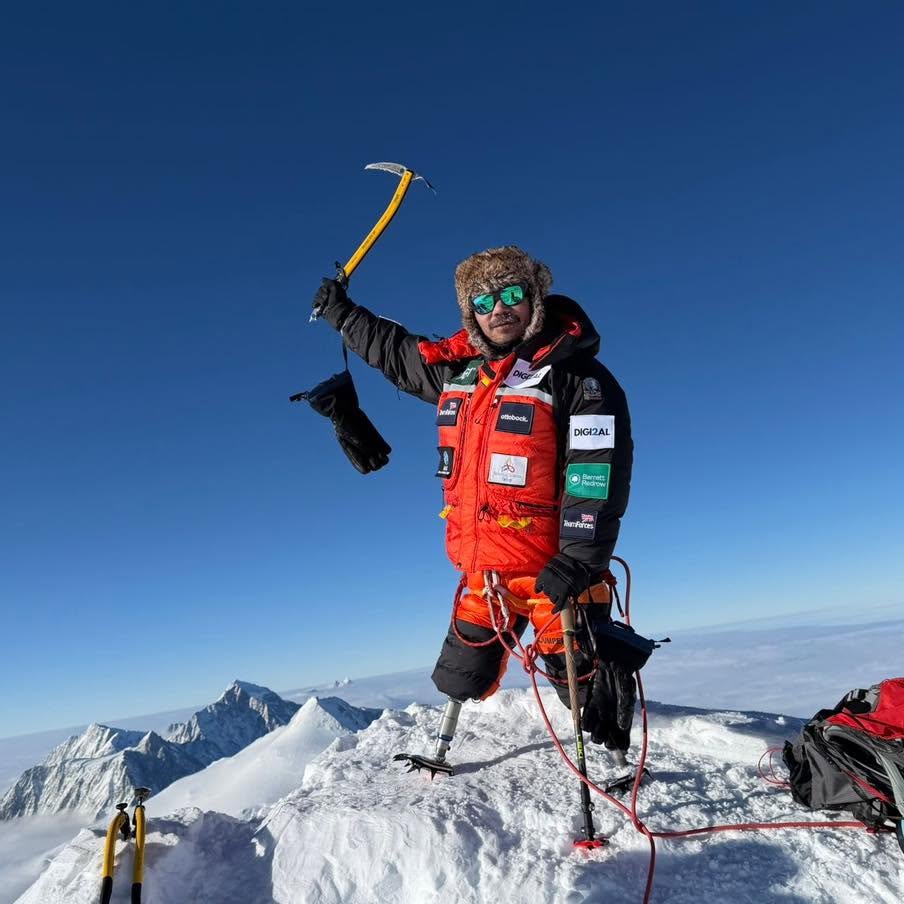
Nepali-British mountaineer Hari Budha Magar has been awarded the prestigious Guinness World Records ICON title, earning global recognition for one of the most extraordinary stories of resilience and achievement in modern mountaineering after becoming the first double above-knee amputee to complete the legendary Seven Summits challenge.
The honour places Magar among a select group of internationally recognized record holders whose achievements extend far beyond breaking records and have gone on to inspire millions worldwide. Previous personalities recognized within the Guinness World Records global spotlight include figures such as Taylor Swift, John Cena, Shohei Ohtani and BLACKPINK.
From Battlefield Tragedy to Life-Changing Recovery
Hari Budha Magar’s remarkable journey began with tragedy in 2010 while serving with the British Army’s Royal Gurkha Rifles in Afghanistan. During military deployment, he stepped on an improvised explosive device (IED), resulting in the loss of both legs above the knee. The life-altering injury ended his military career and presented what many believed would be insurmountable physical and emotional challenges.

His recovery process began with simple but difficult milestones. One of his earliest victories after the accident, he has often recalled, was learning how to lift himself independently from the floor back into his wheelchair, a moment that symbolized the beginning of rebuilding his life. Rather than allowing the injury to define his future, Magar began searching for a new purpose that would eventually transform him into one of the world’s most inspiring adaptive athletes.
Chasing an Impossible Dream: Mount Everest
Following years of rehabilitation, Magar turned his focus toward a dream many considered impossible: climbing the world’s highest mountains using prosthetic legs. In May 2023, he achieved what had never been done before. Hari Budha Magar became the first double above-knee amputee in history to successfully summit Mount Everest, rewriting global perceptions about physical disability and endurance.
The achievement immediately drew international attention, not only because of the technical difficulty involved but because it challenged deeply rooted assumptions about what people with disabilities can accomplish in extreme sports. His historic Everest climb became one of the most celebrated moments in Nepal’s mountaineering history.
Completing the Historic Seven Summits Challenge
Magar did not stop after conquering Everest.
Over the following two years, he continued pushing the boundaries of adaptive mountaineering by climbing the highest mountains on every continent, completing the prestigious Seven Summits Challenge, widely considered one of mountaineering’s ultimate tests of endurance.
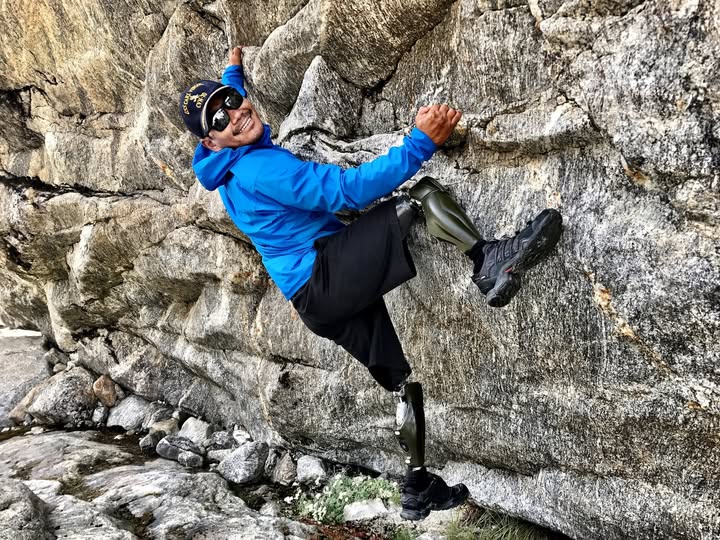
His climbs included:
- Aconcagua in South America
- Denali in North America
- Mount Kilimanjaro in Africa
- Mount Elbrus in Europe
- Mount Vinson in Antarctica
- Carstensz Pyramid in Oceania
By completing all seven climbs, Magar entered one of mountaineering’s most exclusive circles. Globally, fewer than 500 climbers have ever completed the Seven Summits challenge. Hari Budha Magar remains the only climber in history to accomplish it using two prosthetic legs.
Guinness World Records Recognizes Extraordinary Achievement
This year, Guinness World Records formally recognized Magar’s extraordinary achievements by awarding him the coveted GWR ICON title. The title is reserved for record holders whose accomplishments go beyond individual milestones and carry wider inspirational significance across society.
According to Guinness World Records, Magar’s journey from catastrophic injury to becoming a world-record mountaineer represents one of the most powerful stories of perseverance and determination in recent years. The recognition also acknowledges several world-first mountaineering records achieved during his climbing career.
Magar Dedicates Award to Supporters
Reacting to the honour through a Facebook post, Magar expressed gratitude and said the achievement was never his alone. He dedicated the recognition to everyone who supported him throughout his life journey, from childhood to military service, rehabilitation, and ultimately completing the Seven Summits challenge. “This wouldn’t be possible without you. I’m deeply grateful for your love and support,” he wrote. His message reflected the humility that has become a defining part of his public journey.
Mission Beyond Mountains: Changing Perceptions About Disability
For Hari Budha Magar, climbing mountains was never solely about personal achievement. Throughout his journey, he has consistently emphasized that his mission is much larger, raising awareness about disability rights and breaking society’s limiting perceptions surrounding physical disability.

He has repeatedly stated that every summit represented an opportunity to show the world that disability does not define human potential. “I’m incredibly honoured. This is bigger than climbing mountains; it is about showing what people with disabilities can achieve,” Magar said following the recognition.
A Global Symbol of Resilience and Human Possibility
Hari Budha Magar’s story has become far more than a sporting achievement. A man once told he would never walk normally again has gone on to climb the seven highest mountains on Earth, transforming himself into a global symbol of resilience, courage, and determination.
His journey continues to inspire not only the mountaineering world but also millions of people facing physical, mental, and personal challenges around the world. With the Guinness World Records ICON recognition, Nepal has once again earned global pride through one of its most extraordinary sons, proving that human determination can rise higher than even the world’s tallest mountains.