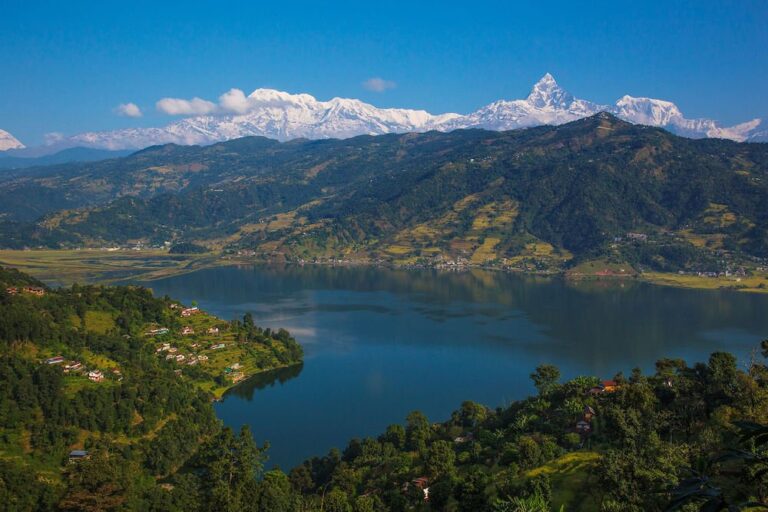
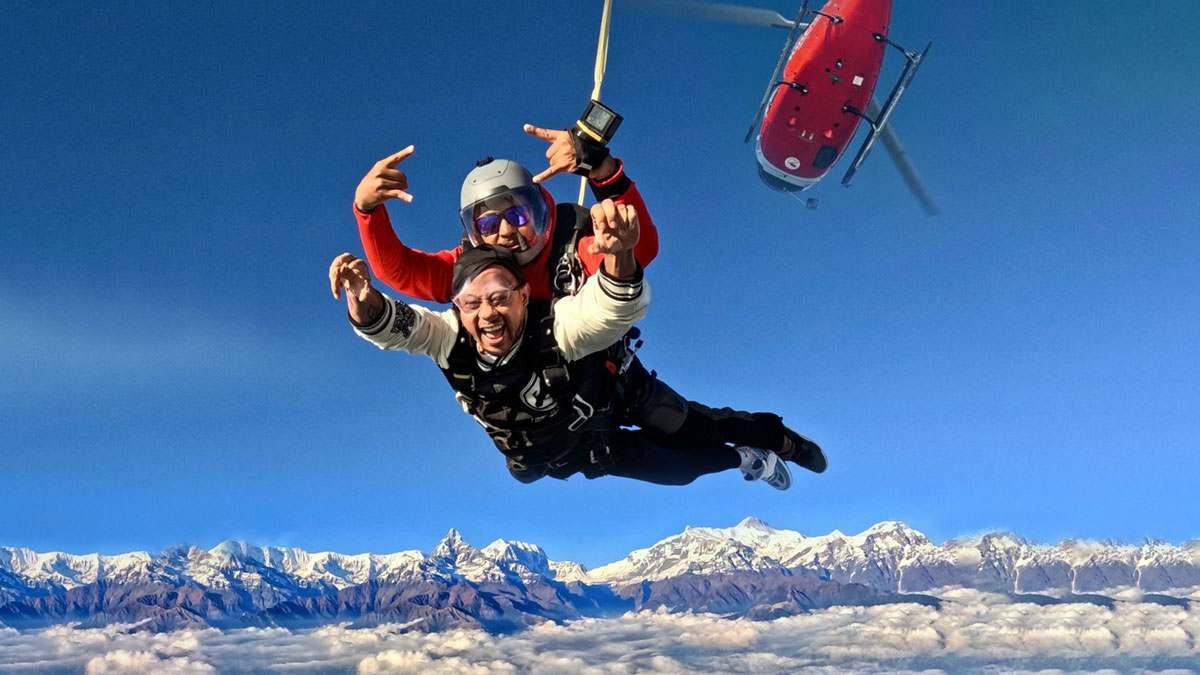
Pokhara, widely known for its lakes, Himalayan landscapes and rich cultural heritage, is strengthening its position as one of Nepal’s leading adventure tourism destinations. With the arrival of the autumn season, clear skies and panoramic mountain views are creating favourable conditions for outdoor activities, attracting visitors seeking unique experiences in Nepal’s tourism capital. Alongside popular adventure activities such as paragliding, hot-air ballooning and ultralight flights, skydiving is emerging as another attraction for domestic and international tourists. The introduction of more regular operations is expected to help diversify Pokhara’s tourism products and strengthen its appeal among adventure seekers.
Skydiving Adds a New Dimension to Pokhara’s Adventure Tourism
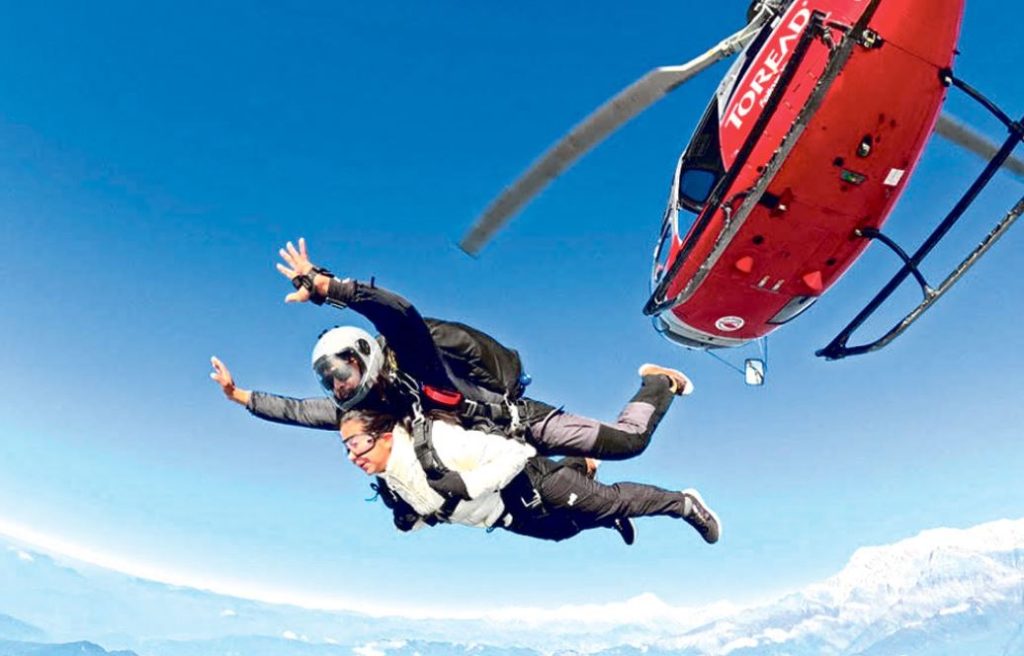
Skydiving offers visitors an opportunity to experience Pokhara’s natural beauty from thousands of feet above the ground. Participants jump from a helicopter at an altitude of approximately 13,000 feet and descend safely using a parachute under the supervision of trained professionals. The activity combines the thrill of freefall with spectacular aerial views of the surrounding mountains and landscapes.
Although skydiving was first test-operated in Pokhara in 2010, the activity had previously been available only during limited periods of the year. The introduction of a more flexible operating system has now created opportunities for regular services throughout the year, giving visitors greater access to this specialised adventure tourism experience.
Regular Operations and Skydiving Experience
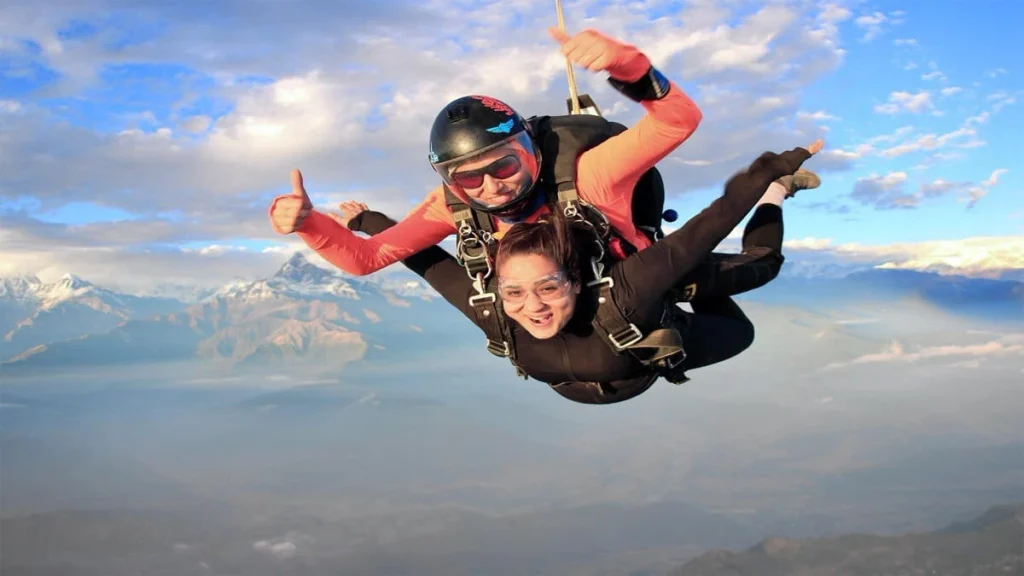
Skydiving in Pokhara is operated by Skydiving in Nepal Pvt. Ltd. in collaboration with helicopter service provider Simrik Air. According to company instructor Alice Thapa, the activity takes place at the aerial sports practice ground of Avia Club in Lauruk, Pame, within Pokhara Metropolitan City–23. The company has reported growing participation in the activity. Since October, 35 people have participated in tandem skydiving, in which participants jump alongside experienced instructors, while another 20 have undertaken solo skydiving. September and October are considered favourable months because of generally clear weather conditions and improved visibility of the surrounding mountains.
According to Thapa, experienced foreign nationals often visit Pokhara for solo skydiving, while tandem jumps remain popular among visitors who want to experience the activity without extensive individual training. Interest among Nepali participants is also increasing, indicating opportunities to expand the activity’s domestic market. The experience begins with a helicopter flight from the old airport area of Pokhara towards the designated jumping location. After reaching approximately 13,000 feet, participants jump under the supervision of qualified instructors. The parachute opens after around 50 seconds of freefall, followed by a descent lasting approximately seven to eight minutes before landing.
Skydiving Packages for Domestic and International Visitors
Skydiving is being marketed as a premium adventure tourism product, with different packages available for Nepali and foreign participants. According to the company, the prices for Nepali participants are NPR 102,000 for the Deluxe Package, NPR 123,000 for the VIP Package and NPR 149,000 for the Diamond Package.
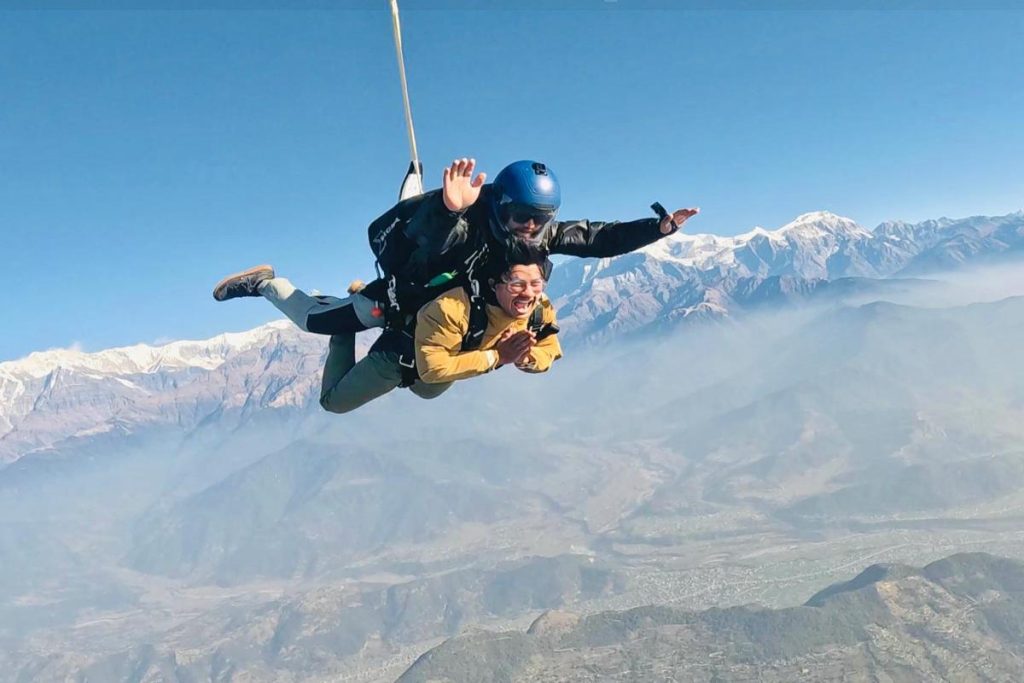
For foreign participants, the corresponding packages cost USD 750, USD 900 and USD 1,200, respectively. The pricing reflects the specialised nature of the activity, which requires aviation support, trained personnel and appropriate equipment. The availability of multiple packages allows the company to cater to visitors with different preferences and expectations for their skydiving experience.
Nepali Instructors Strengthen Local Expertise
The development of skydiving in Pokhara also highlights the growing involvement of Nepali professionals in specialised adventure tourism. Instructor Alice Thapa said the initiative was established with the objective of developing the activity within Nepal rather than relying entirely on foreign operators. According to Thapa, the company now has Nepali instructors conducting skydiving activities, including Subash Thapa, Manish Hirachan and Yashoda KC Thapa, who is recognised as Nepal’s first female skydiver.
Professional training abroad has helped develop the technical expertise required to advance skydiving as a commercial tourism activity in the country. Greater involvement of Nepali professionals could contribute to local employment, technical skill development and the expansion of specialised tourism services. Building a skilled domestic workforce may also help strengthen the long-term capacity of Nepal’s adventure tourism industry.
Aviation Approval Supports Regular Skydiving Operations
A significant development for the sector has been the introduction of the Recreational Aviation Operator Certificate (RAOC) for qualifying skydiving operators. According to company director Nirmal Pandey, the Civil Aviation Authority of Nepal (CAAN) granted the company the certificate, enabling it to operate skydiving services more regularly. Previously, the company had generally received permission to conduct the activity for only 15 days at a time. The new arrangement has reduced operational restrictions and created opportunities for more consistent service delivery.
Skydiving in Nepal Pvt. Ltd. is currently the only company reported to have received this certificate for the activity. Operators seeking the certificate must fulfil the aviation authority’s prescribed requirements. These include access to an aircraft or a five-year agreement with a helicopter service provider, a designated operating base, appropriate airspace arrangements and qualified instructors. Meeting these requirements is essential to ensuring that skydiving operations are organised, professionally managed and compliant with aviation regulations.
Adventure Tourism Creates Opportunities for Pokhara
Tourism entrepreneurs believe that expanding adventure activities could help Pokhara attract new categories of visitors and generate additional economic opportunities. Hari Bhujel, president of the Pokhara Tourism Council, has highlighted the importance of combining nature, culture and adventure to strengthen the city’s tourism appeal. Pokhara already attracts visitors through its lakes, mountain views, cultural attractions and outdoor recreational opportunities.
The addition of specialised activities such as skydiving could encourage tourists to explore experiences beyond conventional sightseeing and potentially extend their stays. Regular operations could also create employment opportunities in aviation, tourism services, instruction, hospitality and other supporting sectors. The long-term success of skydiving tourism will depend on maintaining strong safety standards, complying with aviation regulations, developing skilled human resources and promoting the activity to appropriate domestic and international markets. Effective coordination among operators, tourism businesses and relevant authorities will be important in developing the activity sustainably.
Skydiving Strengthens Nepal’s Adventure Tourism Potential
Pokhara’s expanding skydiving operations demonstrate the potential to diversify Nepal’s tourism products beyond traditional sightseeing and trekking. Its combination of Himalayan scenery, established tourism infrastructure and a growing range of adventure activities gives the city an opportunity to attract travellers seeking distinctive and memorable experiences.
The move towards regular skydiving operations represents a step forward in developing adventure aviation as part of Nepal’s tourism industry. With effective promotion, professional expertise and consistent safety practices, skydiving could become another distinctive experience supporting Pokhara’s reputation as a destination where nature, culture and adventure come together. For Nepal’s tourism sector, the priority will be to transform growing interest into a sustainable tourism product that benefits local communities while providing visitors with a safe and memorable adventure.