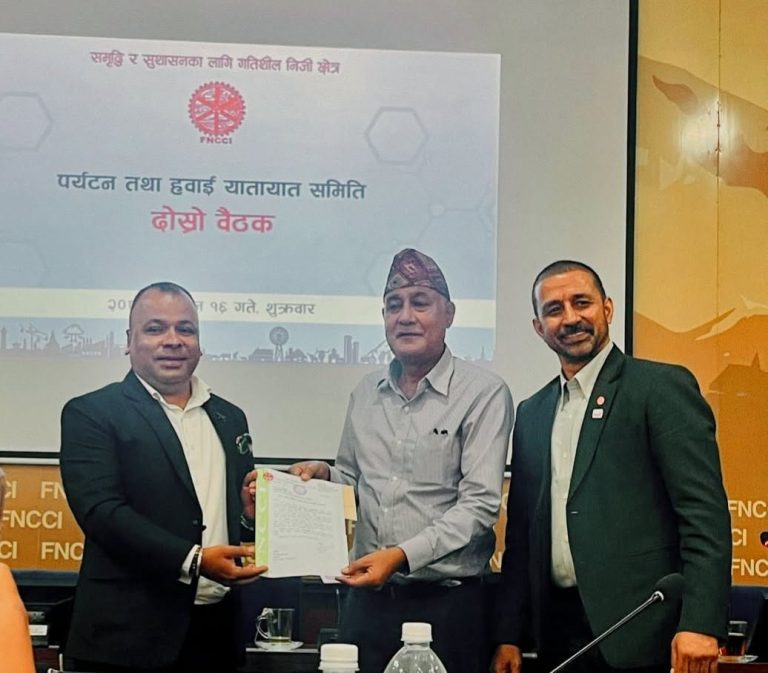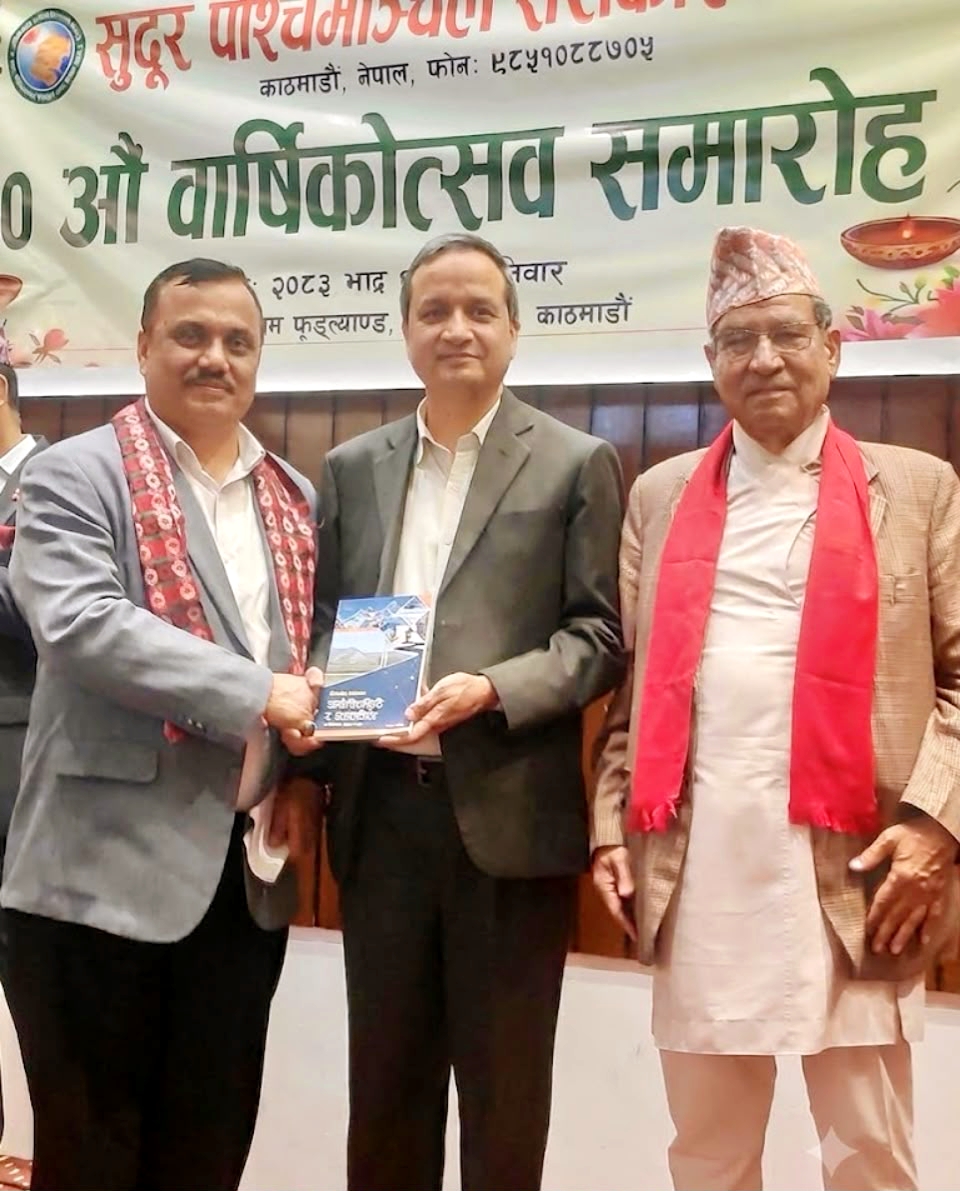
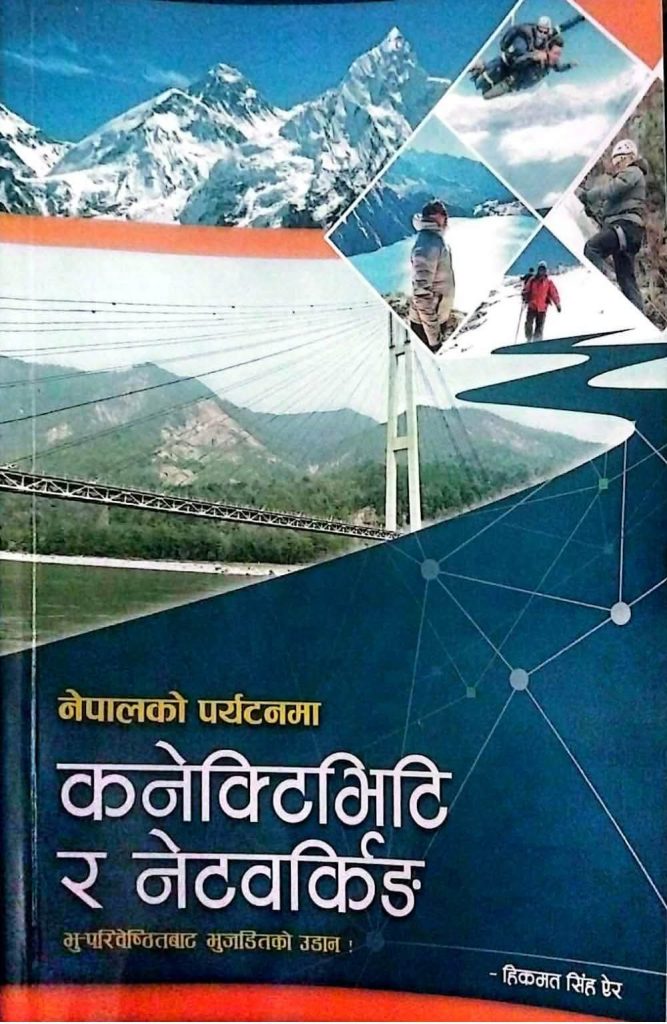
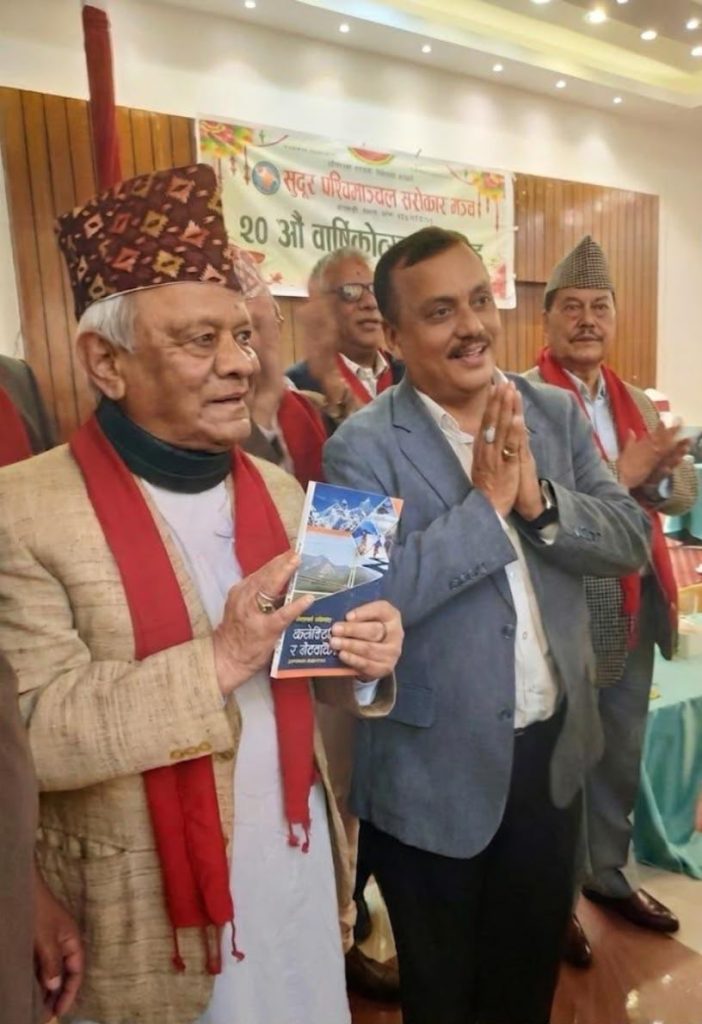
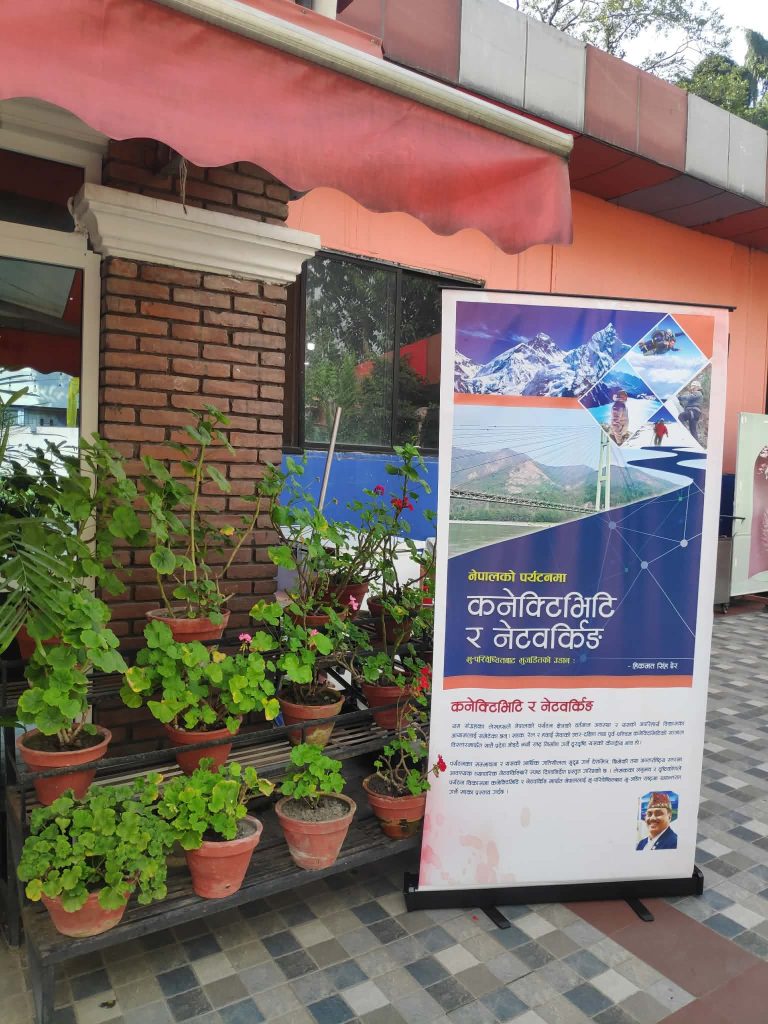
The book “Connectivity and Networking in Nepal’s Tourism: From Landlocked to Land-Linked Flights”, authored by Hikmat Singh Ayer, Officiating Chief Executive Officer of the Nepal Tourism Board (NTB), has been officially launched in Kathmandu.
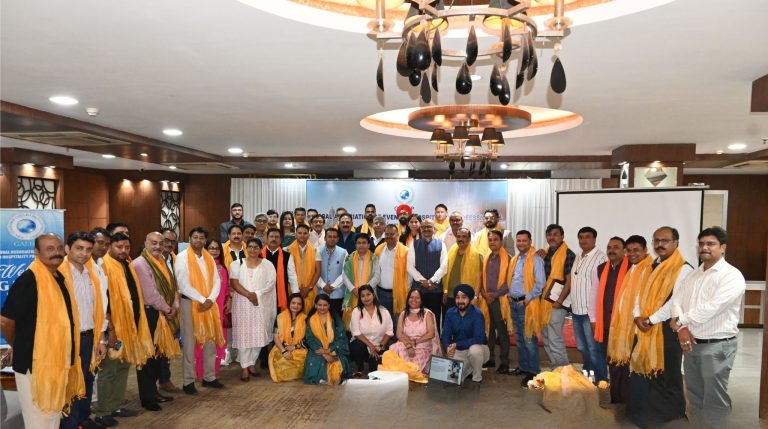
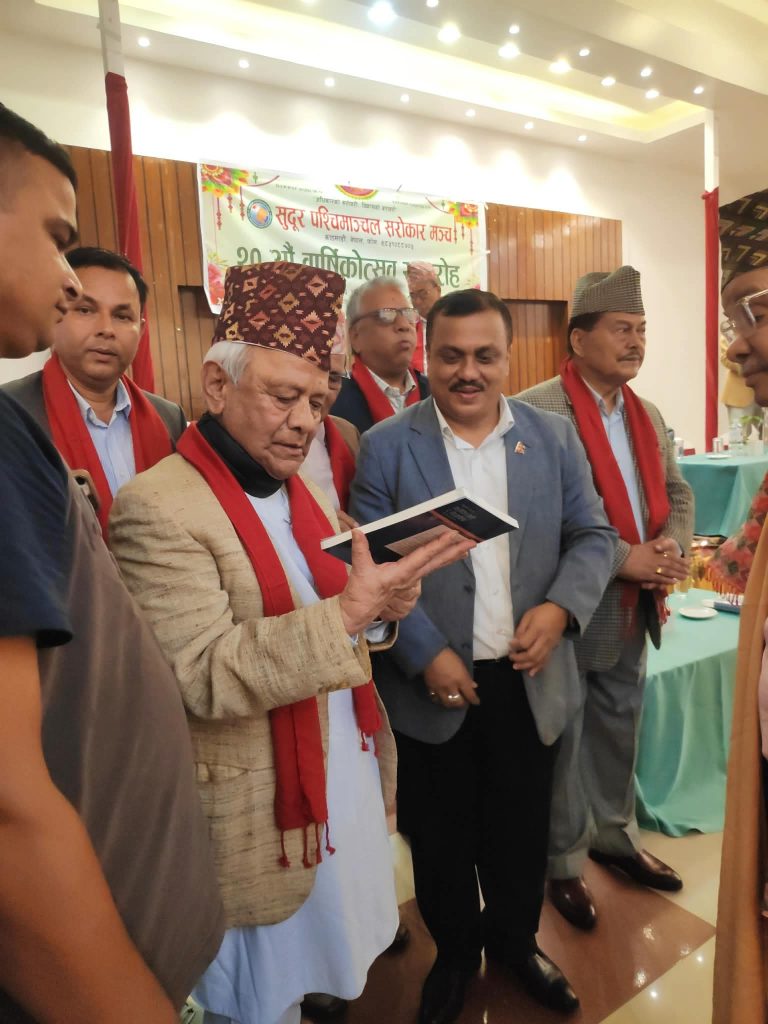
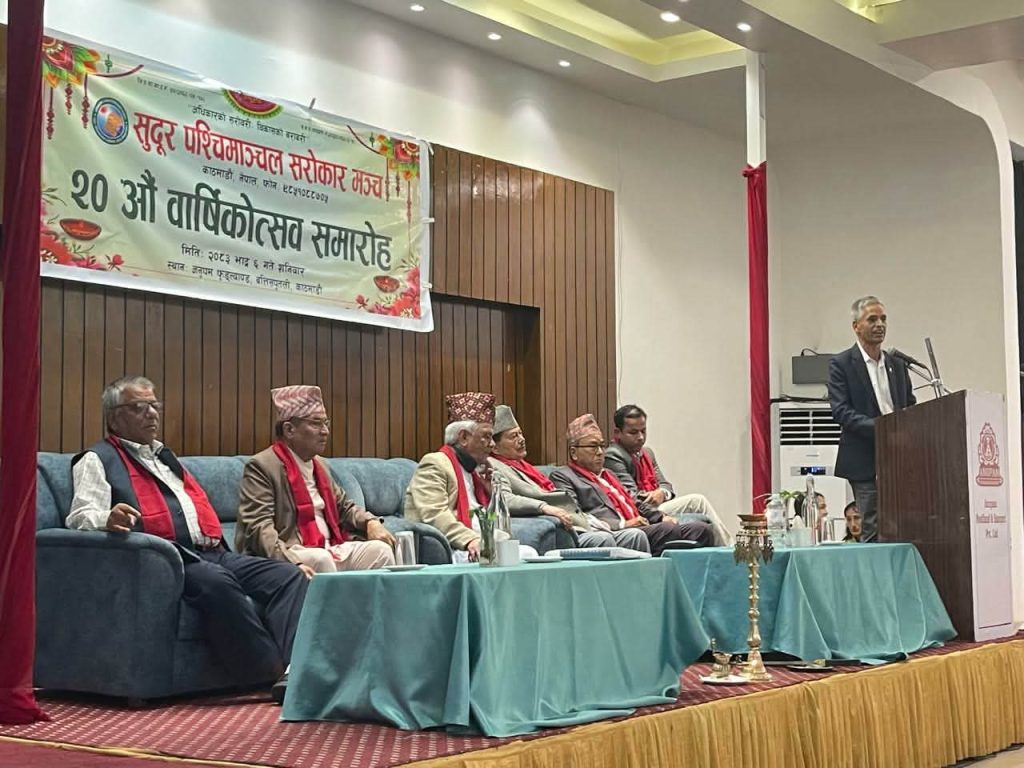
Former Prime Minister Lokendra Bahadur Chand launched the book on Saturday during a program organized to mark the 20th anniversary of the Sudurpaschim Concern Forum Nepal.
Ayer, who hails from Sudurpaschim Province, has been associated with the Nepal Tourism Board for the past 26 years, serving in various capacities and currently holding the responsibility of Officiating CEO.
Book Focuses on Connectivity, Infrastructure and Tourism Growth
The 182-page book examines Nepal’s tourism potential, challenges and policy dimensions, with particular emphasis on tourism infrastructure, regional and international connectivity, networking and market expansion.
The author presents tourism as a key driver of Nepal’s economic and social development and discusses issues ranging from the development of new tourism destinations to expanding access to regional tourism markets.
Drawing on his professional experience and practical observations, Ayer argues that Nepal’s tourism development should not be limited to destination promotion. Instead, connectivity, networking, infrastructure, tourism products, policy and market development need to be advanced as an integrated strategy.
Seven Sections Explore Nepal’s Tourism Potential
The book is divided into seven sections, each addressing a different dimension of Nepal’s tourism development.
The first section, “Tri-Nation Development Potential Revealed by the North-South Corridor,” examines the opportunities created by improved regional connectivity.
The second section focuses on “Dimensions of Development at Tourist Destinations,” while the third discusses “Policy Provisions in the Tourism Sector.”
The fourth section, “Innovative Efforts in Tourism Products,” explores new approaches to developing and diversifying tourism products.
The fifth section, “Tourism as an Engine of Economic and Social Development,” examines the wider economic and social role of tourism.
The sixth section addresses “Development in the Regional Tourism Market,” while the final section focuses on “Connectivity and Networking Required in Tourism.”
Former PM Chand Highlights Importance of Connectivity
Speaking at the launch, former Prime Minister Lokendra Bahadur Chand emphasized the need to expand road, air and other transportation infrastructure alongside regional and international connectivity to accelerate Nepal’s tourism development.
Chand said tourism should not be viewed merely as a sector for recreation and travel but should be integrated into Nepal’s broader economic and social transformation.
He noted that Nepal’s geographical, cultural and natural diversity provides significant tourism opportunities, but these opportunities need to be effectively connected to national, regional and international markets.
According to Chand, the book highlights the importance of connectivity and networking in transforming Nepal’s tourism potential into sustainable economic opportunities.
Ayer Calls for Integrated Tourism Development
Author Ayer said Nepal needs to move beyond conventional destination promotion and adopt an integrated approach that combines connectivity, networking, policy, infrastructure, tourism products and market expansion.
Based on his 26 years of experience in Nepal’s tourism sector, Ayer has presented his perspectives on various aspects of tourism development and explored ways to connect Nepal’s tourism potential with regional and international networks.
He particularly links the development of north-south corridors, emerging tourism destinations, innovative tourism products, regional tourism markets and infrastructure with Nepal’s long-term tourism growth.
From Landlocked to Land-Linked Nepal
A central theme of the book is the expansion of connectivity across Nepal through road, rail and air networks along both north-south and east-west corridors.
The book presents a vision of connecting all seven provinces through an integrated transportation and connectivity network, with the broader objective of transforming Nepal from a landlocked country into a more interconnected nation.
Ayer’s approach links improved connectivity directly with tourism development, arguing that better transportation networks can open new destinations, expand tourism markets and strengthen Nepal’s integration with neighboring and international markets.
The book also examines the current state of Nepal’s tourism sector and identifies areas requiring further development to support long-term growth.
Relevant to Tourism Policy and Planning
Participants at the launch said the issues raised in the book are particularly relevant at a time when Nepal is seeking to diversify tourism destinations, expand into new markets and strengthen regional connectivity.
They noted that the book’s perspectives could provide useful inputs for tourism policy formulation and long-term planning, particularly in areas related to infrastructure, market development and regional tourism cooperation.
Senior Officials Attend Book Launch
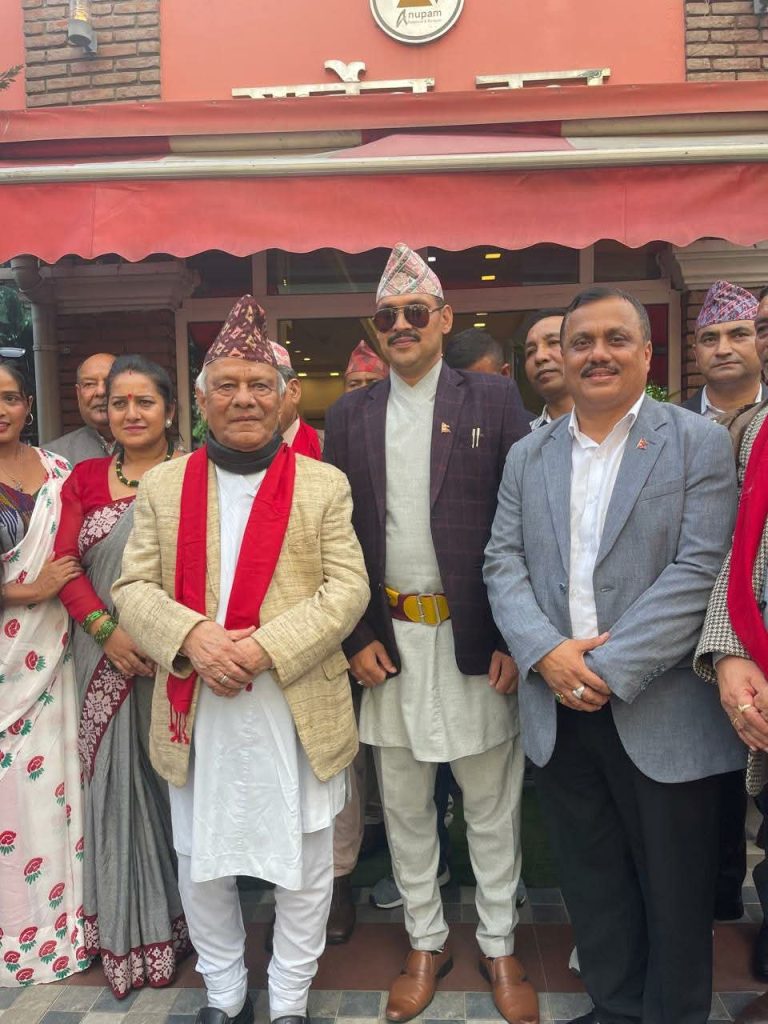
The book launch was attended by National Planning Commission Vice Chairman Dr. Gunakar Bhatta, former Energy Secretary Anup Upadhyaya, former Health Secretary and Chairperson of the Sudurpaschim Concern Forum Dirgha Singh Bam, and former Inspector General of Police Motilal Bohora, among other distinguished guests.
The publication adds to ongoing discussions about how improved infrastructure, connectivity and regional networking can help unlock Nepal’s tourism potential and strengthen its position in the international tourism market.