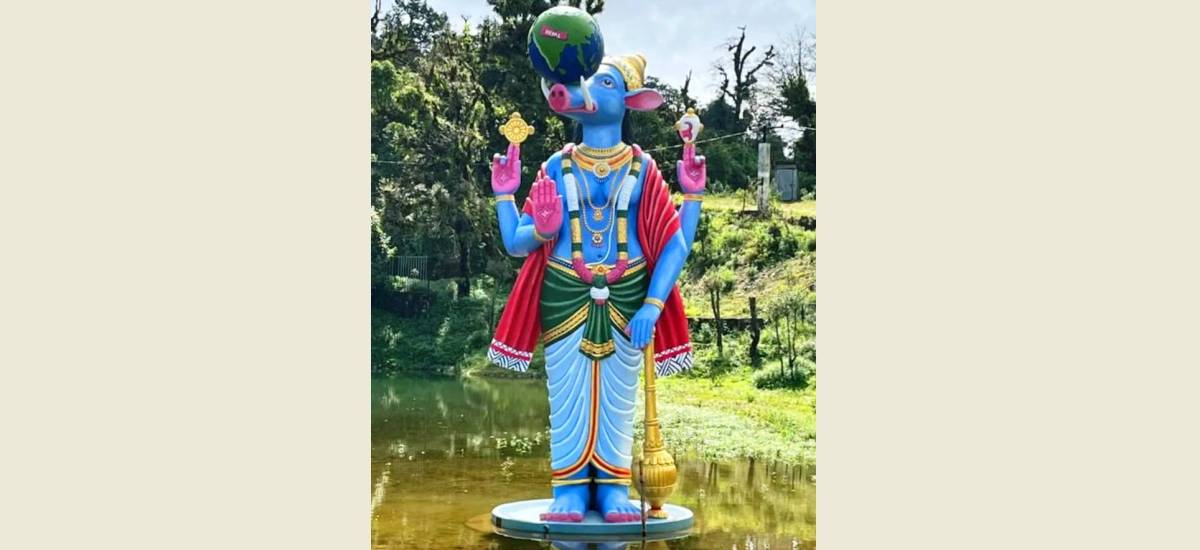
In a significant development for religious and cultural tourism, a 23-foot-tall full-scale statue of Siddhabarah has been erected at the center of Gaja Daha in Baglung. Recognized as one of the 100 tourist destinations identified by the government, Gaja Daha is located in Jaimini Municipality–3 at an altitude of 2,500 meters above sea level. The statue was crafted over a span of four months by sculptor Krishna Bahadur Sunar, with a total construction cost of NPR 2 million. The initiative aims to promote the rich cultural and spiritual heritage associated with Siddhbarah while attracting more visitors to the area.
A Religious Icon with Deep Significance
Siddhbarah, considered the third incarnation of Lord Vishnu among his ten avatars, is revered in Hindu mythology as the Boar incarnation that rescued the Earth from cosmic waters. The newly installed statue reflects this divine form, symbolizing strength, protection, and the triumph of good over evil. The chairman of the local ward, Krishna Bahadur Bhujel, explained that the construction of the statue was part of a broader plan to develop Gaja Daha as both a religious and tourism hub. The project not only enhances the site’s spiritual importance but also supports its positioning as a major attraction for both domestic and international tourists.
Community-Led Development and Infrastructure Expansion
The installation of the statue is part of a larger initiative led jointly by Jaimini Municipality and the local community. Alongside the statue, several infrastructure improvements have been made, including the construction of the Siddhabarah Temple, lake conservation measures, and enhanced visitor facilities. These developments are designed to preserve the natural beauty of Gaja Daha while making it more accessible and appealing to visitors. The entire effort reflects a strong collaboration between local authorities, religious leaders, and residents, showcasing the community’s dedication to safeguarding their heritage.
Funding Through a Religious Gathering
One of the remarkable aspects of the project is its funding source. The cost of building the Siddhabarah statue was entirely covered by contributions collected during a Gyaan Mahayagya (a grand religious gathering) held in Gaja Daha. This event not only raised the necessary funds but also brought together devotees, community members, and supporters from surrounding regions, fostering a sense of unity and shared purpose. The Mahayagya served as both a spiritual celebration and a fundraising drive, proving that cultural preservation can be achieved through community engagement.
A Scenic Destination with Spiritual Appeal
Spread over an area of 24 square meters, Gaja Daha offers a tranquil natural setting that blends scenic beauty with deep spiritual value. The serene waters of the lake, surrounded by lush hills and crisp mountain air, provide an ideal backdrop for meditation, prayer, and relaxation. With the new statue standing prominently at its center, the site’s visual appeal has been further enhanced, making it a must-visit location for pilgrims, spiritual seekers, and nature lovers alike.
Part of a National Tourism Vision
The inclusion of Gaja Daha among Nepal’s top 100 tourist destinations highlights the government’s commitment to promoting diverse attractions beyond traditional trekking routes and urban centers. By focusing on cultural, historical, and religious sites such as Gaja Daha, the government aims to encourage balanced tourism development across the country. The Siddhbarah statue is expected to play a central role in drawing visitors to Baglung, thereby supporting local businesses, creating jobs, and fostering economic growth in the region.
Potential for Year-Round Tourism
Thanks to its unique combination of natural beauty and religious significance, Gaja Daha has the potential to attract tourists throughout the year. While spring and autumn are expected to be peak seasons for visitors seeking pleasant weather and clear mountain views, the site’s spiritual importance ensures a steady flow of pilgrims regardless of the season. The newly built infrastructure, including improved access roads, temples, and visitor amenities, will help accommodate this influx of guests and enhance their overall experience.
Local Voices of Pride and Expectation
Residents of Jaimini Municipality have expressed pride in seeing their hometown gain recognition as a prominent tourist and pilgrimage site. Many locals believe that the statue will not only increase footfall but also inspire the younger generation to take an active role in preserving their cultural and religious heritage. Ward Chairman Bhujel emphasized that the project reflects the community’s shared vision for sustainable development, where cultural preservation and economic progress go hand in hand.
A Step Toward Sustainable Religious Tourism
The Gaja Daha Siddhabarah statue project represents more than just a physical landmark—it is a testament to how local culture, faith, and community spirit can be leveraged to create lasting benefits. With proper management and promotion, the site could serve as a model for sustainable religious tourism in Nepal. Visitors will not only have the chance to witness a striking example of craftsmanship but also immerse themselves in a location steeped in mythology, tradition, and natural beauty.
A Monument of Faith and Unity
The completion of the 23-foot Siddhabarah statue marks a milestone in the cultural and tourism development of Baglung. Through collaborative effort, community funding, and the vision to protect and promote spiritual heritage, Gaja Daha is on its way to becoming a leading pilgrimage and tourism destination. As pilgrims bow before the statue and travelers pause to admire its artistry against the backdrop of pristine nature, the monument stands as a powerful symbol of faith, unity, and the boundless potential of community-driven initiatives.