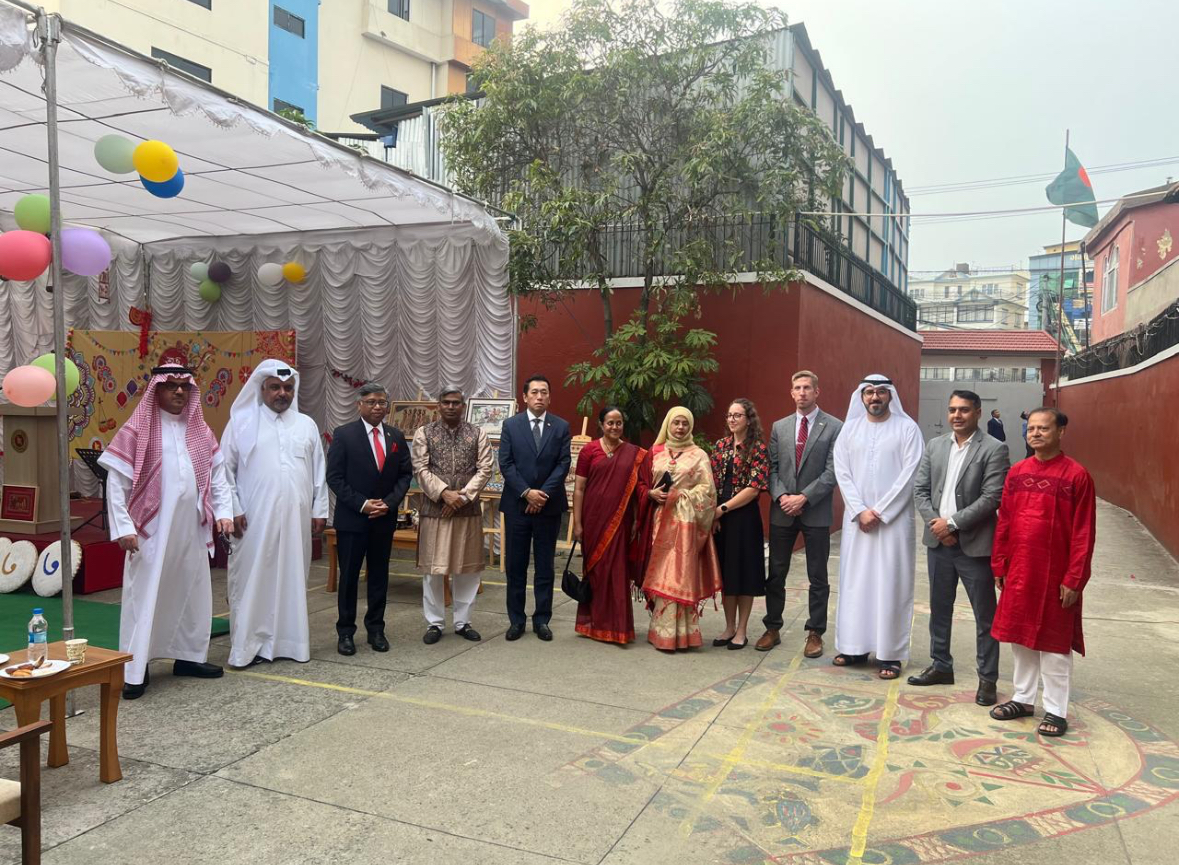
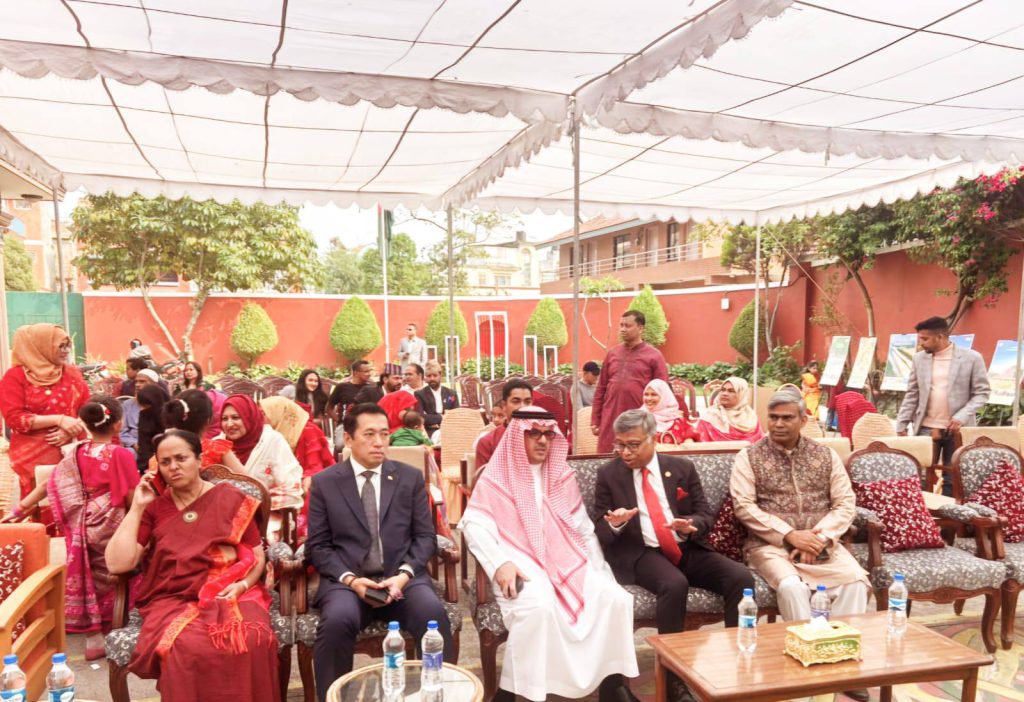
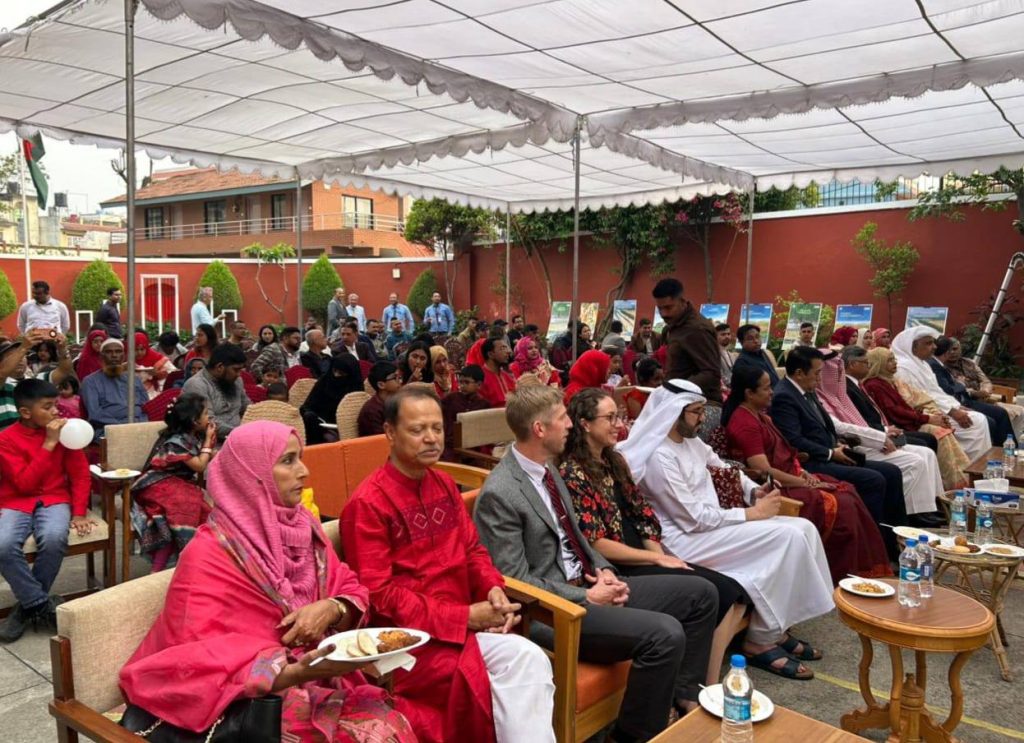
The Embassy of Bangladesh in Kathmandu celebrated Pohela Boishakh, marking the first day of the Bangla New Year 1433, with vibrant cultural festivities held at the Embassy premises on Friday.
The event was observed with great enthusiasm and brought together a distinguished gathering of diplomats, government officials, business leaders, and members of the Bangladeshi community living in Nepal.

High-Level Participation and Diplomatic Presence
The celebration was attended by ambassadors and heads of mission from various countries, senior officials of the Government of Nepal, representatives from resident diplomatic missions, prominent Nepali business leaders, and Bangladeshi families residing in Nepal. The Secretary-General of SAARC graced the occasion as the guest of honour, adding regional significance to the cultural event.
Cultural Significance of Pohela Boishakh
In his welcome remarks, the Ambassador of Bangladesh highlighted the rich origin and cultural heritage of Pohela Boishakh, describing it as a festival that reflects the identity, history, and traditions of the Bengali people. He noted that Pohela Boishakh has evolved into a universal celebration in Bangladesh, symbolizing renewal, transformation, and unity across society.
Symbol of Renewal and Cultural Identity
The Ambassador emphasized that the festival is traditionally associated with haal khata, the opening of new financial ledgers, representing fresh beginnings and economic renewal. He further stated that Pohela Boishakh transcends religious, social, and geographical boundaries, embodying the inclusive and vibrant spirit of Bengali culture and its long-standing traditions.
Cultural and Civilisational Linkages with Nepal
Referring to the deep-rooted civilisational ties between Bangladesh and Nepal, the Ambassador highlighted shared historical and cultural linkages that form a strong foundation for enhanced cooperation. He noted that these connections offer significant opportunities for collaboration in cultural exchange, tourism promotion, and people-to-people relations between the two countries.
Message of Regional Harmony
The guest of honour praised Bangladesh’s rich cultural heritage and stressed the importance of regional cultural exchanges in strengthening bonds among South Asian nations. He described the celebration as a symbol of harmony, unity, and diversity within the region.

Cultural Performances Enrich the Event
The programme featured vibrant cultural performances, including Bangla and Nepali songs that reflected the close cultural affinity between the two nations. Nepali artist Sabu Lama, along with students from a local Nepali school, performed a mix of Bangla and Nepali songs, creating a lively and inclusive atmosphere. Fun-filled activities for children and a prize distribution ceremony further added to the festive spirit of the event.
Celebrating Shared New Year Traditions
The celebration also highlighted the shared cultural rhythms of the region, particularly the coincidence of Pohela Boishakh and the Nepali New Year (Naya Barsha), both observed in mid-April. The event symbolized the shared seasonal traditions and civilisational heritage of Bangladesh and Nepal, reinforcing the cultural bonds and mutual respect between the two nations.