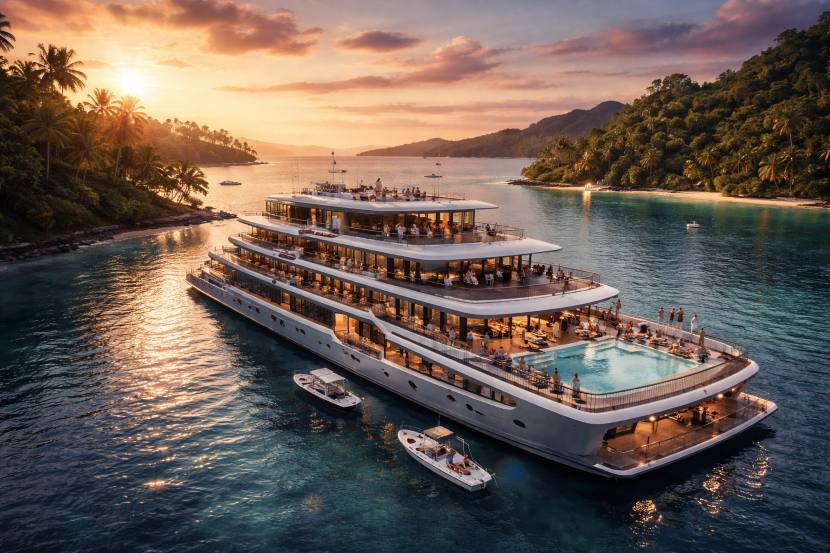
The floating hotels market is emerging as one of the most promising segments in the global tourism and hospitality industry. Recent projections indicate that the sector will grow from USD 4.83 billion in 2025 to an estimated USD 8.03 billion by 2032, reflecting a surging demand for innovative and experiential accommodations. These hotels, which combine maritime engineering with modern hospitality, are redefining how travelers experience luxury, adventure, and sustainability at sea.
As travelers increasingly seek distinctive and memorable stays, floating hotels are uniquely positioned to cater to niche tourism markets. From urban waterfronts to remote coastal regions, these accommodations offer immersive experiences that traditional land-based hotels cannot match.

Advancements in Maritime Engineering and Hospitality Innovation
Floating hotels leverage state-of-the-art vessel architecture alongside contemporary hotel amenities to deliver a seamless and flexible guest experience. Many are built with modular designs, allowing developers to customize layouts, expand capacity, or relocate structures with relative ease. This adaptability has made floating hotels attractive to investors and developers looking for the future-proof hospitality solutions.
Technological progress in materials science and modular construction has significantly streamlined the building process. These innovations reduce construction time, improve durability, and enhance the overall guest experience. As a result, the floating hotels are becoming more cost-effective and accessible, appealing to a wider range of travelers, from luxury seekers to eco-conscious tourists.
Sustainability and Regulatory Drivers
Sustainability is a central factor shaping the floating hotel industry. Many new projects integrate the hybrid propulsion systems, renewable energy sources, and advanced waste management technologies to minimize their environmental footprint. These initiatives align with the global trend of eco-friendly travel and responsible tourism.
Additionally, stringent regulatory frameworks, particularly in Europe and North America, are influencing design and operational standards. Floating hotel operators are adapting by ensuring compliance with environmental and safety guidelines, enhancing both consumer confidence and long-term market sustainability.
Regional Opportunities and Geopolitical Trends
The floating hotels market is influenced by regional dynamics and geopolitical trends. In the Asia-Pacific, the booming tourism sector presents opportunities for innovative concepts in coastal and island destinations. Europe demands high-end offerings that meet complex regulations, while the Americas show growth potential for urban waterfront developments. The Middle East is increasingly exploring large-scale floating hotel projects to cater to luxury tourism.
Global economic factors, such as US tariffs on imported materials, have prompted operators to diversify supply chains, sourcing more components locally or regionally. These measures help maintain project timelines and control costs, ensuring stability in a rapidly growing sector.
Strategic Recommendations for Industry Leaders
As the market expands, floating hotel operators are encouraged to adopt strategic approaches to capitalize on emerging opportunities. Key strategies include:
- Building resilient supply chains to mitigate external economic pressures.
- Leveraging digital technologies to enhance operations and guest experiences.
- Forming regional partnerships to navigate local regulations and optimize market entry.
- Aligning projects with sustainability goals and community expectations to ensure long-term viability.
By embracing innovation, operational efficiency, and sustainable practices, floating hotels can position themselves as leaders in the next generation of tourism offerings.

Floating Hotels: Shaping the Future of Tourism
The floating hotels market represents a transformative trend in global tourism. Offering a blend of luxury, adventure, and sustainability, these accommodations are poised to attract travelers seeking unique experiences beyond conventional hotels. With expected growth to USD 8.03 billion by 2032, the sector is set to become a key driver of tourism expansion worldwide.
Industry experts agree that the combination of engineering innovation, strategic regional planning, and environmentally responsible practices will enable floating hotels to thrive in the coming decade, reshaping the global hospitality landscape and offering unforgettable travel experiences at sea.